For COOs: Par Levels and Reorder Points for Branded Cans
There are two bad phone calls every operations leader knows. " Both come from the same missing piece, a simple par level and reorder point that everyone on the team can follow.
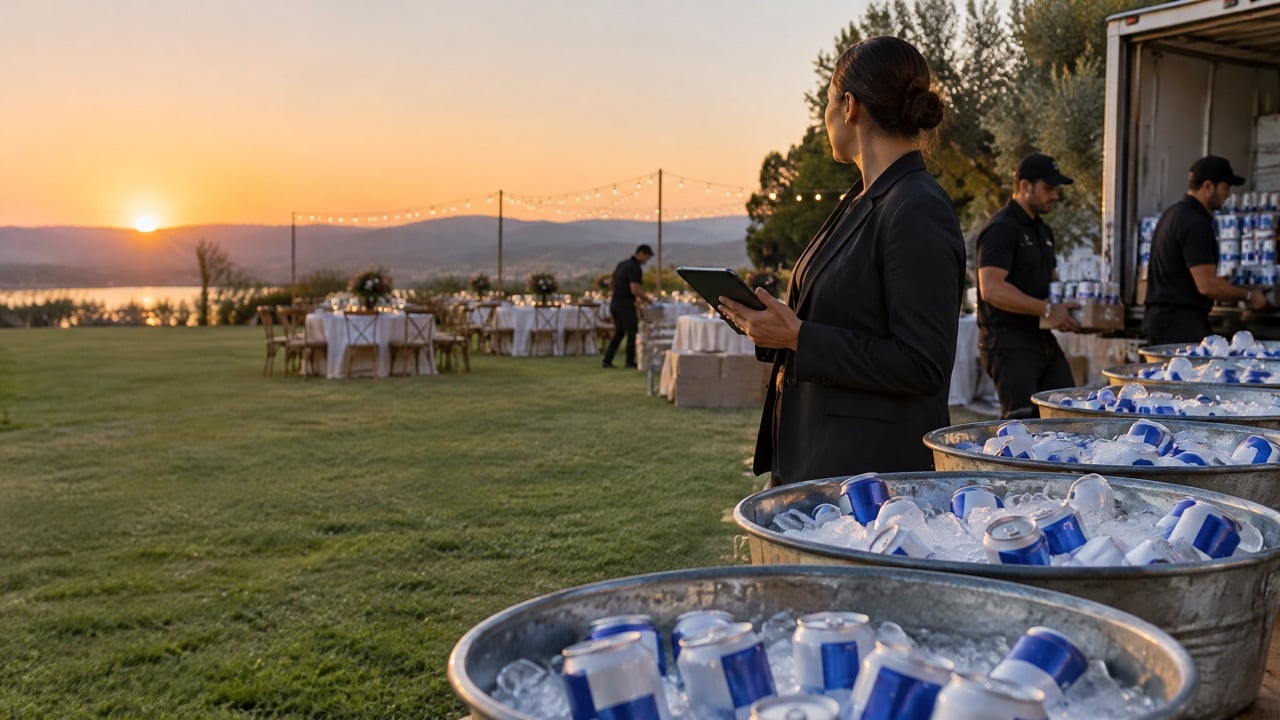
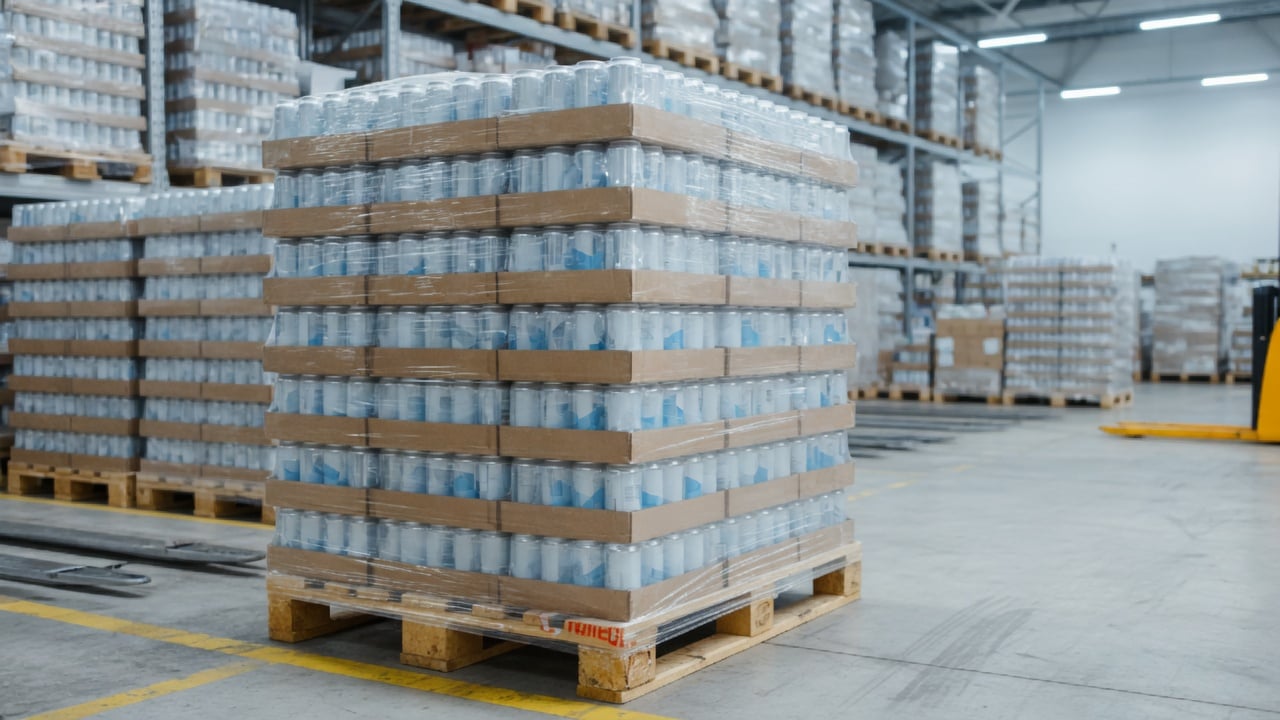
There are two bad phone calls every operations leader knows. The first one is "we are out of water and the event starts in an hour." The second one is quieter but costs more: "why are there eleven pallets of cans in the loading dock?" Both come from the same missing piece, a simple par level and reorder point that everyone on the team can follow.
This guide is for COOs, directors of operations, and purchasing managers who run branded canned water across hotels, clubs, venues, or multiple locations. It explains par levels, safety stock, and reorder points in plain words, with a worked example you can copy into a spreadsheet today.
What is a par level for branded canned water?
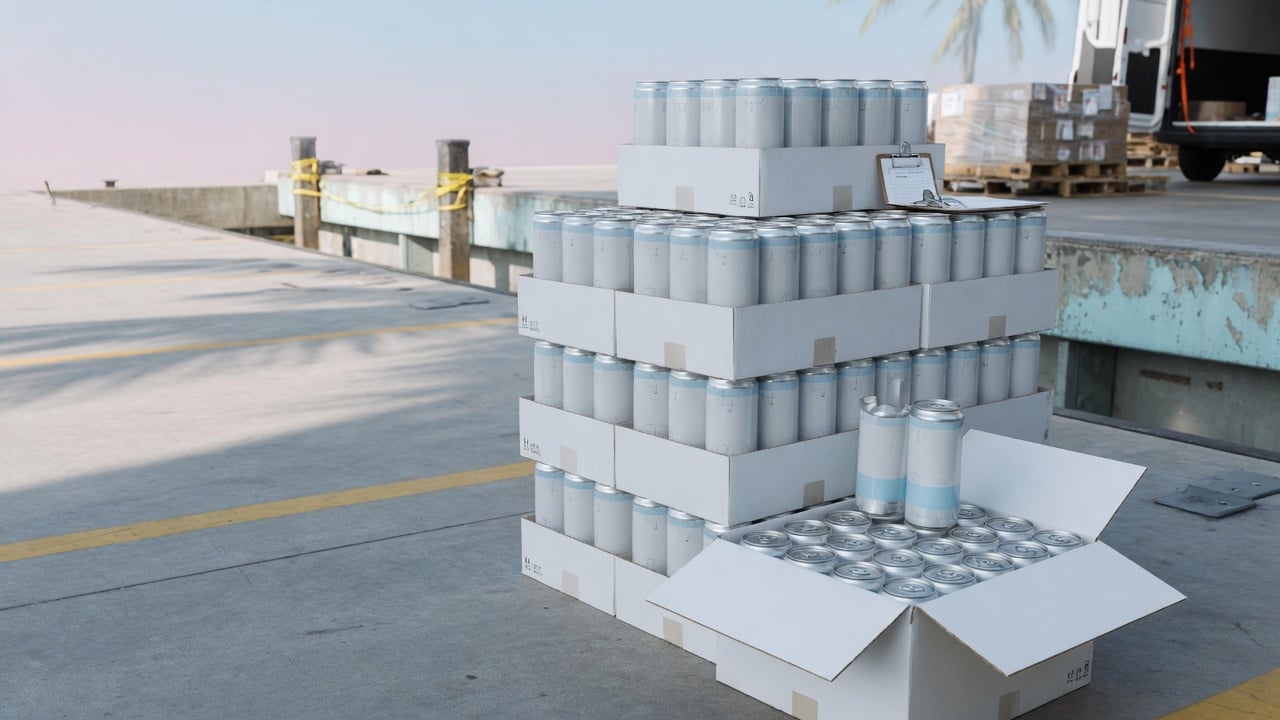
A par level is the amount of stock a location should have on hand after a delivery, enough to cover normal use until the next order arrives, plus a cushion. For branded canned water, par is usually counted in cases because that is how cans are stored, moved, and ordered. At We Can It, a case holds 24 cans.
Par has three parts:
- Cycle stock: what you normally use between orders.
- Safety stock: the cushion for heat waves, surprise events, and slower deliveries.
- Receiving buffer: a few days for the order to be counted and put away.
How do you calculate a reorder point?
The reorder point tells your team when to order, not how much. It is the stock level that triggers a new order so cans arrive before you hit zero.
Reorder point = (average daily use x lead time in days) + safety stock
Lead time is the full time from placing a reorder to cans on your shelf. For a reorder of existing artwork, production at We Can It runs about 2 to 3 weeks, then add transit and receiving. Many operators plan 21 to 25 days end to end and adjust after the first two reorders.
A worked example for a hotel
Imagine a 180-room hotel that places cans in rooms, at the pool, and in the fitness center.
- Average daily use: 9 cases a day (about 216 cans).
- Lead time: 23 days from reorder to shelf.
- Cycle need over lead time: 9 x 23 = 207 cases.
- Safety stock: 5 days of use, 45 cases, because summer occupancy swings.
- Reorder point: 207 + 45 = 252 cases.
When the storeroom count drops to 252 cases, purchasing places the next order. The order size is usually one month of use, rounded to a practical number of cases for your storeroom and your quote.
How much safety stock is enough?
Safety stock protects you from the things you cannot plan exactly. Too little and you run out. Too much and cash sits in a storeroom.
A simple way to set it:
- Stable demand (office, year-round club): 3 to 4 days of use.
- Seasonal demand (resort, beach club, marina): 5 to 7 days of use in peak months.
- Event-driven demand (venues, conference centers): size safety stock to your largest regular event, not an average day.
- Multiple locations sharing one storeroom: hold safety stock centrally and transfer, rather than at every outlet.
Review safety stock every quarter. If you have not touched it in three months, it is probably too high.
How should par levels work across multiple locations?
Multi-site operators often set one par for the whole company, and it fails because each site uses water differently. Set par by outlet, then roll it up.
- List each outlet: rooms, pool, spa, gym, meetings, retail.
- Record weekly use per outlet for four weeks.
- Set a par per outlet that covers use until the next internal transfer, usually two to three days.
- Hold the main safety stock in the central storeroom.
- Reorder from the central count, not the outlet counts.
This keeps small outlets from hoarding and makes the central reorder point the only number purchasing needs to watch.
Where and how should cans be stored?
Storage affects how much par you can realistically hold.
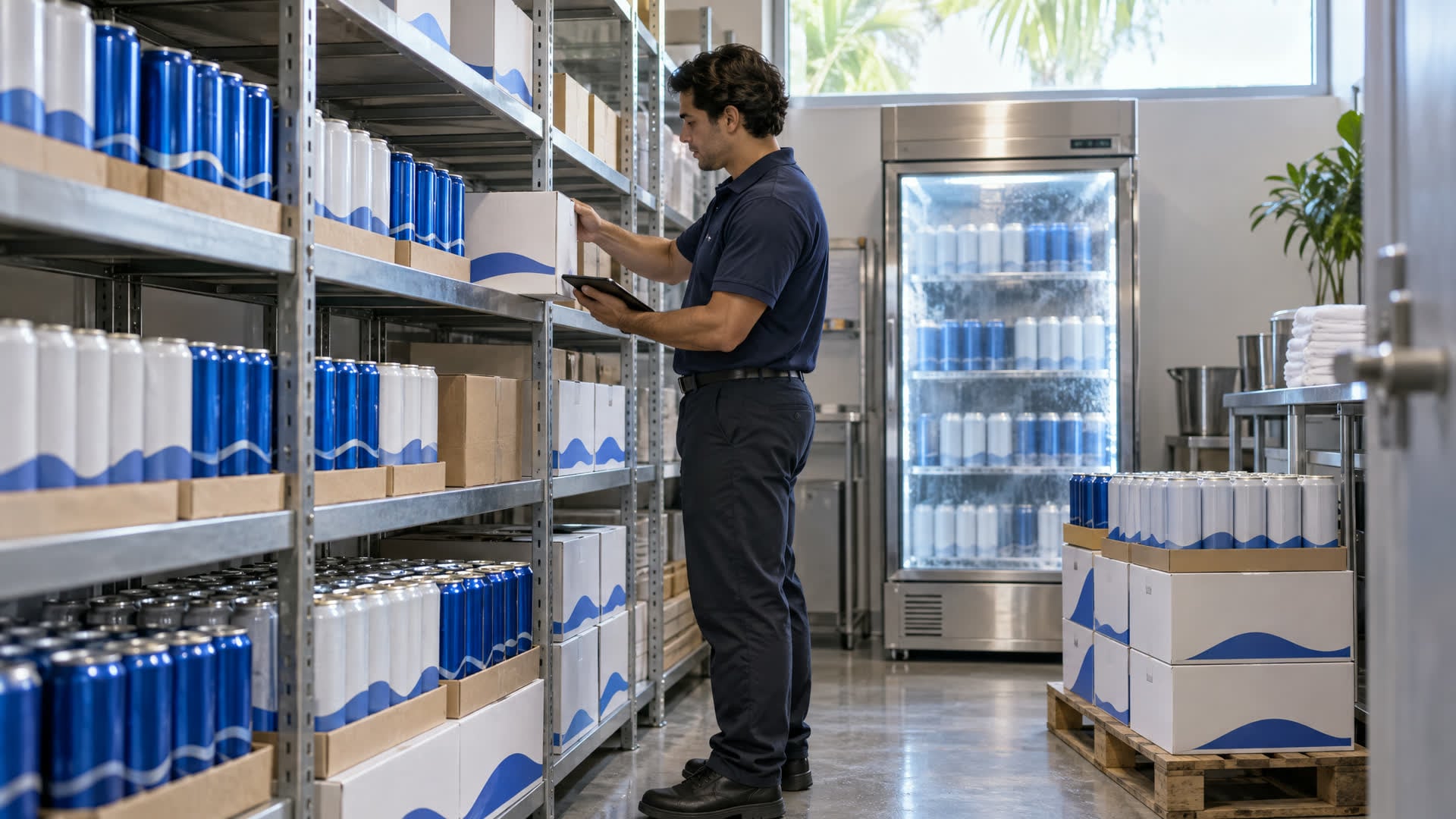
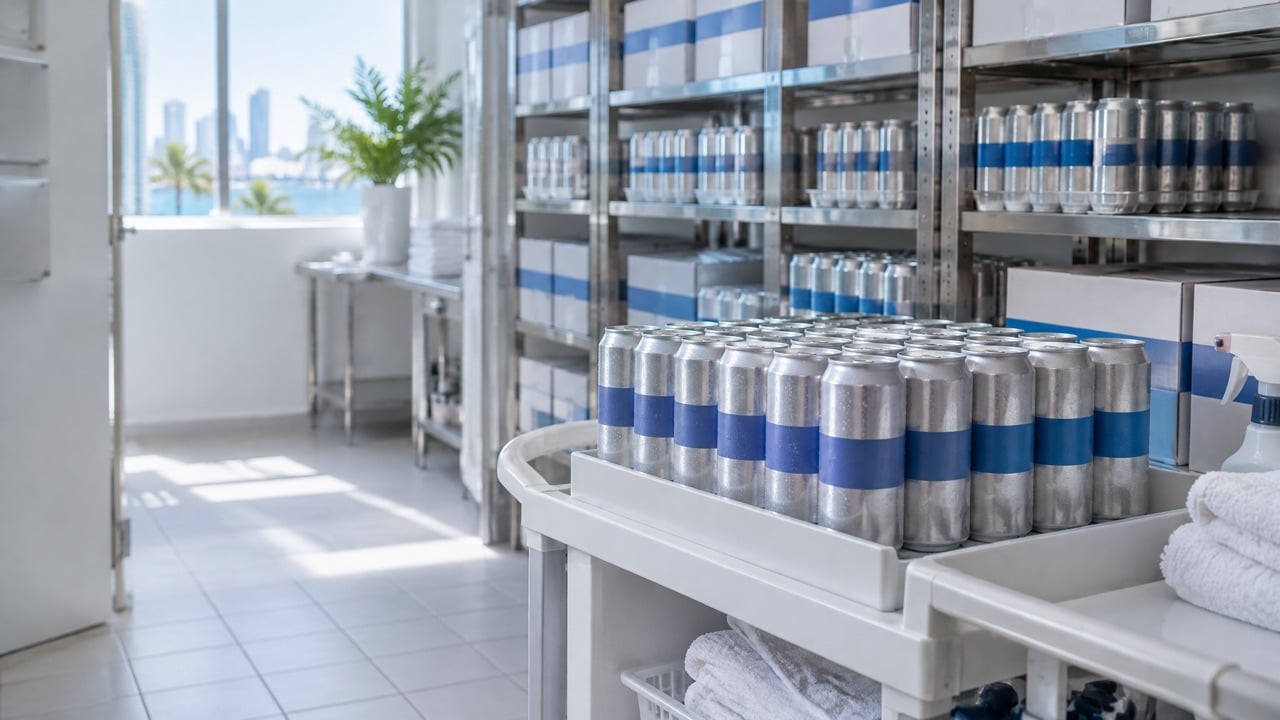
- Keep cases off the floor on shelving or pallets.
- Store in a cool, dry area away from direct sun and heat sources.
- Rotate first in, first out so older stock goes out first.
- Chill only what you need for the next day or event, not the whole par.
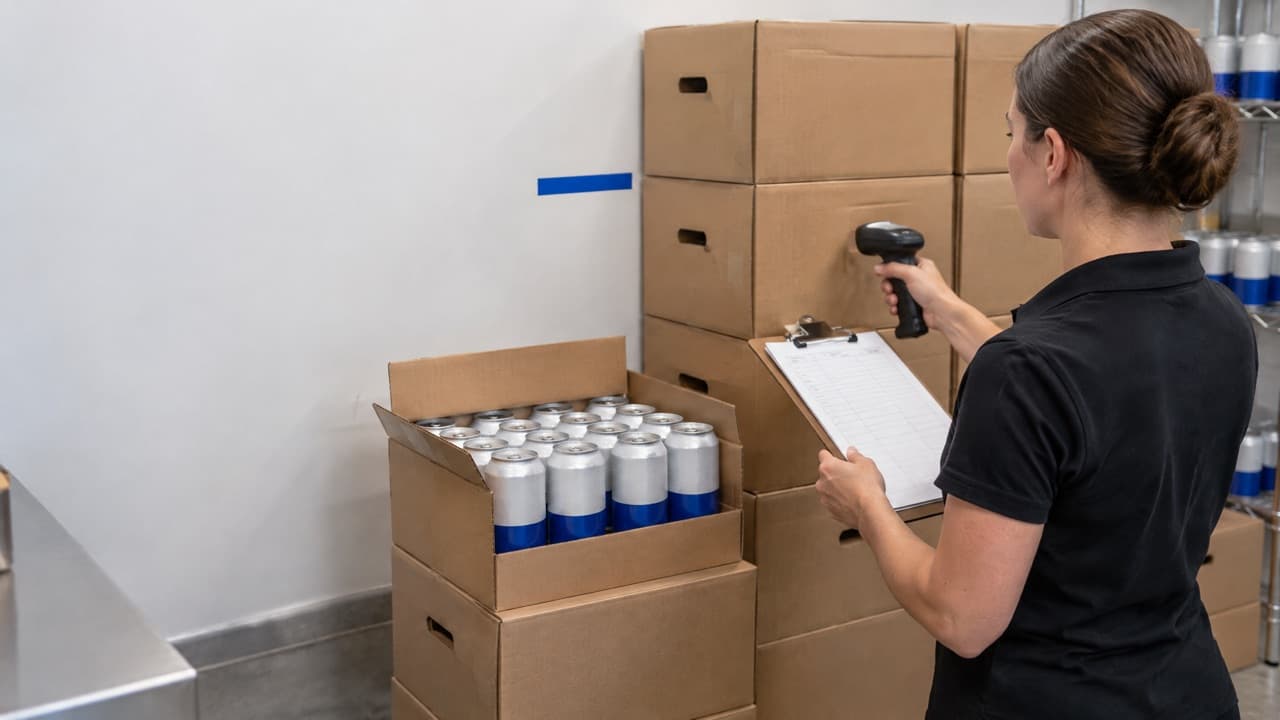
- Label shelves with the par and reorder numbers so anyone can see when to call purchasing.
Aluminum cans stack and ship well, and they do not break like glass, which makes storeroom handling simpler.
How do you set par for event spikes?
Events break normal par math. Treat them as separate orders or as a planned bump to safety stock.
- Known annual events: place a dedicated order sized to the event, timed to arrive a week early.
- Recurring weekly events: fold them into average daily use.
- One-off large events: if you can confirm the date at least a month ahead, order separately so daily par stays clean.
For a first special order, remember the minimum is 21 cases, or 504 cans. Label print starts at 21 cases and digital print starts at 100 cases.
What are the signs your par levels are wrong?
Par levels drift as your business changes. Watch for these signals and adjust before they turn into stockouts or extra pallets.
- Emergency orders more than once a quarter: par or safety stock is too low, or lead time is longer than you think.
- Cases older than two months in the storeroom: par is too high for that outlet.
- Outlets borrowing from each other every week: outlet pars do not match real use.
- Staff chilling everything on hand: there is no clear daily chill quantity.
- Purchasing ordering by feel: the reorder point is not visible or not trusted.
How should par levels change by season?
Few operations use the same amount of water every month. A resort in July, a golf club in the dry season, and a marina on holiday weekends all look very different from their quiet months. Instead of one par all year, set two or three seasonal pars.
- Peak season par: based on the busiest four weeks of last year, with the higher safety stock.
- Shoulder season par: the months between peak and low.
- Low season par: a lean number so cash is not tied up in cases.
Change par about one full lead time before the season turns. If your end-to-end lead time is about 23 days, raise par three to four weeks before peak season starts, not the week it starts.
How do you track use without adding work?
You do not need new software to run par levels well. Start with what your team already does.
- Count once a week, same day, same person. Consistency beats precision.
- Record cases, not cans, to keep counts fast.
- Use your point of sale or amenity logs where water is sold or charged.
- Keep a simple shared spreadsheet with outlet, count, par, and reorder point.
- Review the trend monthly and change par only when the pattern holds for several weeks.
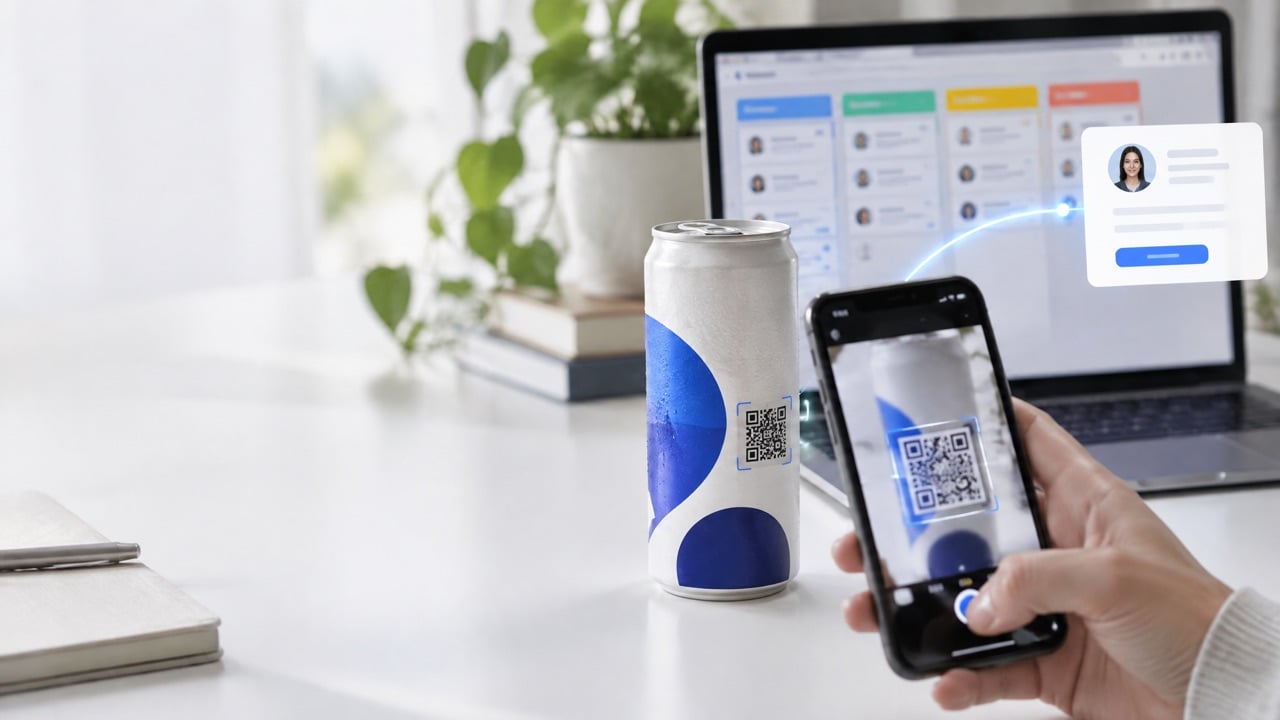
Once the numbers are stable, some teams connect counts to their purchasing system, but a spreadsheet is enough to start.
The one-page par sheet every storeroom should have
Print this and tape it to the storeroom door.
- Outlet name and can size
- Average weekly use in cases
- Par level in cases
- Reorder point in cases
- Standard order quantity
- Lead time in days
- Who counts and on which day
- Who approves the order
Update it after every quarter or every major change in occupancy, membership, or event volume.
Frequently asked questions
What is the difference between a par level and a reorder point?
Par level is how much stock you want on hand after a delivery. The reorder point is the lower level that triggers the next order so new cans arrive before stock runs out.
How do I calculate safety stock for canned water?
Multiply average daily use by the number of cushion days you need. Stable operations use about 3 to 4 days, seasonal operations 5 to 7 days in peak months, and event venues size it to their largest regular event.
What lead time should I use for branded can reorders?
Production for a reorder runs about 2 to 3 weeks at We Can It. Add transit and receiving, and start with 21 to 25 days end to end, then adjust after your first reorders.
Should par levels be set by outlet or by property?
Set par by outlet first, since rooms, pool, and gym use water differently, then roll it up to a central reorder point that purchasing watches.
How often should par levels be reviewed?
Quarterly, and after any big change such as a new season, a new outlet, or a large recurring event.
What is the minimum order for branded canned water?
21 cases, which is 504 cans at 24 cans per case.
Get a quote to set up your branded water reorder plan
Share your weekly use and number of outlets, and a product advisor will help you pick an order size and cadence that fits your storeroom.