How Hotel GMs Budget Branded Water per Occupied Room
Every budget season, the same conversation happens in hotel finance meetings. Marketing wants a better guest experience. Operations wants fewer stockouts. Finance wants to know exactly what it will cost next year and why.
Every budget season, the same conversation happens in hotel finance meetings. Marketing wants a better guest experience. Operations wants fewer stockouts. Finance wants to know exactly what it will cost next year and why. Branded water sits right in the middle of that conversation, and too often it gets budgeted as a round number that nobody can explain.
This guide is for hotel general managers, directors of finance, and rooms division leaders who want to budget branded water the same way they budget other amenities: per occupied room, tied to the occupancy forecast, and easy to defend in a review. It walks through the math with a worked example you can adapt to your property.
What is cost per occupied room?
Cost per occupied room, often shortened to CPOR, is the cost of a product or service divided by the number of rooms sold in the same period. Hotels use it for amenities, laundry, guest supplies, and many other rooms expenses because it scales with business. When occupancy rises, the cost rises with it. When occupancy falls, so does the cost.
Budgeting branded water as a CPOR line means the number moves with your forecast instead of being a fixed guess.
How do you calculate branded water cost per occupied room?
Start from your room standard and your real cost per can.
Water CPOR = (cans per occupied room night x cost per can) + other water outlets allocated per occupied room
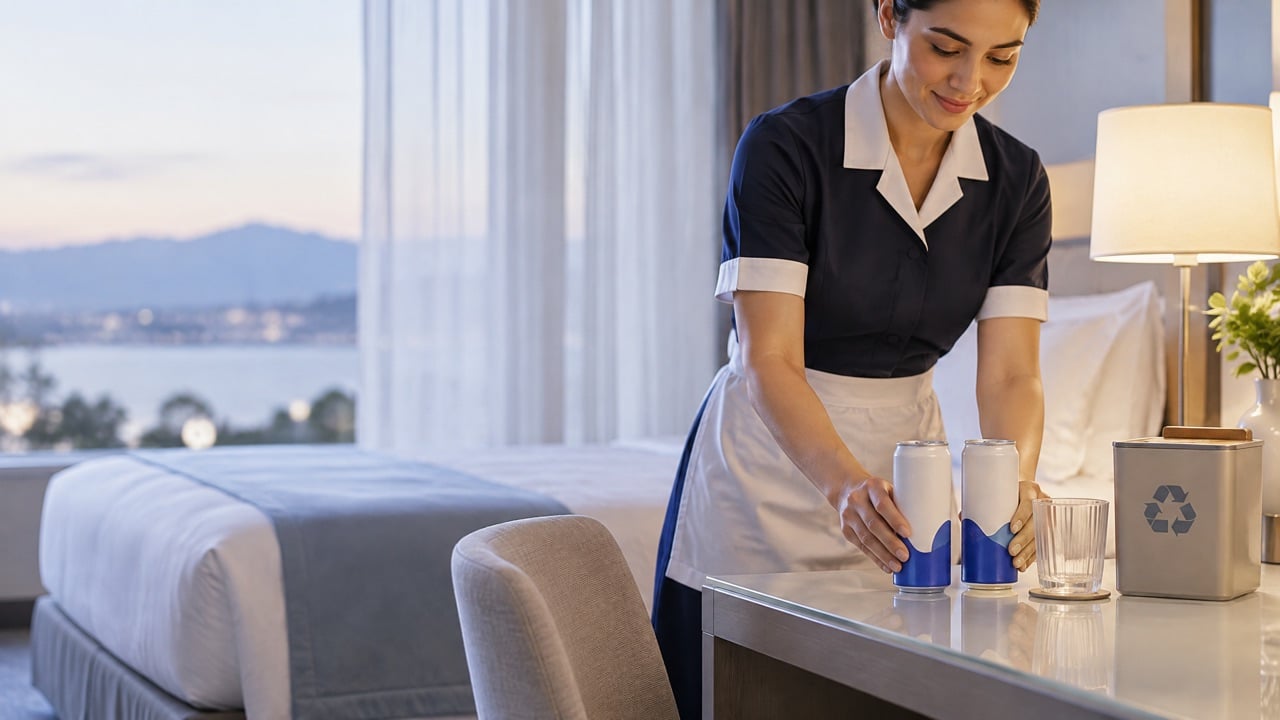
- Cans per occupied room night: your in-room standard, for example two cans on arrival and one replenished per stayover night.
- Cost per can: your delivered cost from a real quote, including production and freight. Do not use an estimate from the internet.
- Other outlets: lobby, gym, pool, and departure water, allocated across occupied rooms.
A worked example
Here is how a 220-room full-service hotel might build the number. The cost per can is a placeholder called C, because your real price depends on your order and should come from a quote.
- Average length of stay: 2.5 nights
- In-room standard: 2 cans on arrival, 1 per stayover night
- Cans per stay: 2 + 1.5 = 3.5 cans
- Cans per occupied room night: 3.5 / 2.5 = 1.4 cans
- Other outlets: lobby, gym, pool, and departure use about 0.6 cans per occupied room night on average
- Total: 2.0 cans per occupied room night
So water CPOR = 2.0 x C. If your forecast is 60,000 occupied room nights next year, you need about 120,000 cans, and your annual water budget is 120,000 x C.
How does the occupancy forecast drive the order plan?
Once you know cans per occupied room night, the forecast tells you when to order.
- Take the monthly occupied room night forecast.
- Multiply by cans per occupied room night to get monthly cans.
- Convert to cases at 24 cans per case.
- Set order dates so each order arrives before the month it covers, allowing about 2 to 3 weeks of production from artwork approval for any new design, plus delivery.
- Adjust monthly when the forecast changes.
For the example above, a month with 6,000 occupied room nights needs about 12,000 cans, or 500 cases.
Should branded water be a rooms expense or a marketing expense?
Hotels handle this differently, and there is no single right answer. Many put in-room water under rooms guest supplies, lobby and departure water under front office or marketing, and pool and gym water under the outlet that serves it. The important thing is consistency. Pick an allocation, write it down, and use it every year so the numbers are comparable.
How do you justify branded water in a budget review?
Finance leaders respond to clear logic and comparison.
- Compare with what it replaces. If branded cans replace generic bottled water, the relevant number is the difference in CPOR, not the full cost.
- Show the guest benefit with evidence you already collect, such as review mentions or guest satisfaction comments about amenities.
- Show sustainability value if your brand or clients have plastic reduction targets.
- Show control. A CPOR number tied to the forecast is easier to trust than a fixed line.
How can hotels control water cost without hurting the experience?
- Set a clear room standard so housekeeping does not over-place cans.
- Replenish on request for long stays rather than daily by default, if your brand standard allows.
- Charge for additional cans from the minibar or market.
- Order in larger, planned runs rather than small emergency orders.
- Track waste such as damaged or expired stock.
How does the budget change for different hotel types?
The formula is the same everywhere, but the inputs change a lot by property type, and the budget should reflect that.
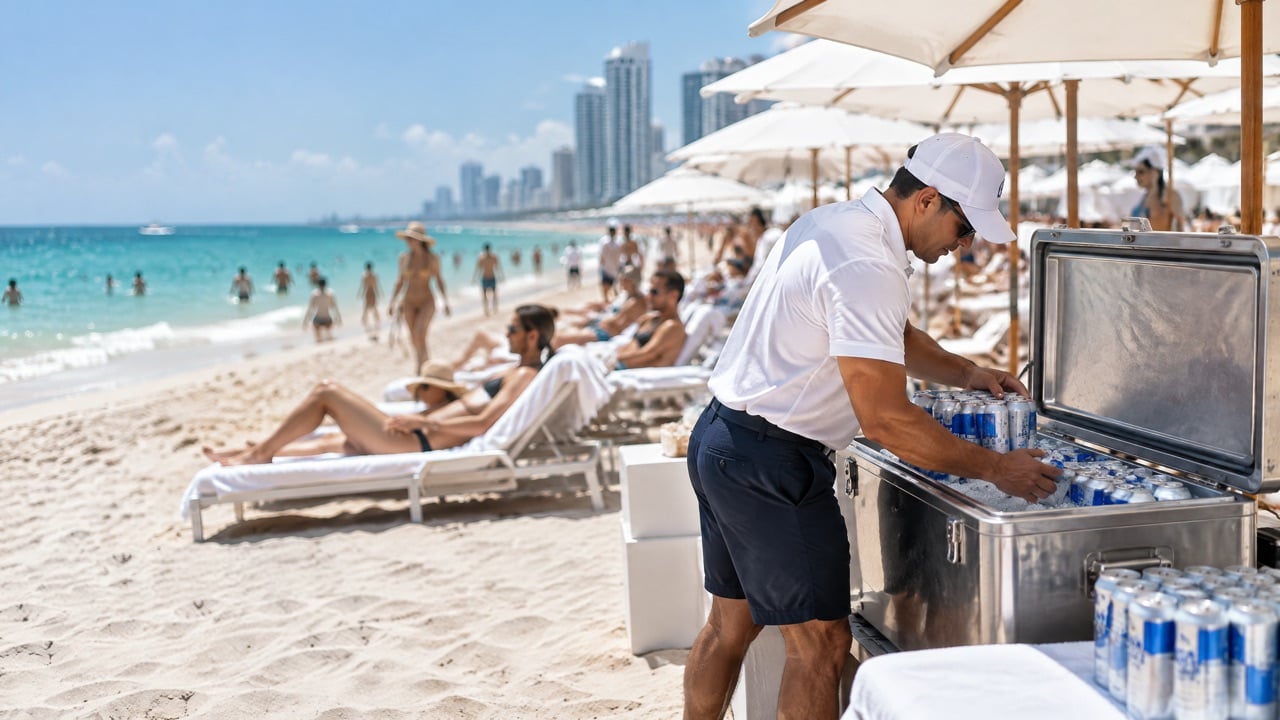
Resorts usually have the highest cans per occupied room night. Guests spend the day at the pool and beach in the heat, stays are longer, and outdoor outlets use far more water than rooms. Budget pool and beach water as a separate line that rises sharply in peak months.
Business hotels tend to have shorter stays and more arrivals per room night, so arrival and departure water matter more. Meeting and event water can be significant, but it is often charged to the group, so keep it separate from the rooms budget.
Extended-stay hotels have long stays and guests who often buy their own supplies. A lower daily standard, with water available on request or in the market, keeps CPOR low without feeling stingy.
Boutique and lifestyle hotels may choose a more generous standard because the branded can is part of the brand experience. In that case, present the water line alongside other brand investments rather than only as a rooms cost.
How do you present the water line to ownership or asset managers?
Owners and asset managers want to see that the cost is controlled and that it supports revenue or reputation. A strong one-page summary includes the CPOR, the annual total at forecast occupancy, the comparison with what it replaces, and one or two guest-facing benefits you can support with your own data. Keep the tone practical. The goal is to show a well-managed amenity, not a marketing wish list.
How often should the water CPOR be reviewed?
Review it monthly against actual usage and quarterly against the budget. If actual cans per occupied room night drift more than about 10 percent from the budget, look for the cause: a change in room standard, a new outlet, seasonal pool use, or a group business mix that drinks more water in meetings.
What order details matter for budgeting?
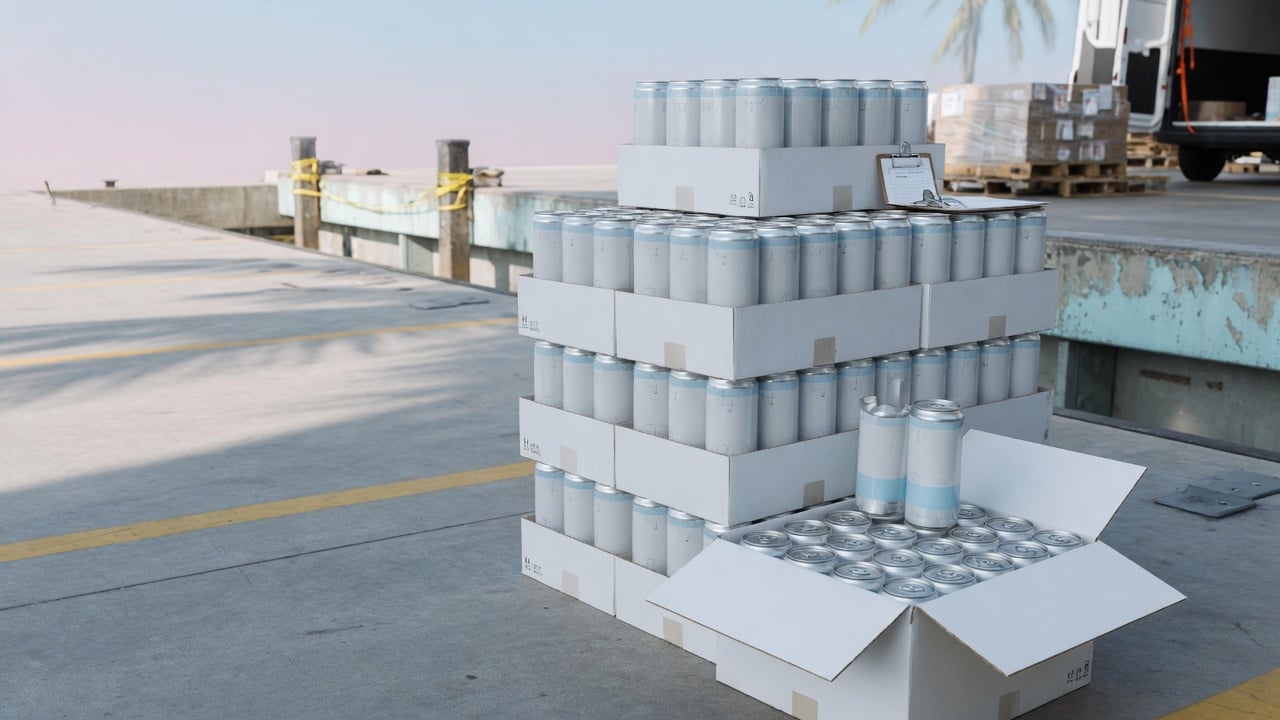
- Minimum order: 21 cases, which is 504 cans.
- Case pack: 24 cans per case.
- Sizes: 12oz Regular, 12oz Sleek, and 16oz.
- Water types: still, sparkling, and alkaline. Sparkling costs a little more per can than still.
- Print: label from 21 cases, digital print from 100 cases.
Real pricing comes from the calculator and a quote. Our cost drivers guide explains what moves the price per can.
Budget season checklist for branded water
- Confirm the room standard and outlet list.
- Get a real delivered cost per can.
- Calculate cans per occupied room night.
- Multiply by the occupied room night forecast.
- Convert to monthly cases and order dates.
- Decide the expense allocation.
- Prepare a one-page justification.
- Review monthly against actuals.
Frequently asked questions
What is CPOR in hotels?
Cost per occupied room is the cost of a product or service divided by rooms sold in the same period. It lets amenity costs scale with occupancy.
How do you budget branded water for a hotel?
Calculate cans per occupied room night from your room standard and other outlets, multiply by your delivered cost per can, then multiply by the occupied room night forecast.
How many cans per occupied room night should a hotel plan?
It depends on your standard. A common in-room approach is two cans on arrival and one per stayover night, plus lobby, gym, pool, and departure use. Measure your own numbers after a month.
Where should branded water sit in the hotel P&L?
Many hotels place in-room water under rooms guest supplies and allocate other outlets to the departments that serve them. Choose one method and keep it consistent.
How can hotels control branded water costs?
Set a clear room standard, replenish long stays on request, charge for extras, order in planned runs, and track waste.
What is the minimum order for branded hotel water?
We Can It starts at 21 cases, which is 504 cans, with about 2 to 3 weeks of production after artwork approval.
Get a quote to build branded water into your hotel budget
Share your room count, occupancy forecast, and room standard, and a product advisor will help you get a real cost per can.