Catering Water Service: Cans vs Bottles vs Dispensers
Every caterer has to decide how water reaches the guest: a dispenser and glassware, bottles in a tub, or cans on the bar. Here is how the three options compare on labor, waste, presentation and cost, so you can pick the right one for each event.
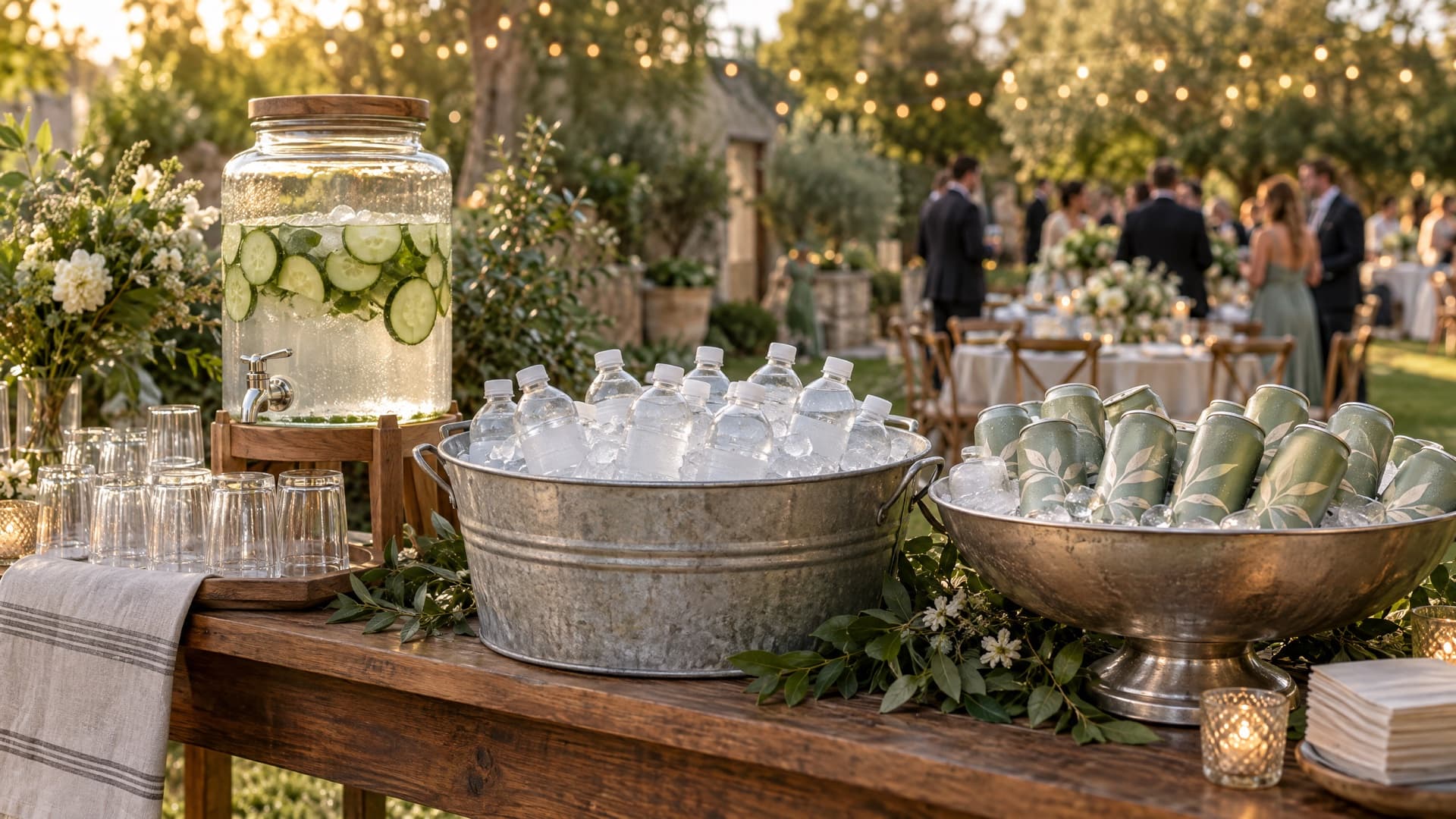
Two hours before a garden reception, the catering lead walks the site. The bar is set, the canapés are plated, and the question that always comes up is still open: do we put out the water dispensers with glasses, fill tubs with bottles, or stock the bar with cans?
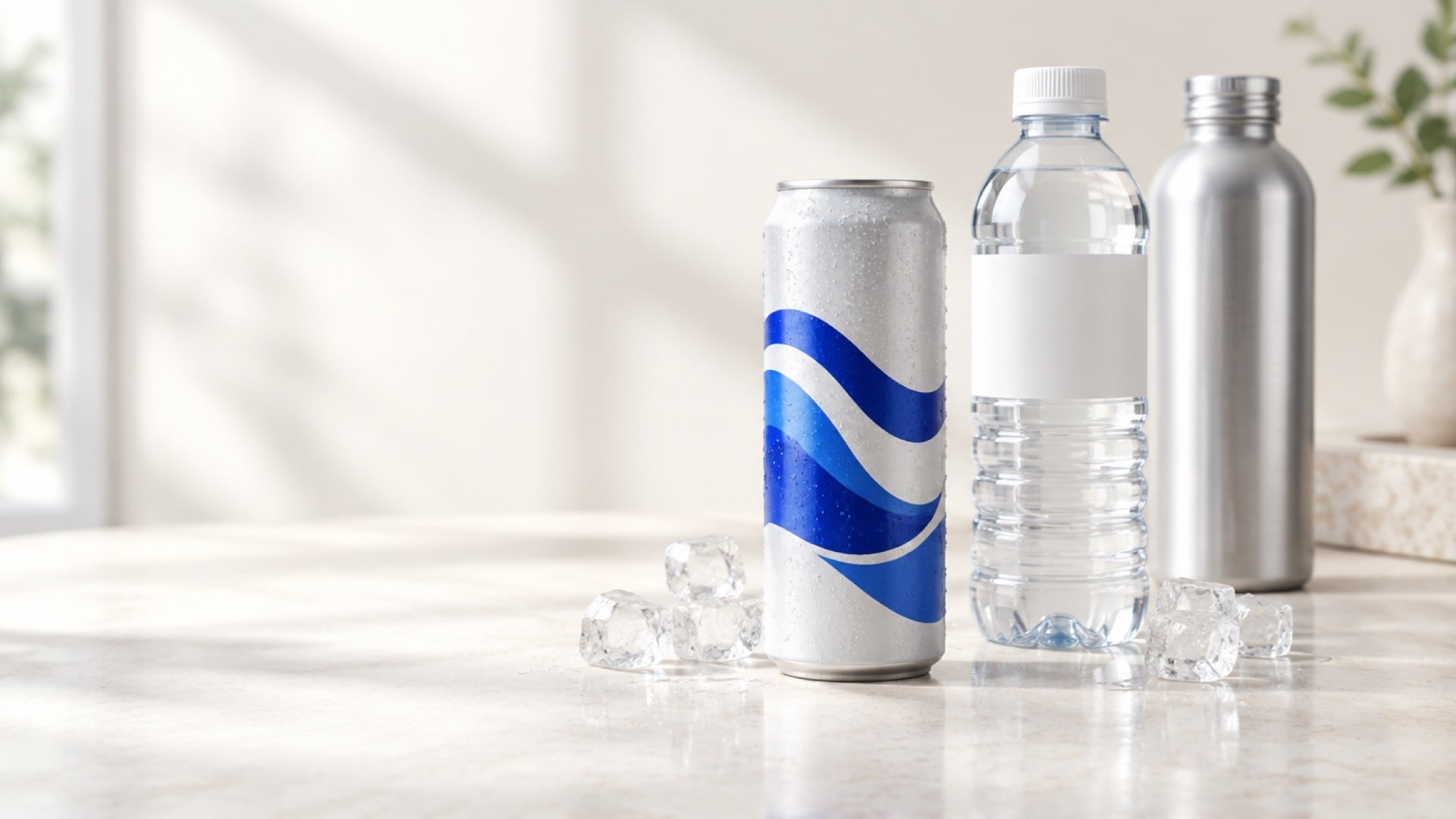
Each answer changes the event. Dispensers need glassware, washing and staff to keep them topped up. Bottles are fast but can look generic and leave a pile of plastic. Cans look designed and chill fast, but need to be ordered ahead. There is no single right choice, but there is a right choice for each event.
This guide compares the three common catering water service options on labor, waste, presentation, cold chain and cost, and shows how to decide event by event.
What is the best way to serve water at a catered event?
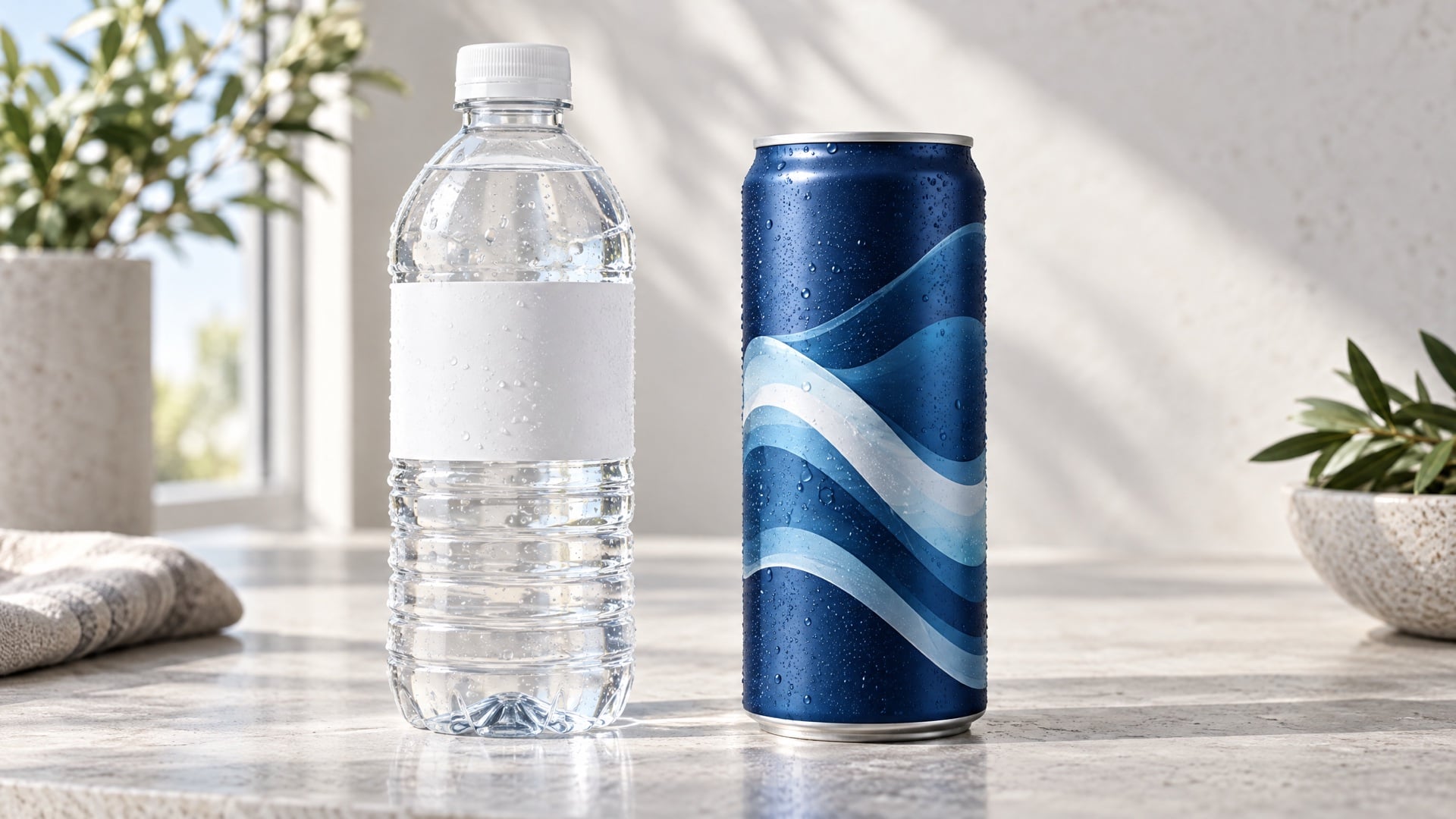
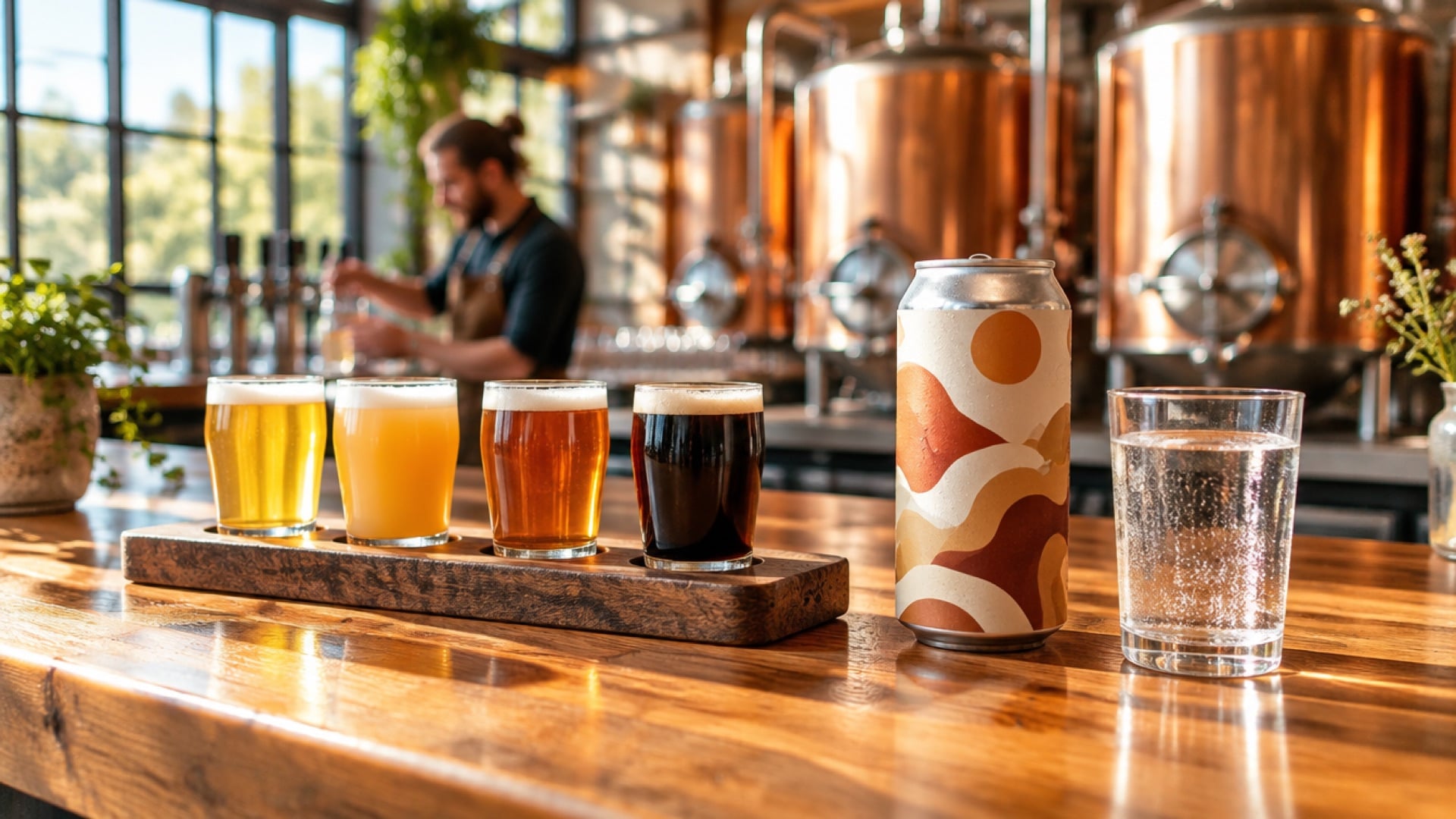
The best way to serve water at a catered event depends on the setting. Dispensers with glassware suit seated, indoor dinners with full dish service. Bottled water is quick for outdoor, high-volume or grab-and-go events. Canned water suits events where presentation, cold service and recycling matter, such as receptions, galas and branded events. Many caterers combine two: glassware at the table and cans at the bar and outdoor stations.
Option 1: Dispensers and glassware
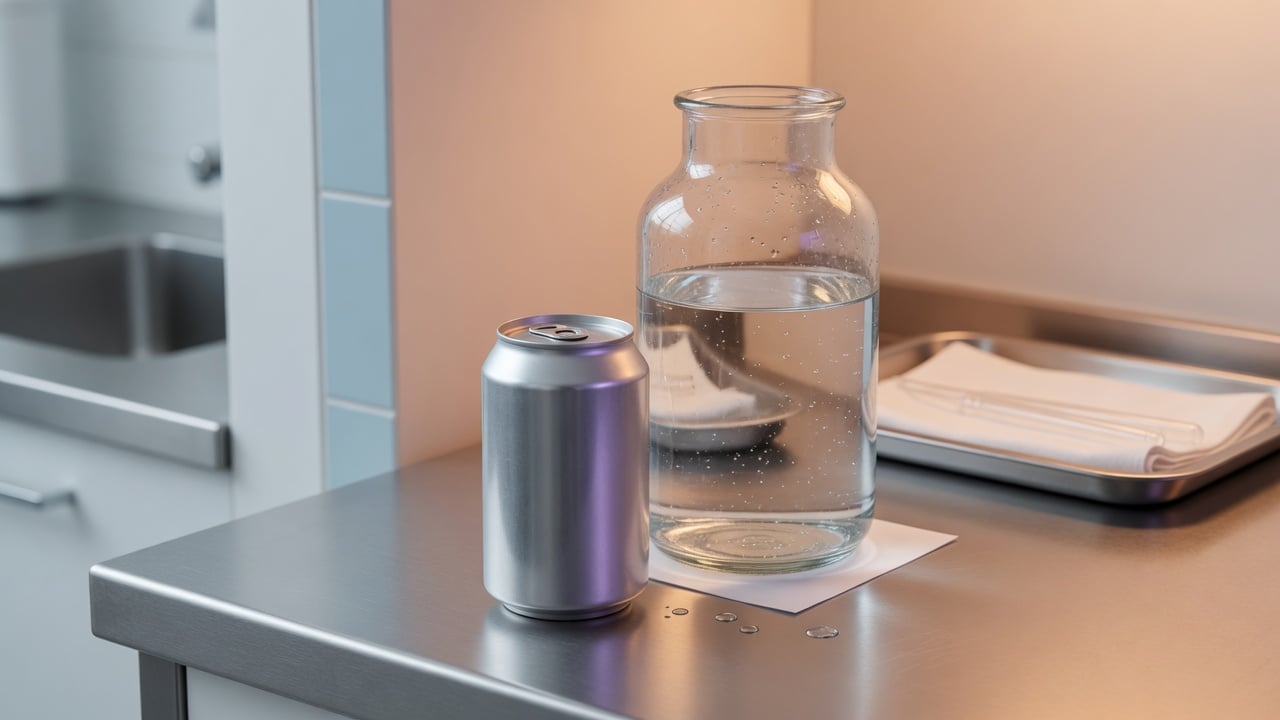
Water in a dispenser, often infused with fruit or herbs, served into glasses.
- Presentation: elegant on a styled station; depends on clean glassware and fresh garnish.
- Labor: high. Staff refill dispensers, collect glasses and run dish service.
- Waste: low packaging waste; more water and energy for washing.
- Cold chain: ice in the dispenser dilutes; outdoor heat warms water quickly.
- Guest experience: guests queue at the station and carry a glass, which is awkward when mingling.
- Best for: seated dinners and indoor events with full dish service.
Option 2: Bottled water
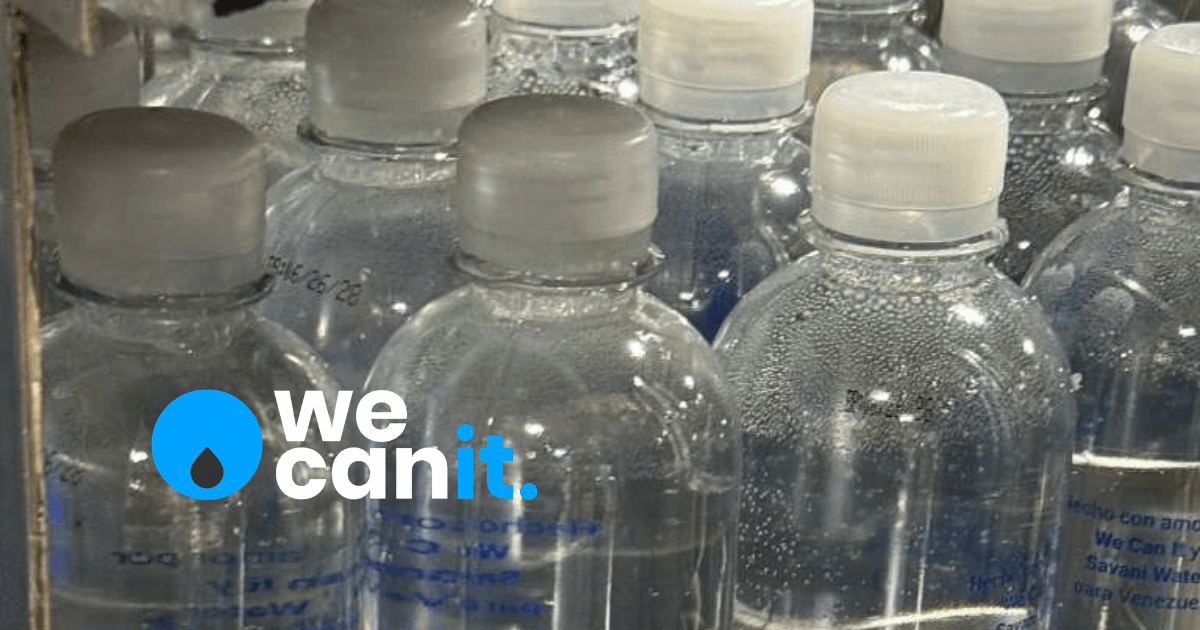
Single-serve plastic bottles in tubs or at the bar.
- Presentation: functional; a generic brand can look out of place at a high-end event.
- Labor: low. Fill tubs, restock as needed.
- Waste: high plastic waste unless a recycling plan is in place.
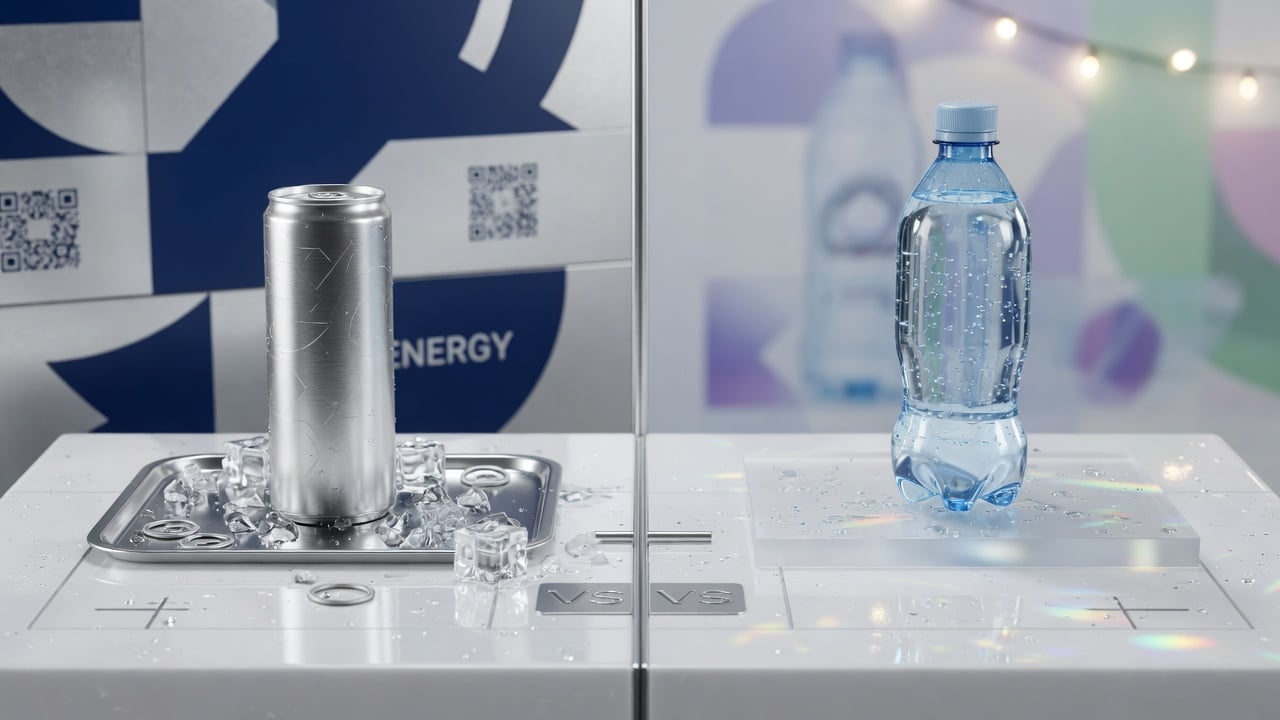
- Cold chain: bottles chill slowly and can feel soft and crushed in ice.
- Guest experience: easy grab-and-go; resealable caps are handy outdoors.
- Best for: large outdoor events, sports, festivals and staff hydration.
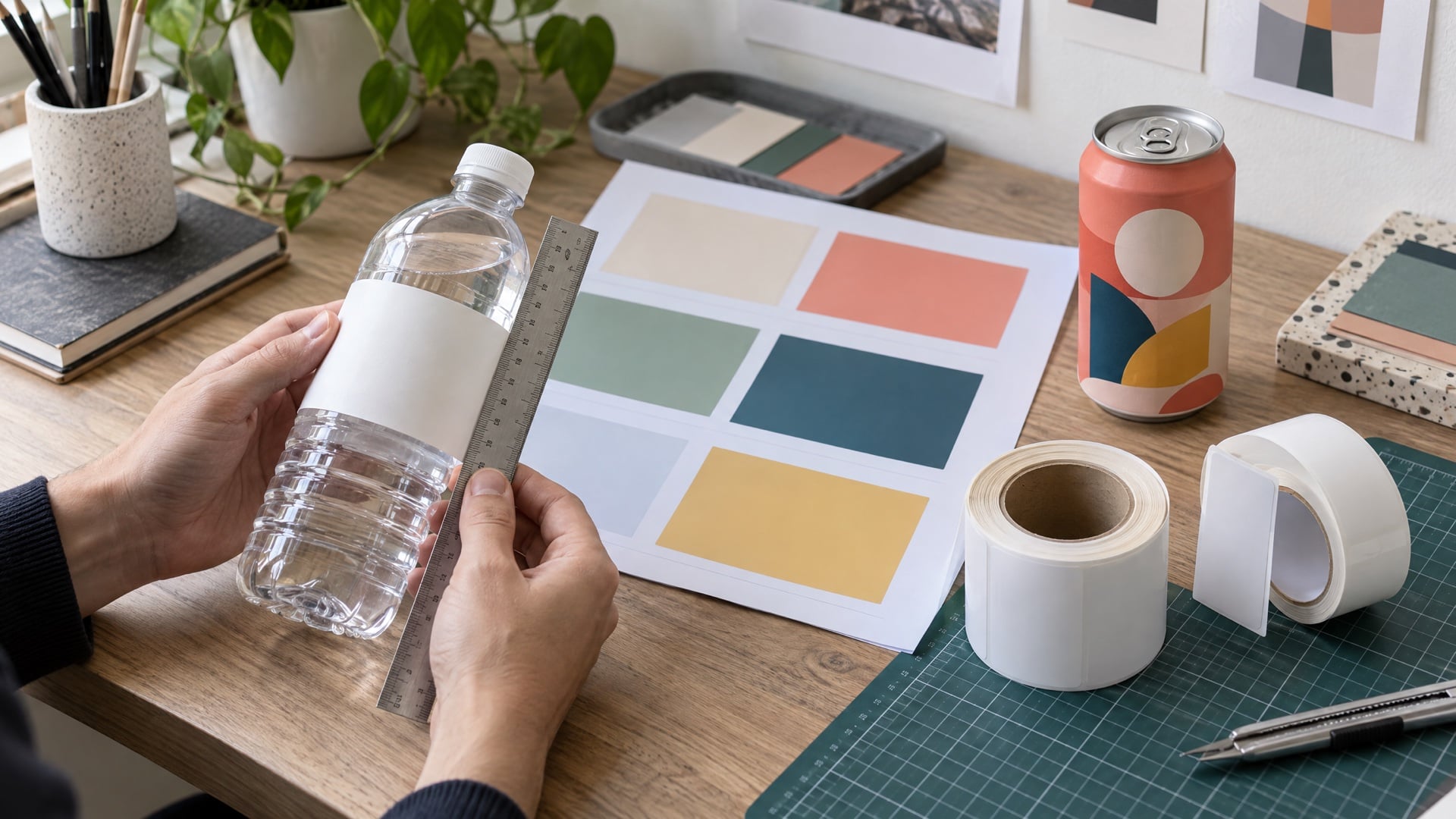
Custom label bottles are an option for branding, but labels can wrinkle or peel in ice. Our guide to custom water bottle labels covers materials that hold up.
Option 3: Canned water
Single-serve aluminum cans, either a stock brand or a custom design.
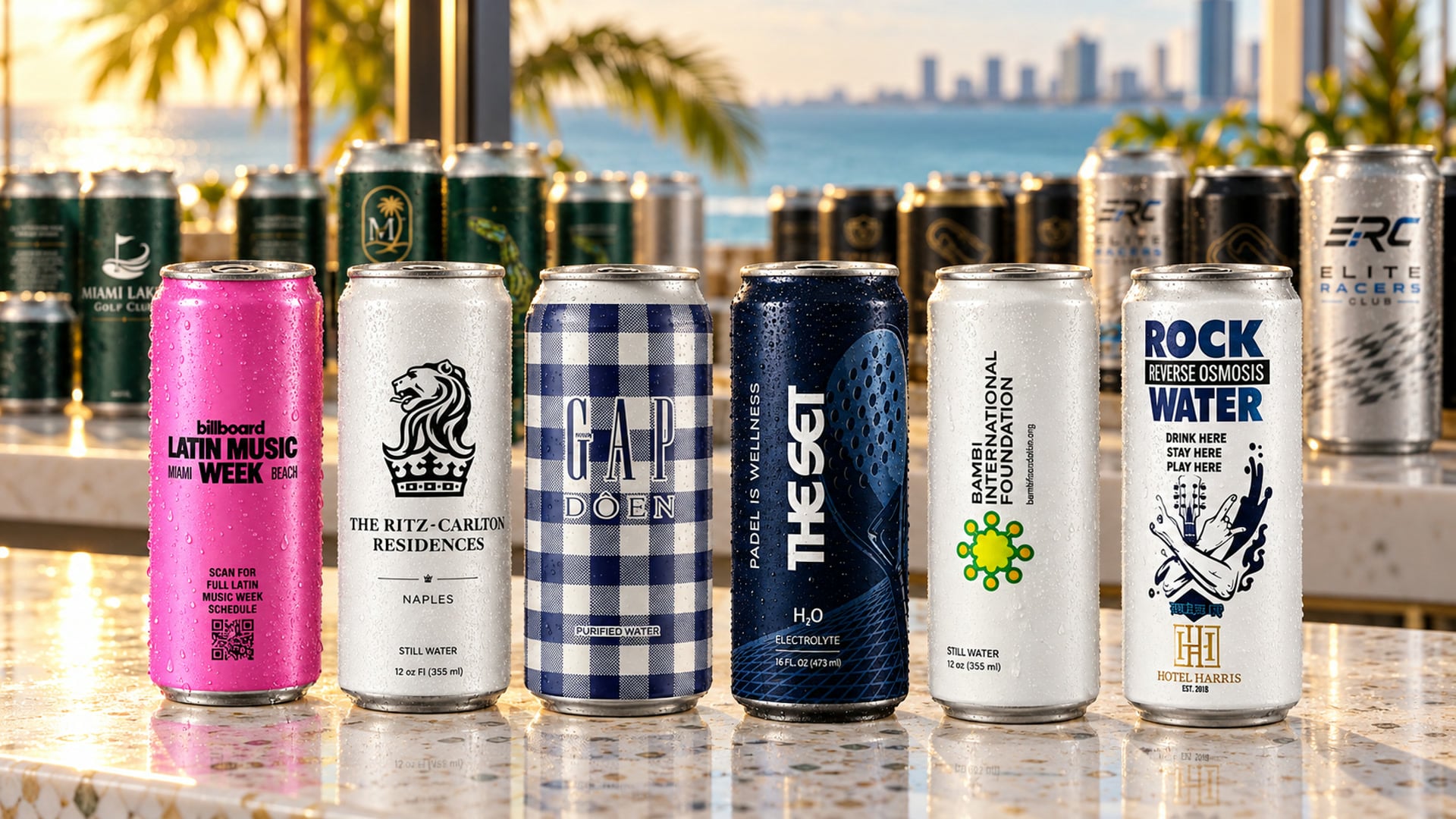
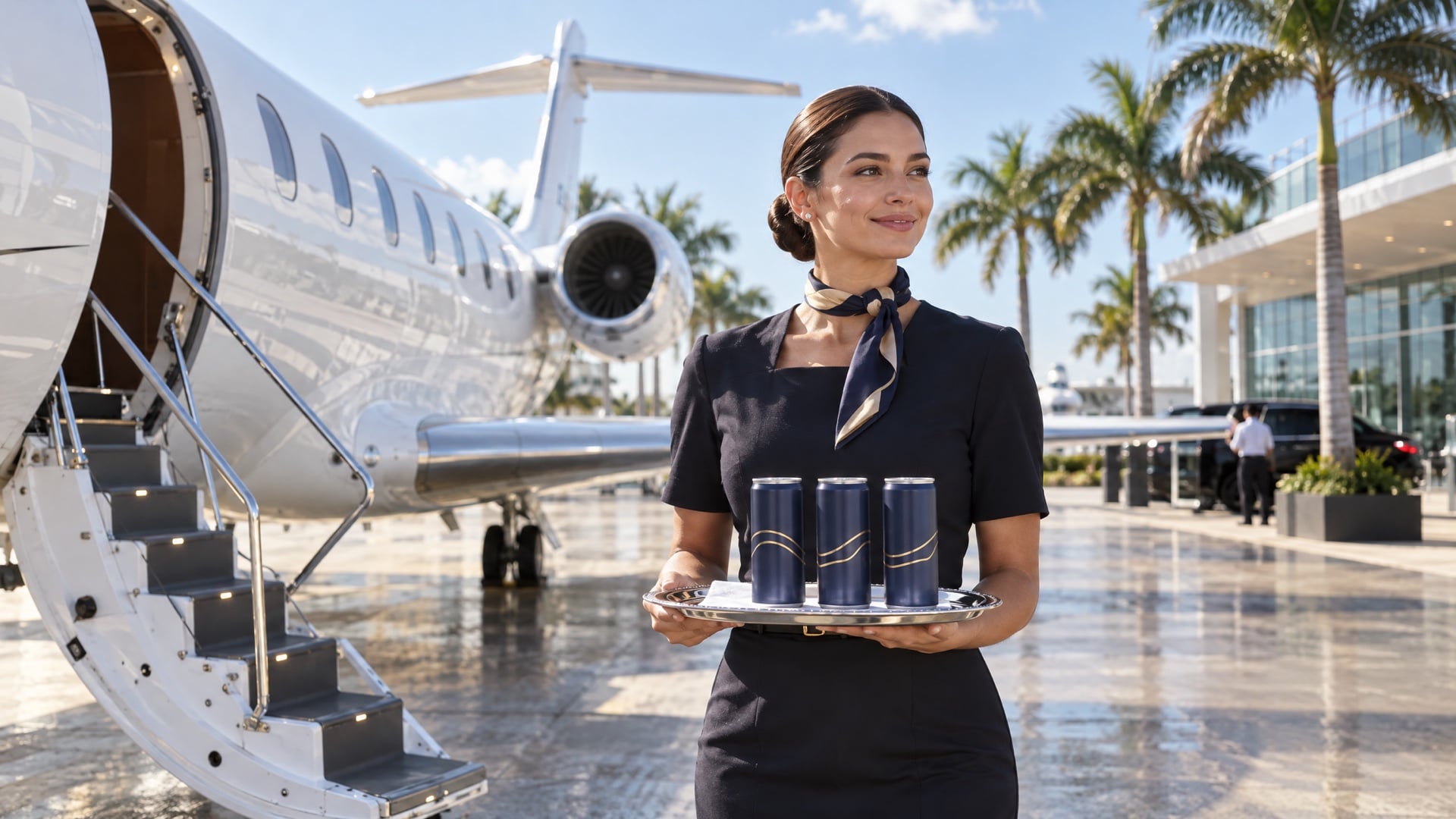
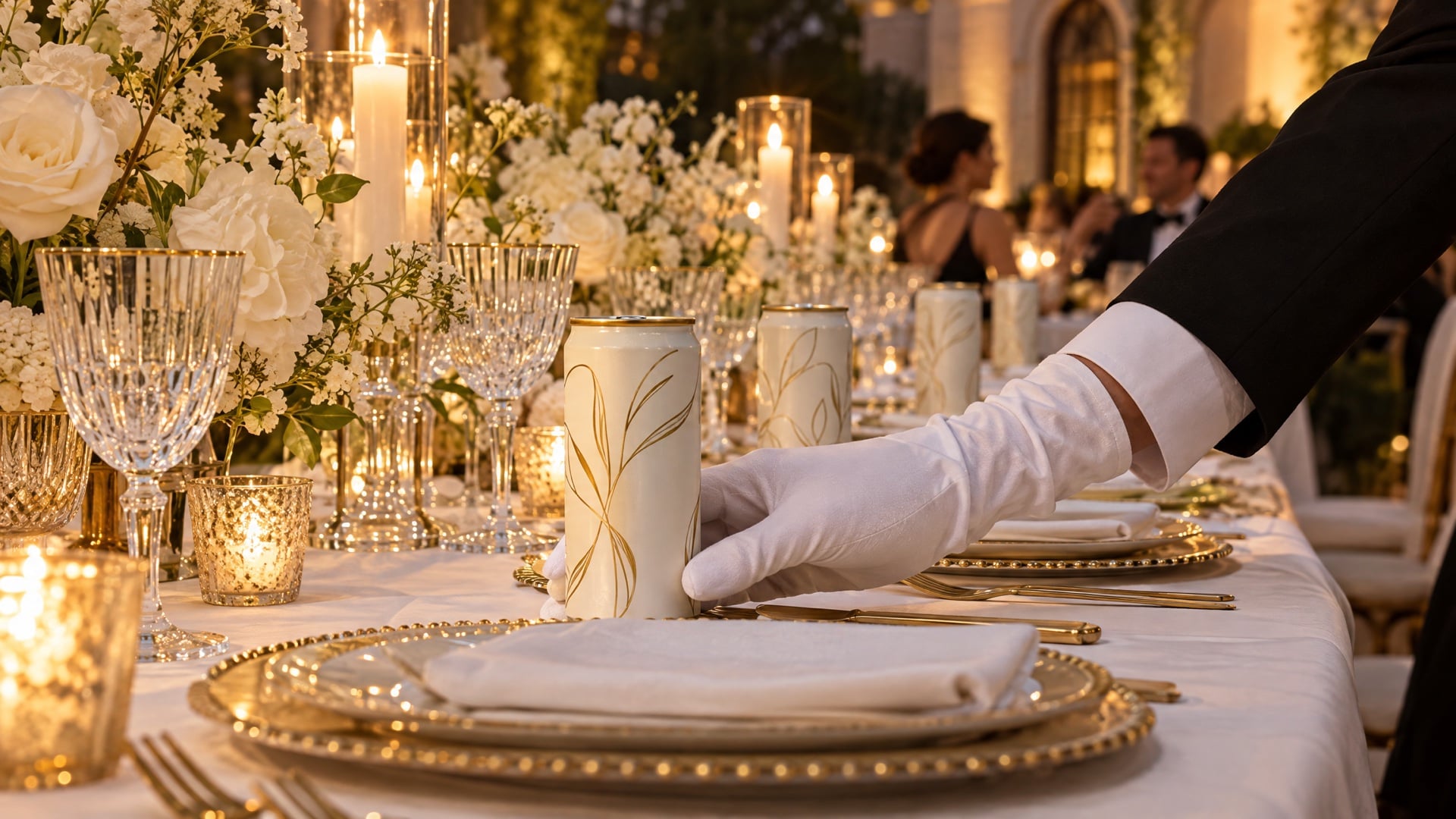
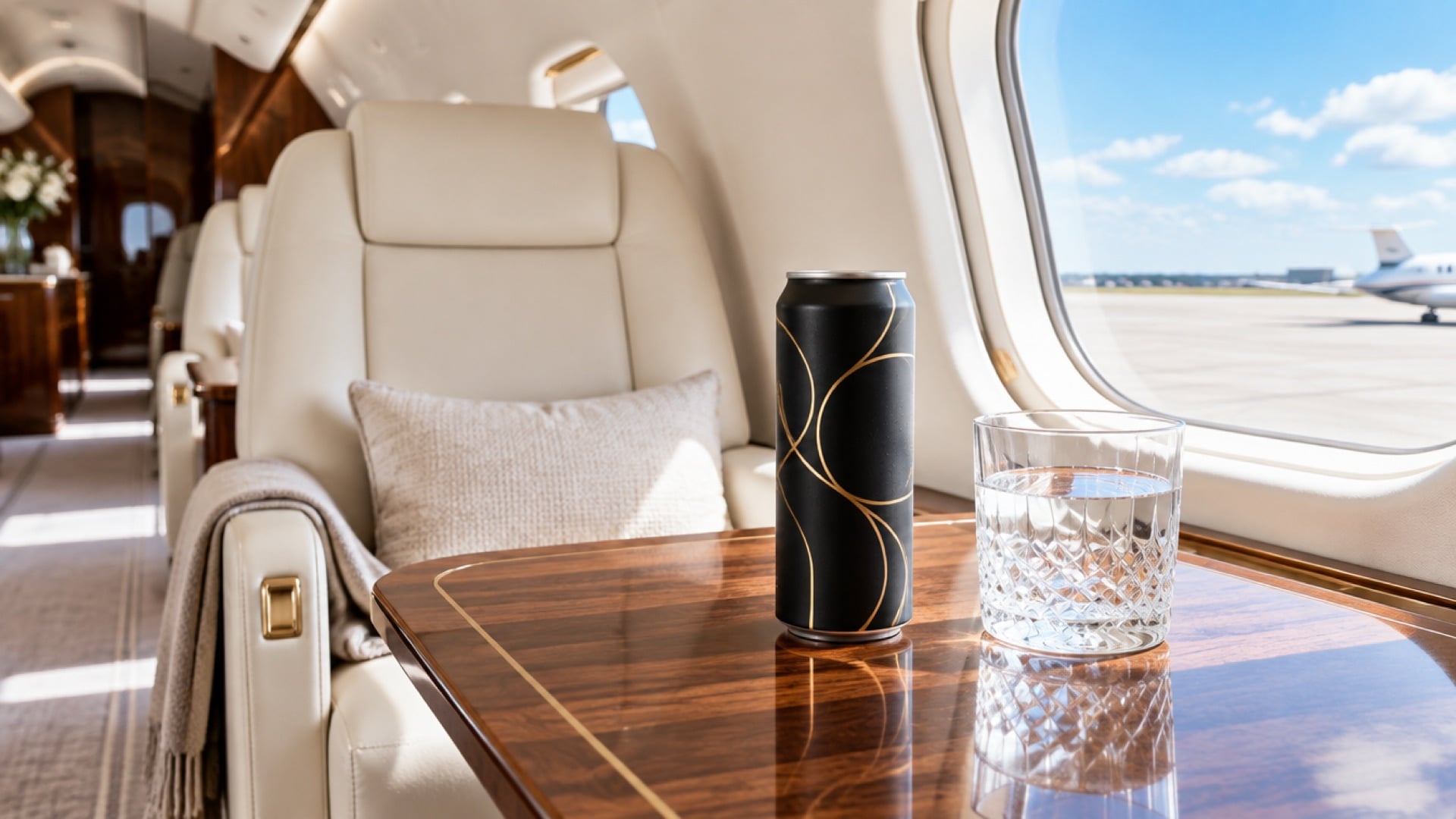
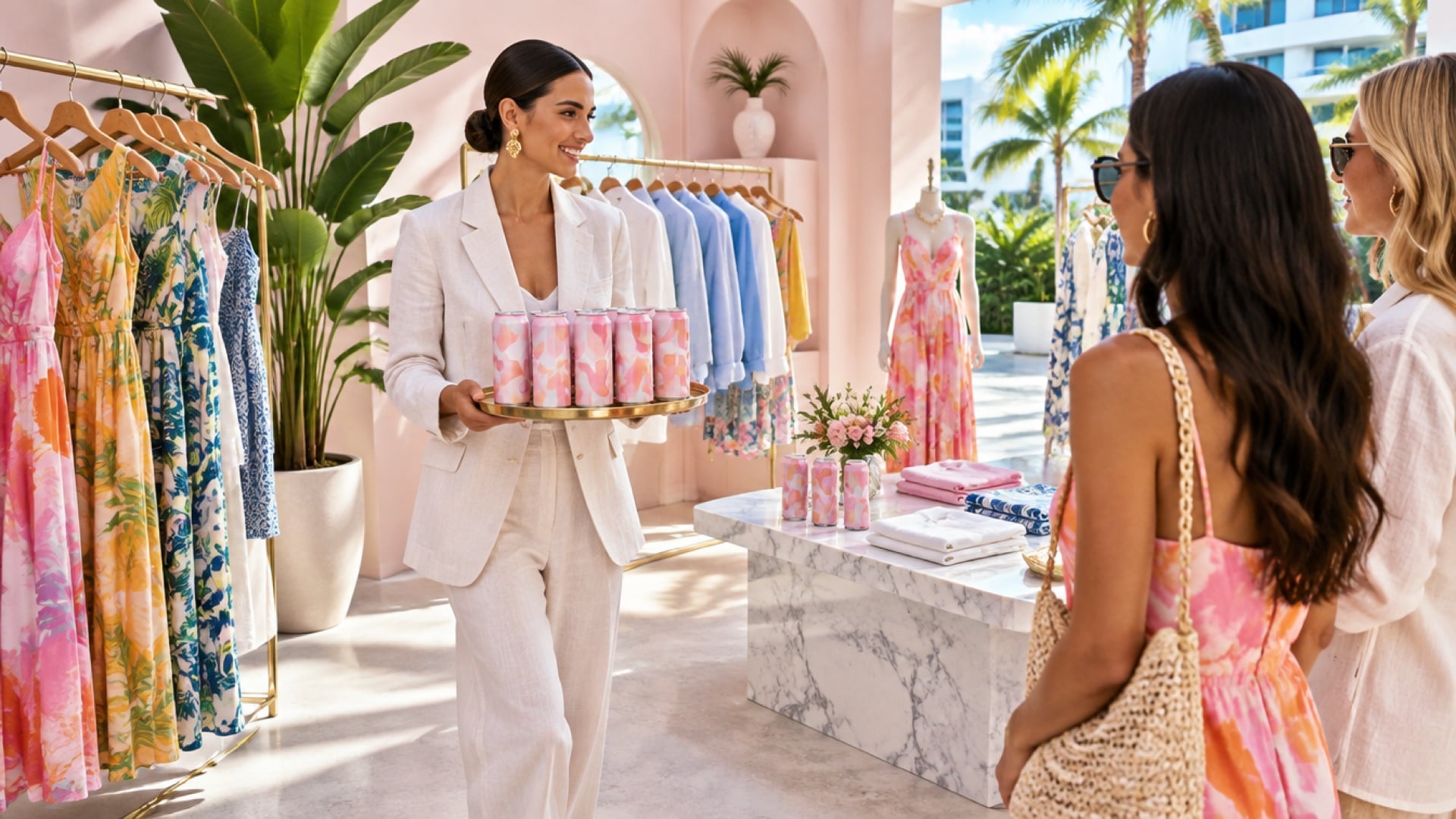
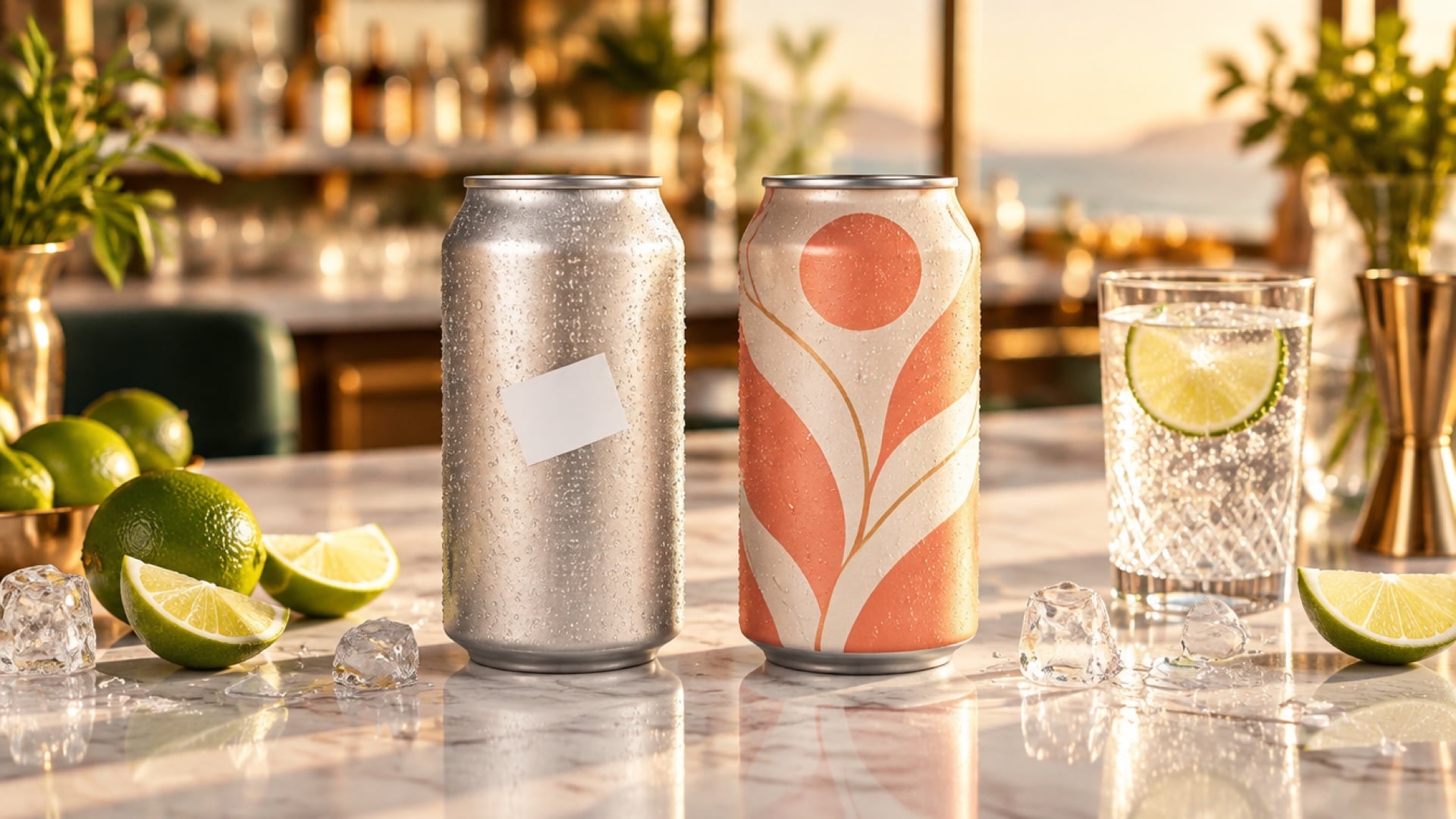
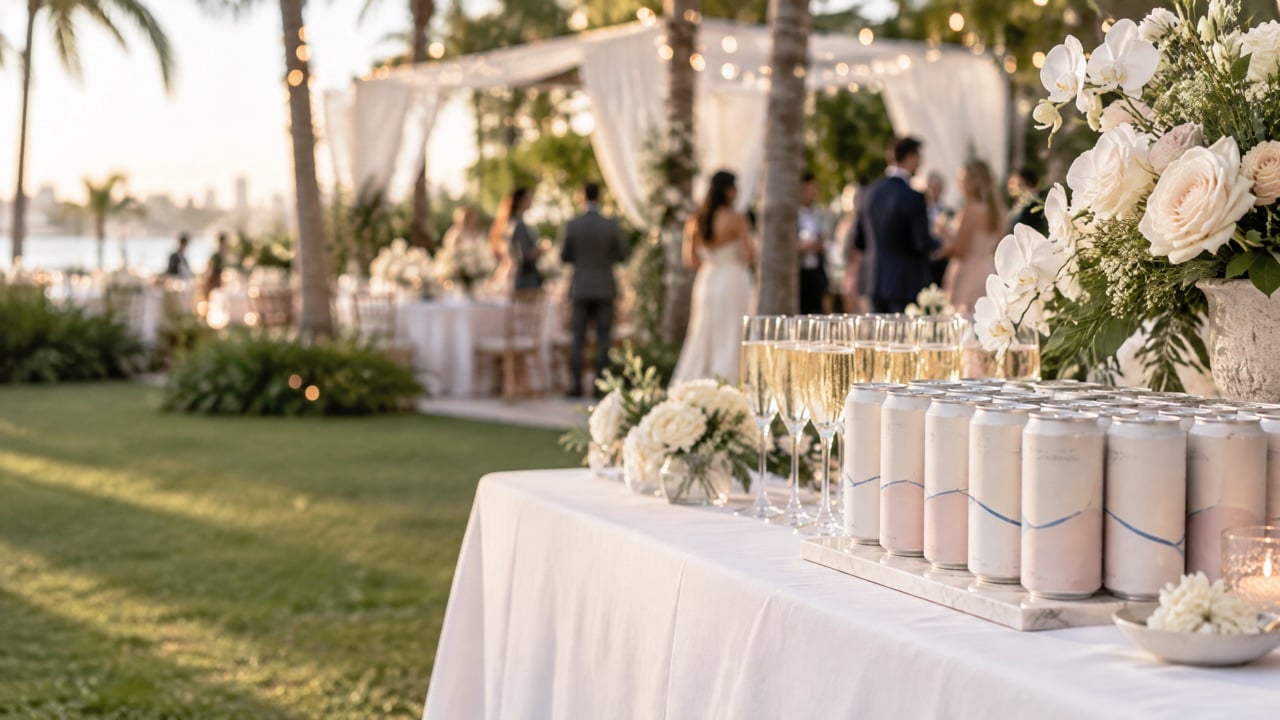
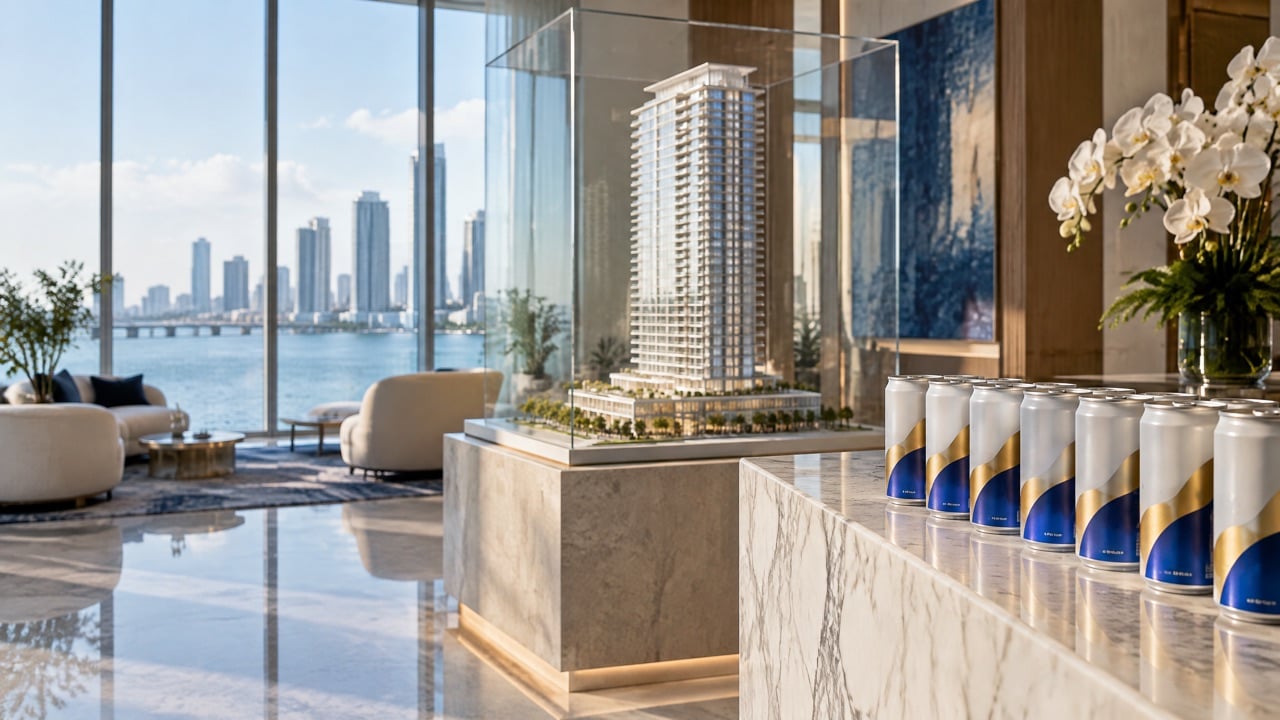
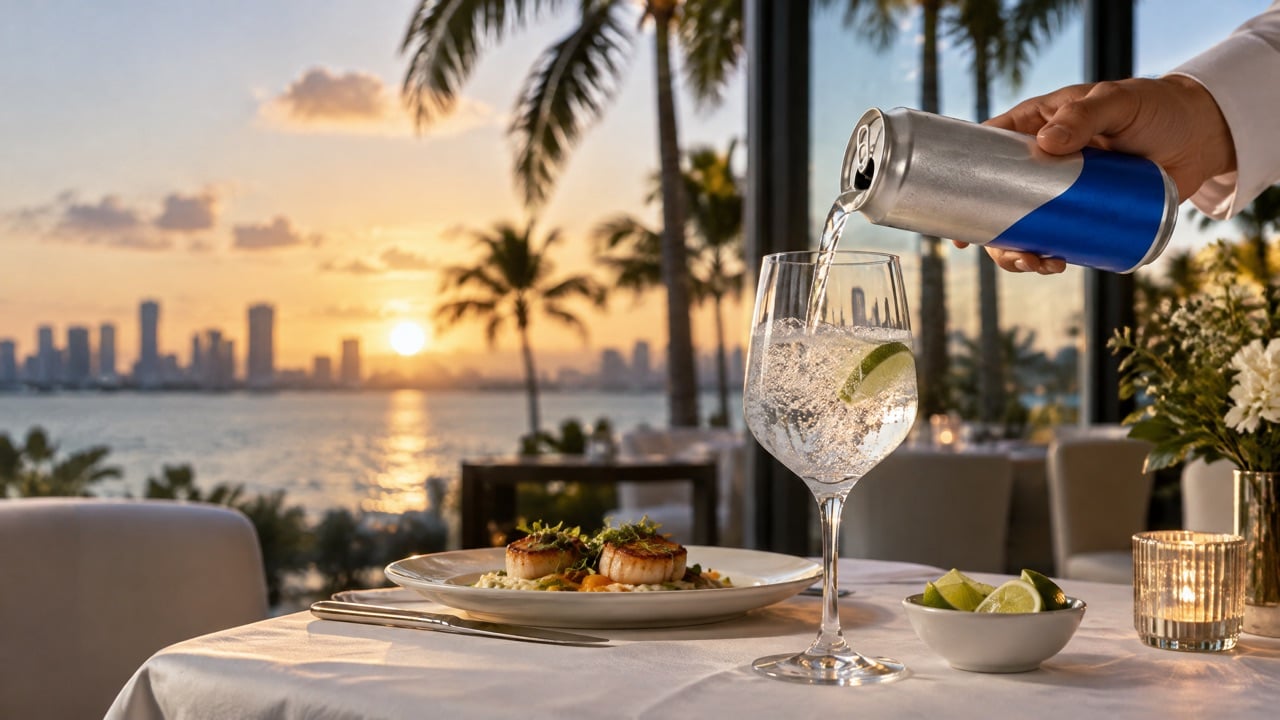
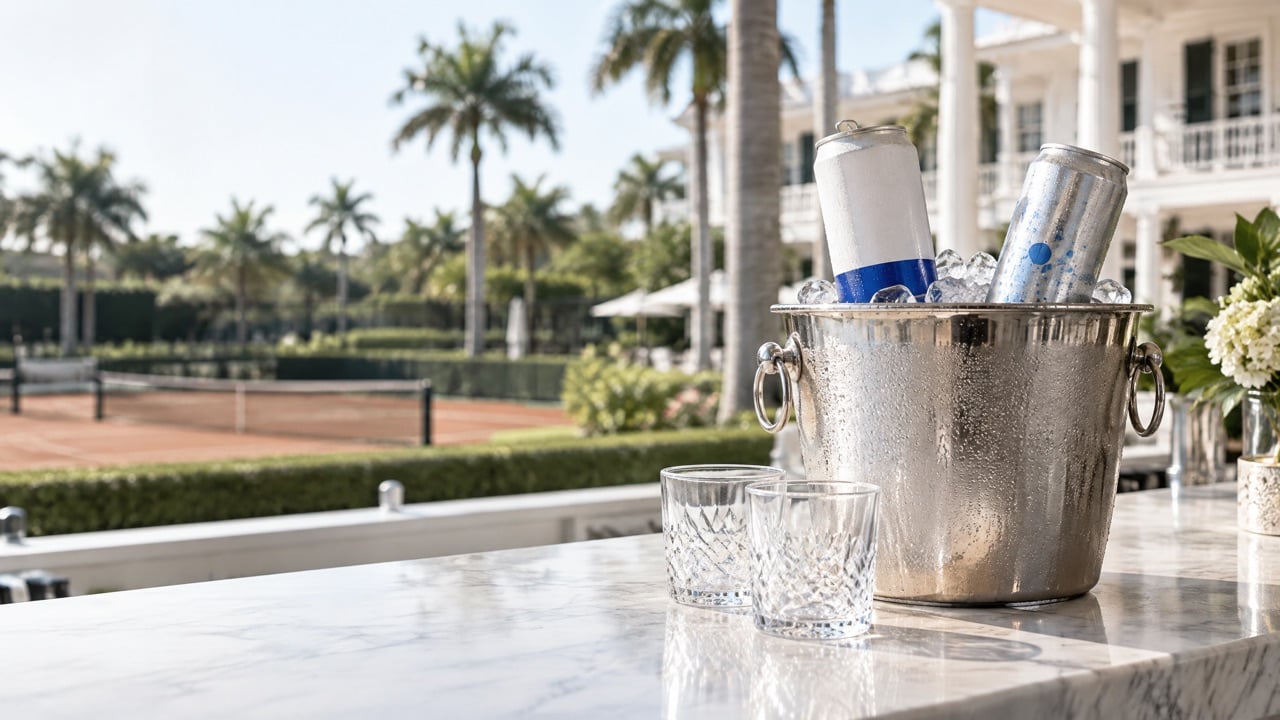
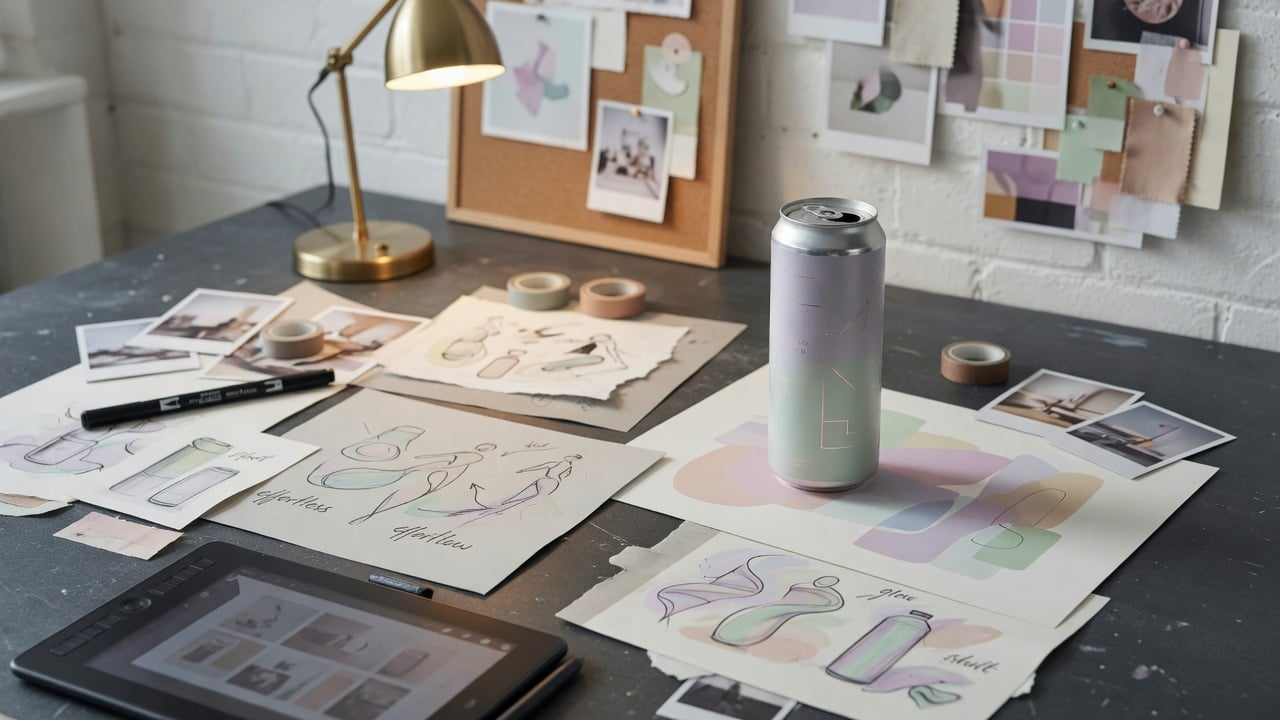
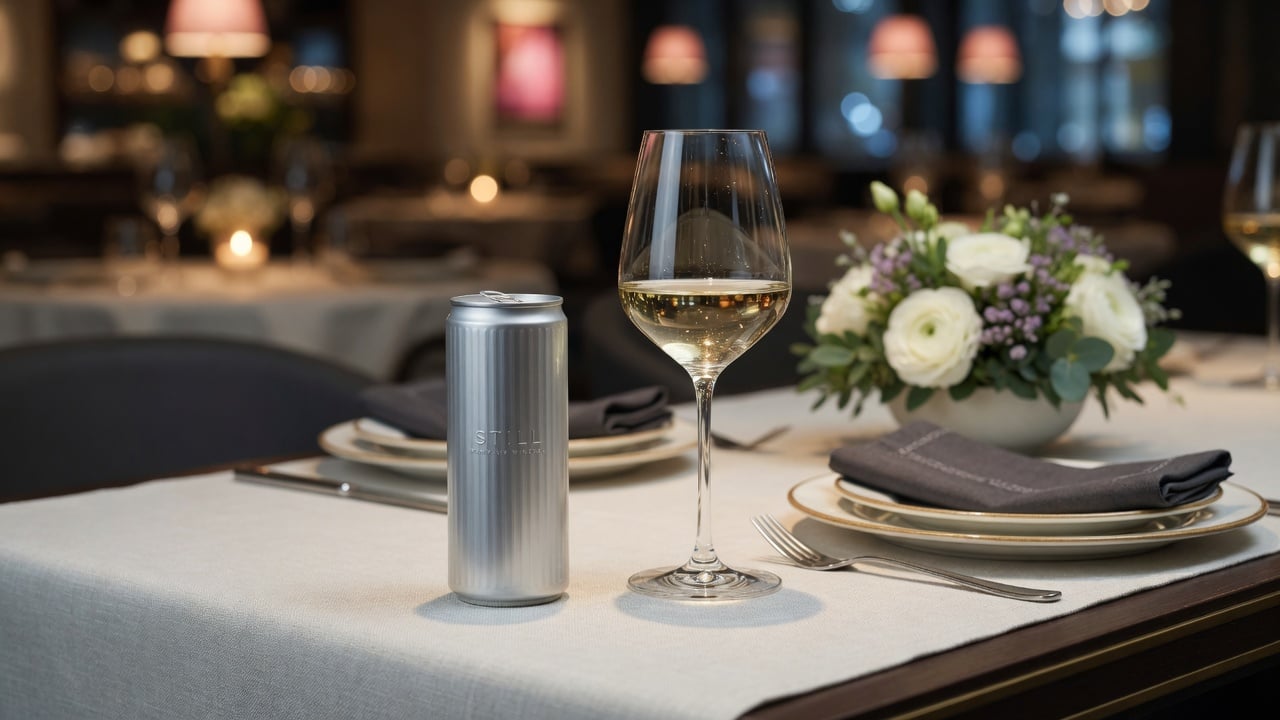
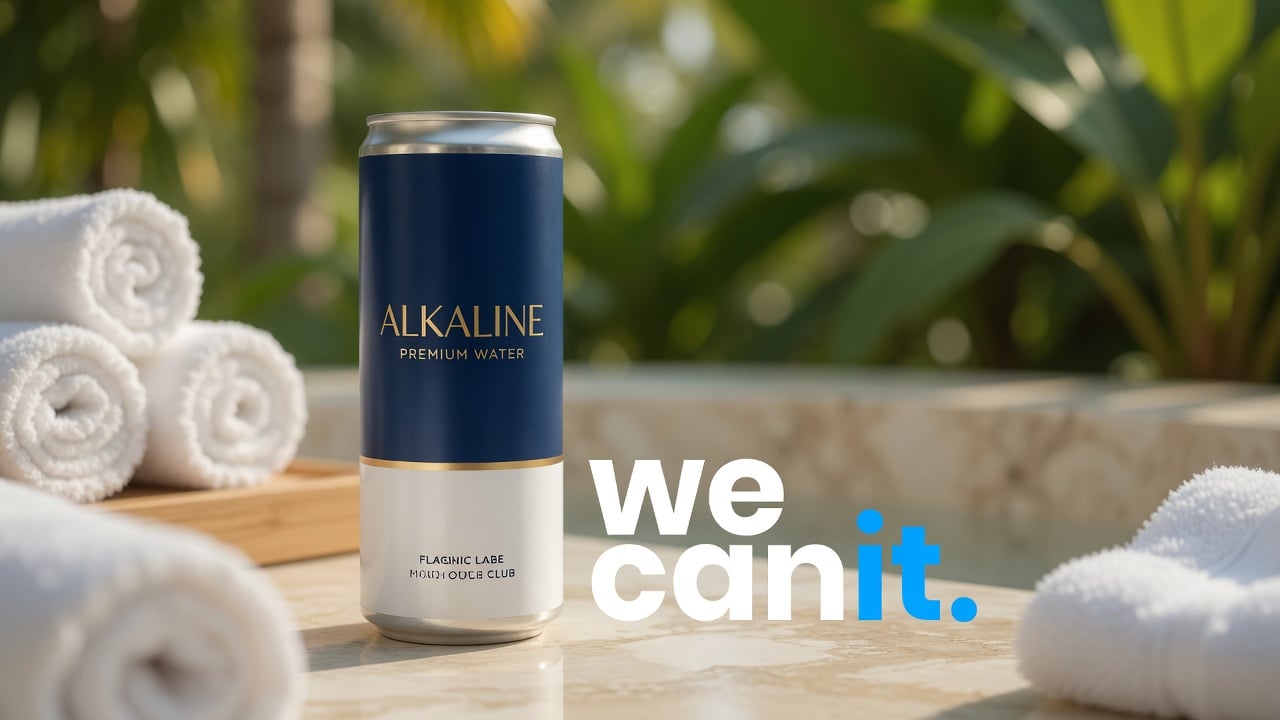
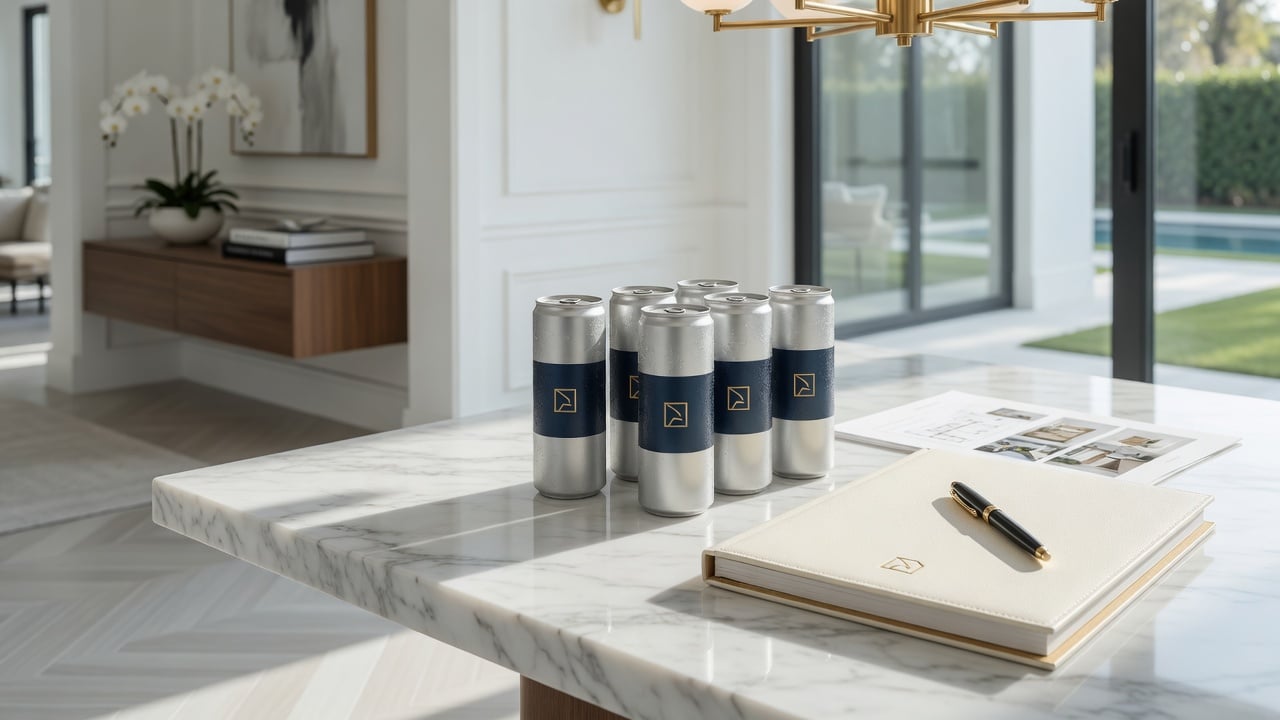
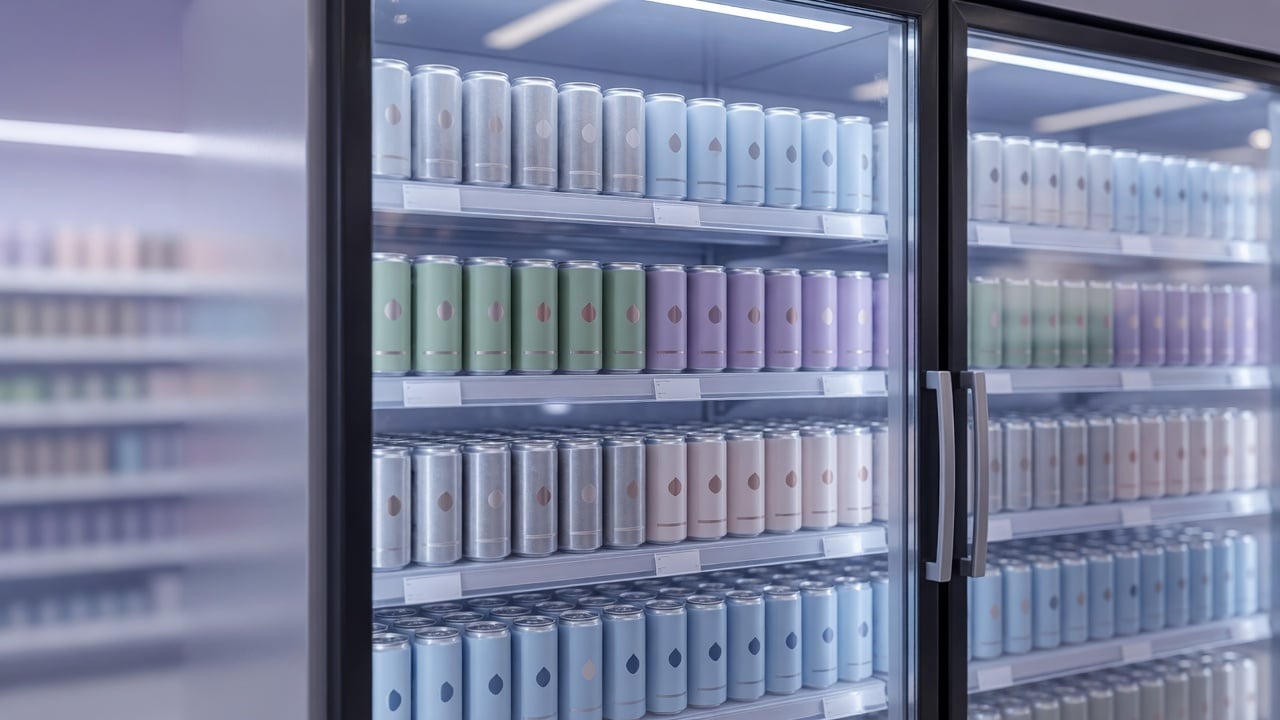
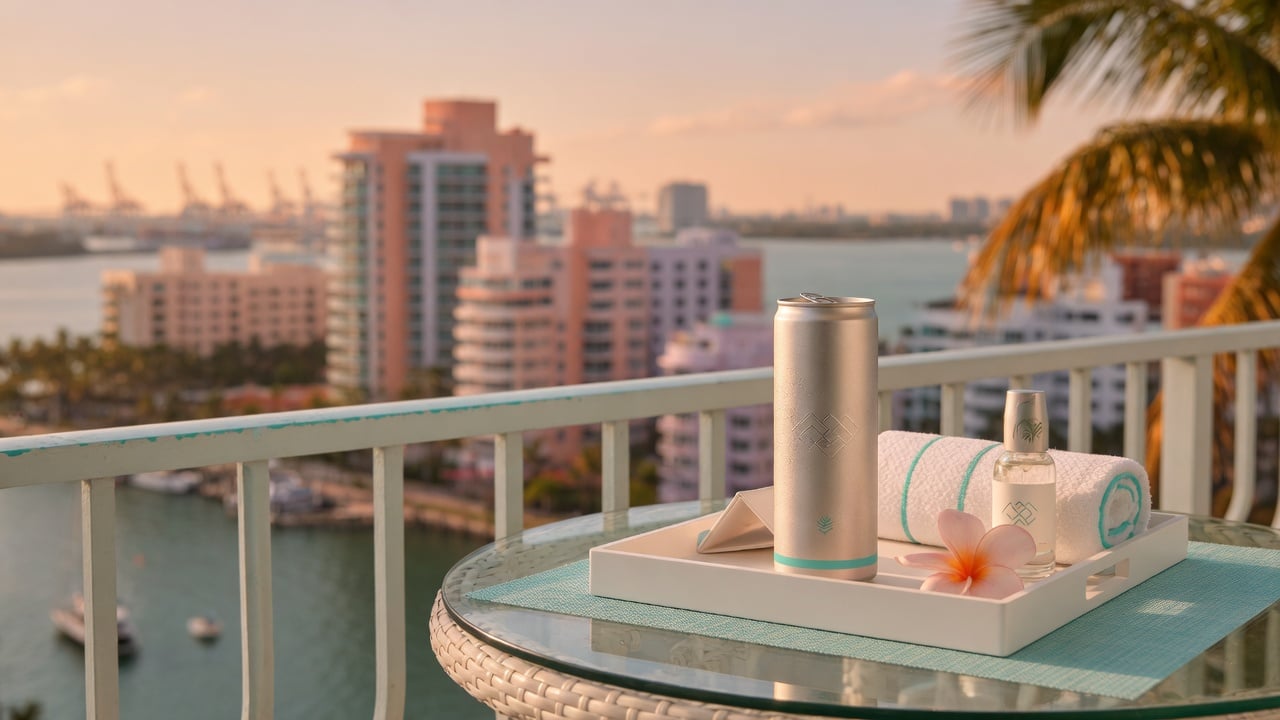
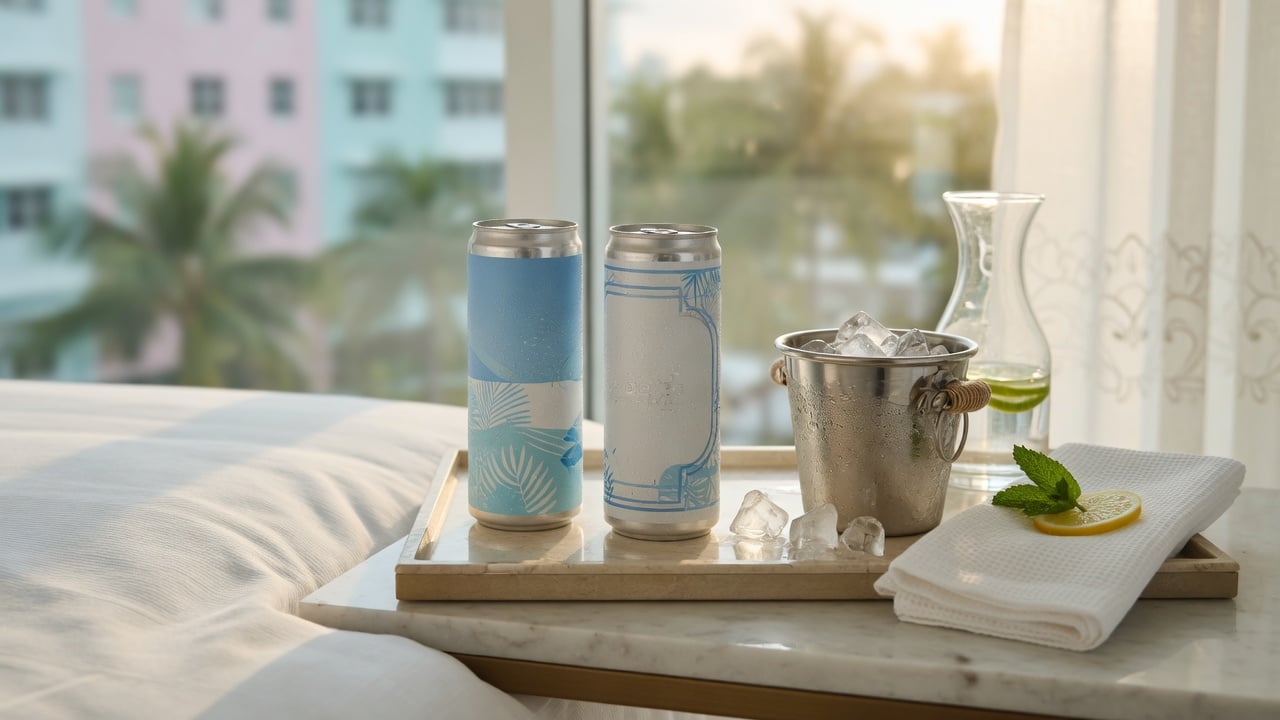
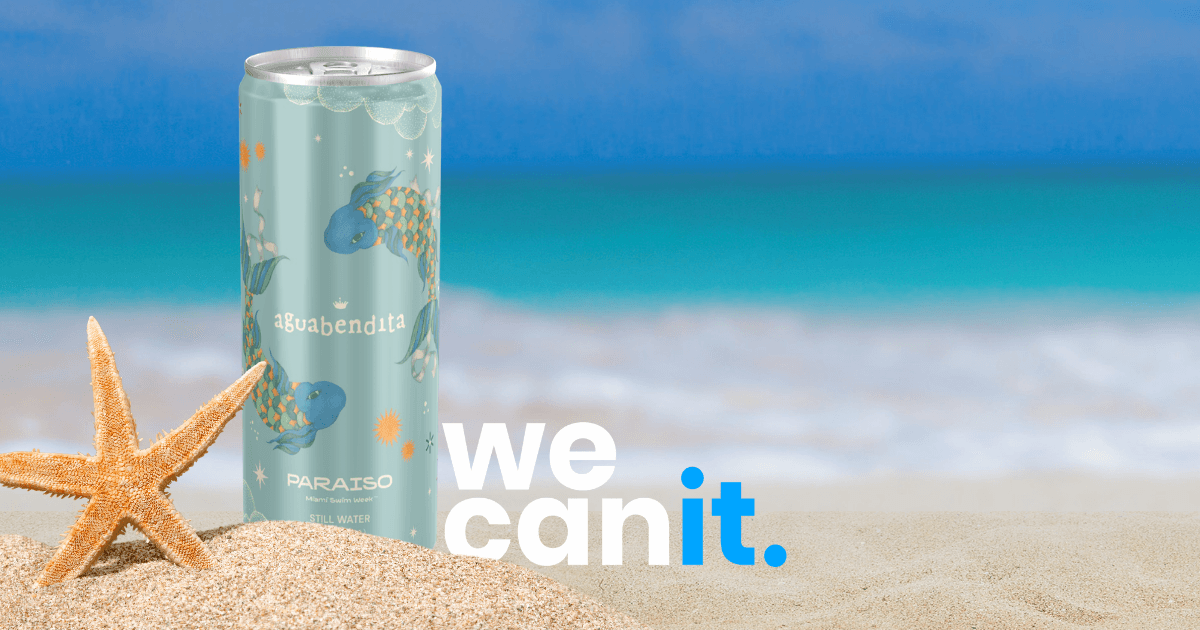
- Presentation: a designed can in the event's palette looks intentional on a tray or bar.
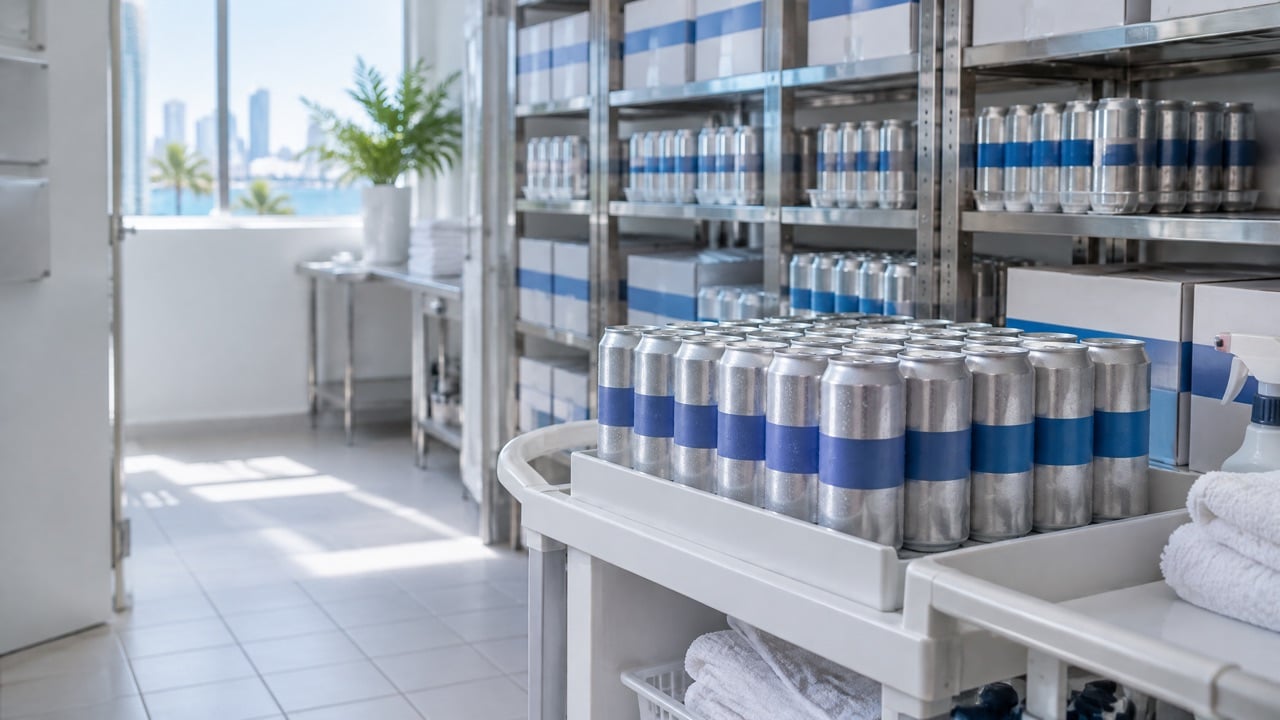
- Labor: low. Stock like bottles; no glassware required.
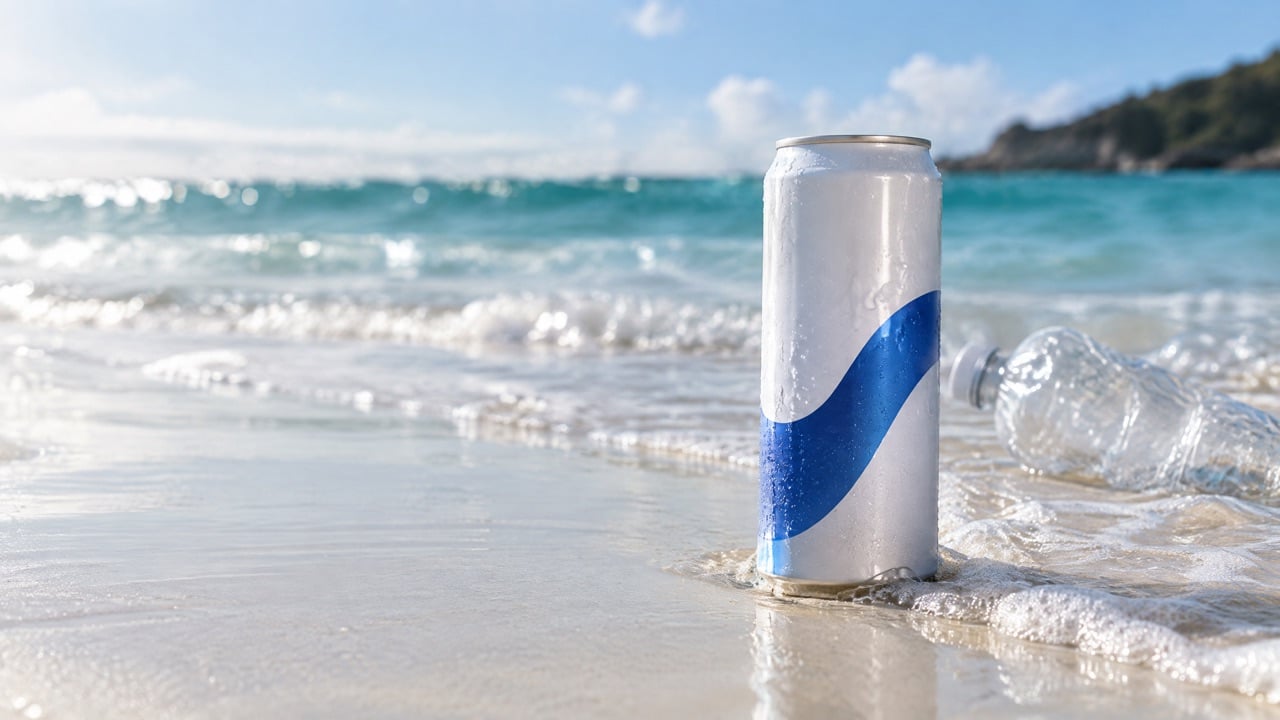
- Waste: aluminum is widely recycled, a stronger sustainability story than plastic.
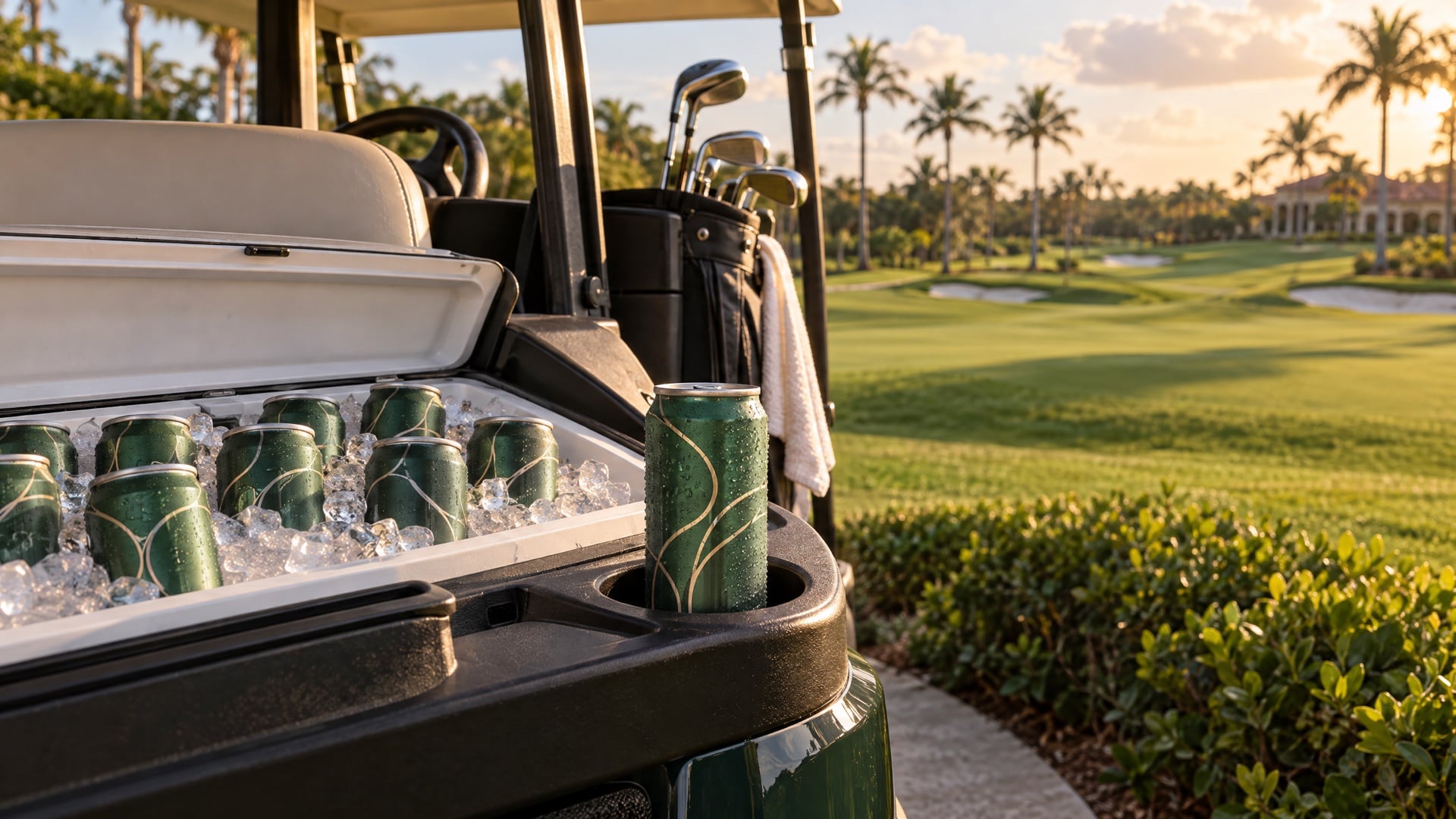
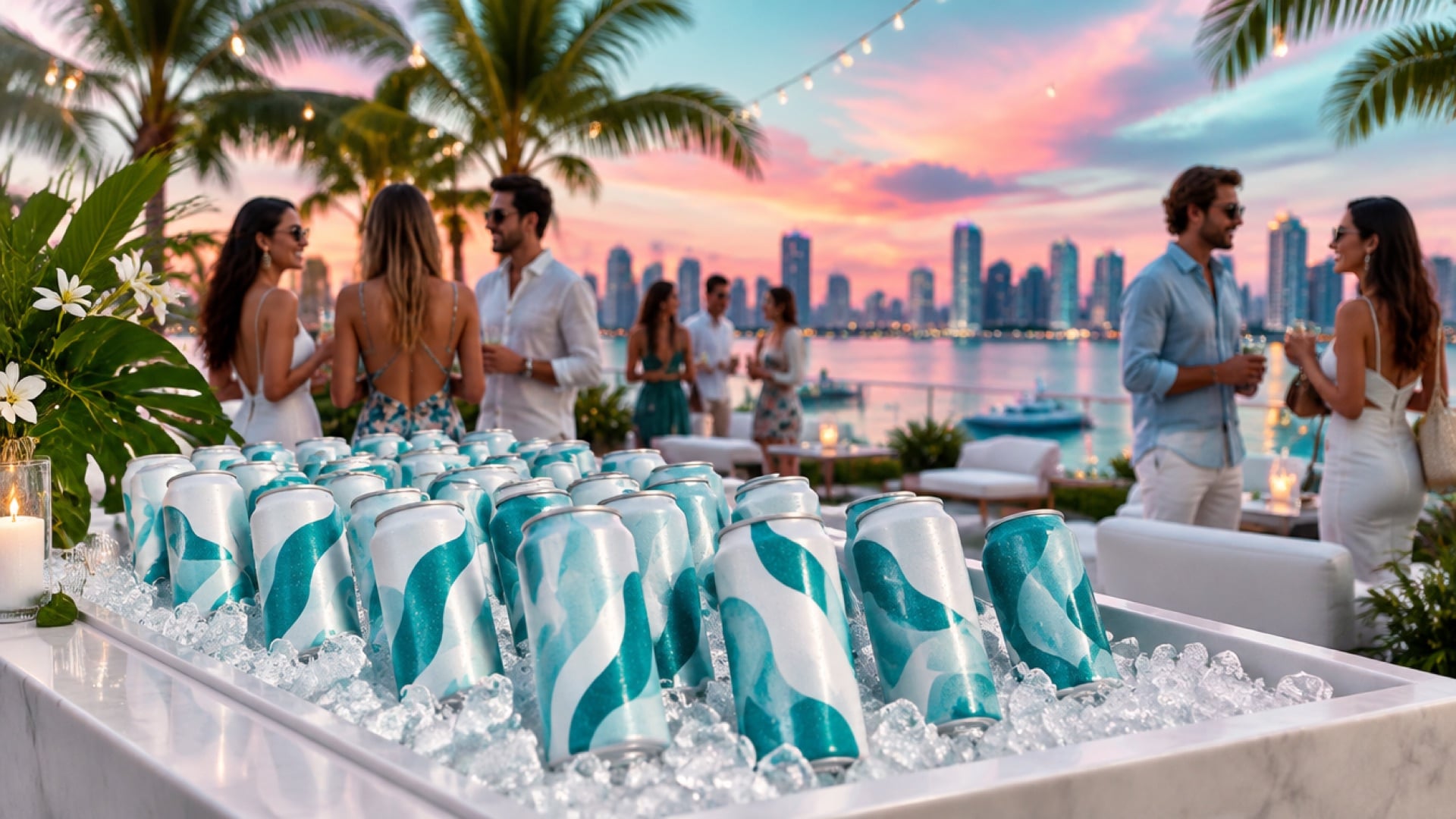
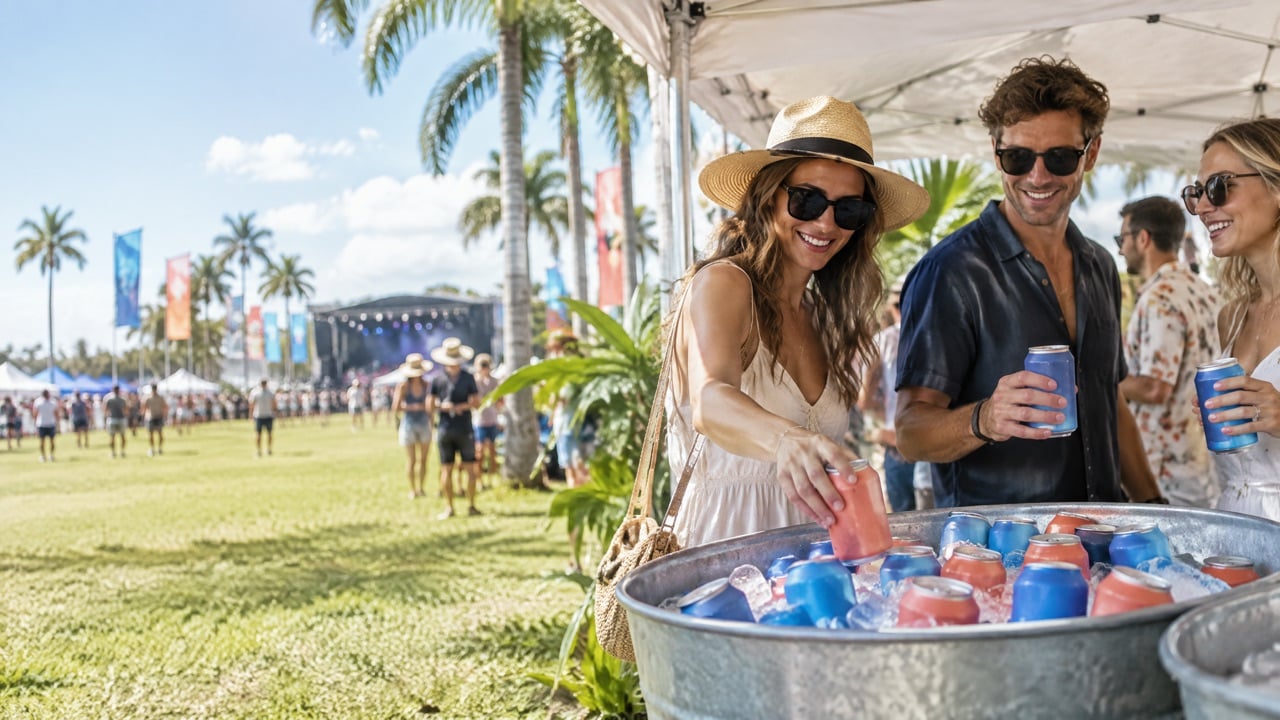
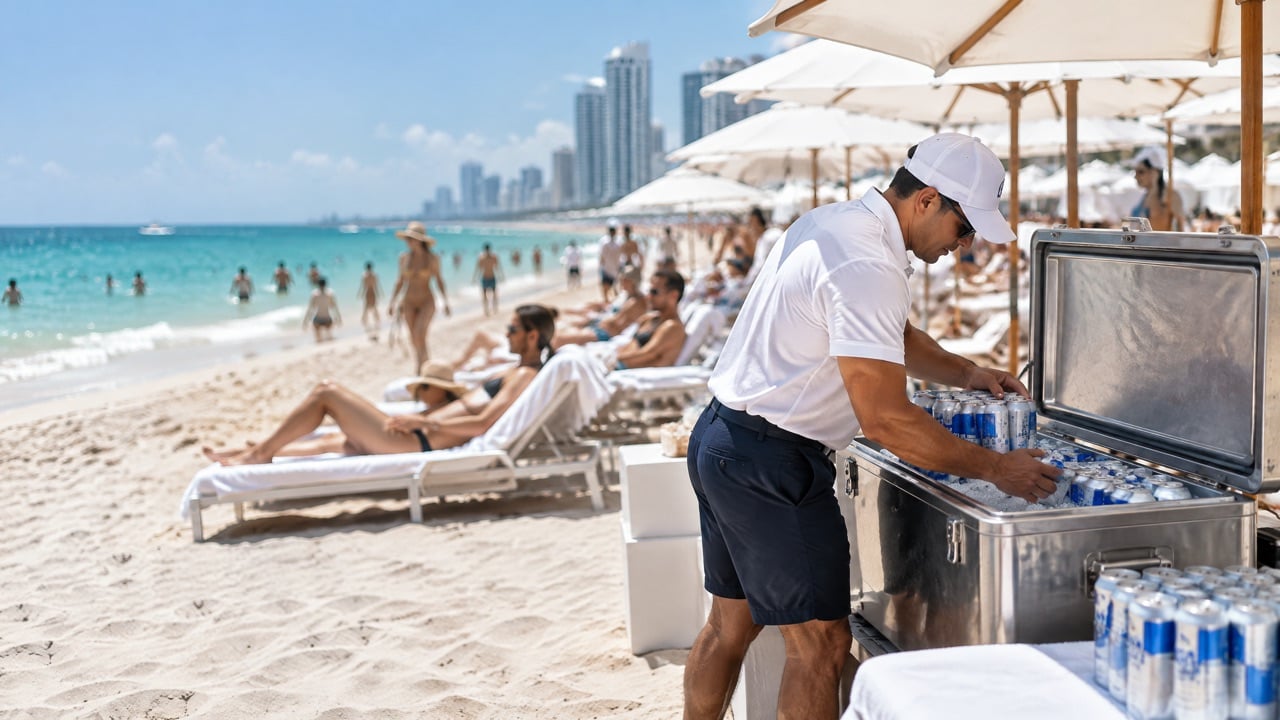
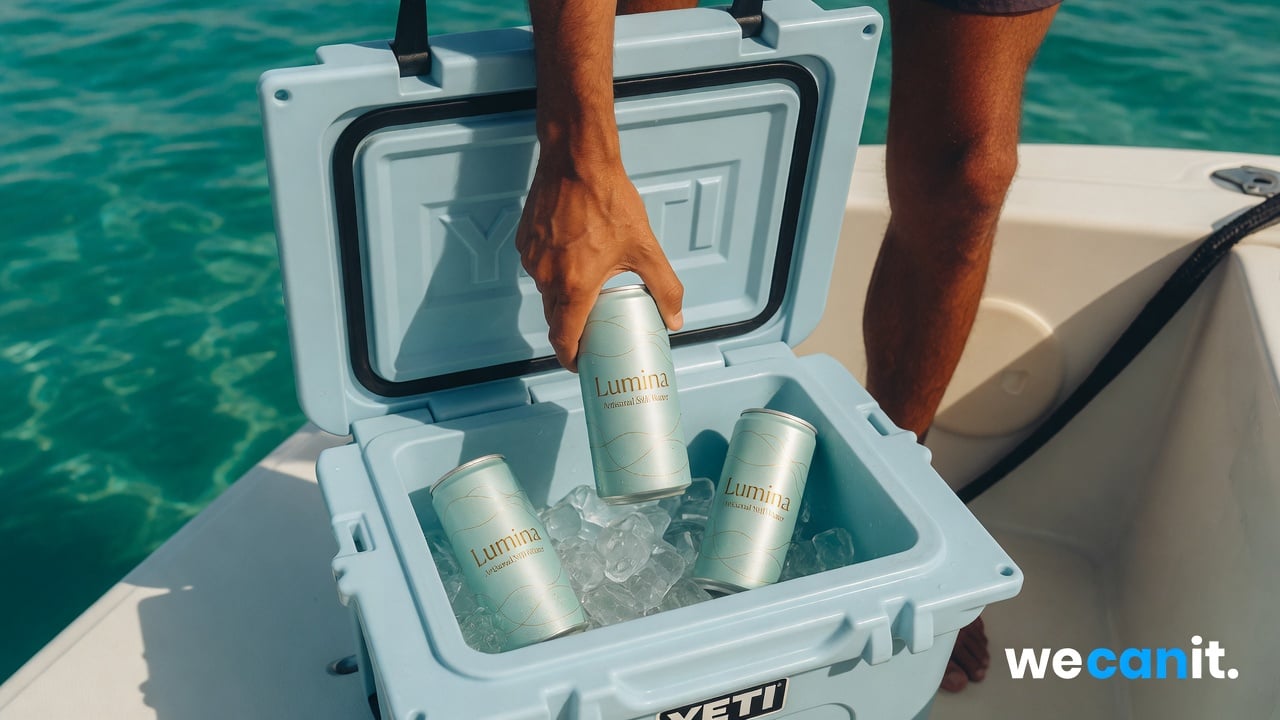
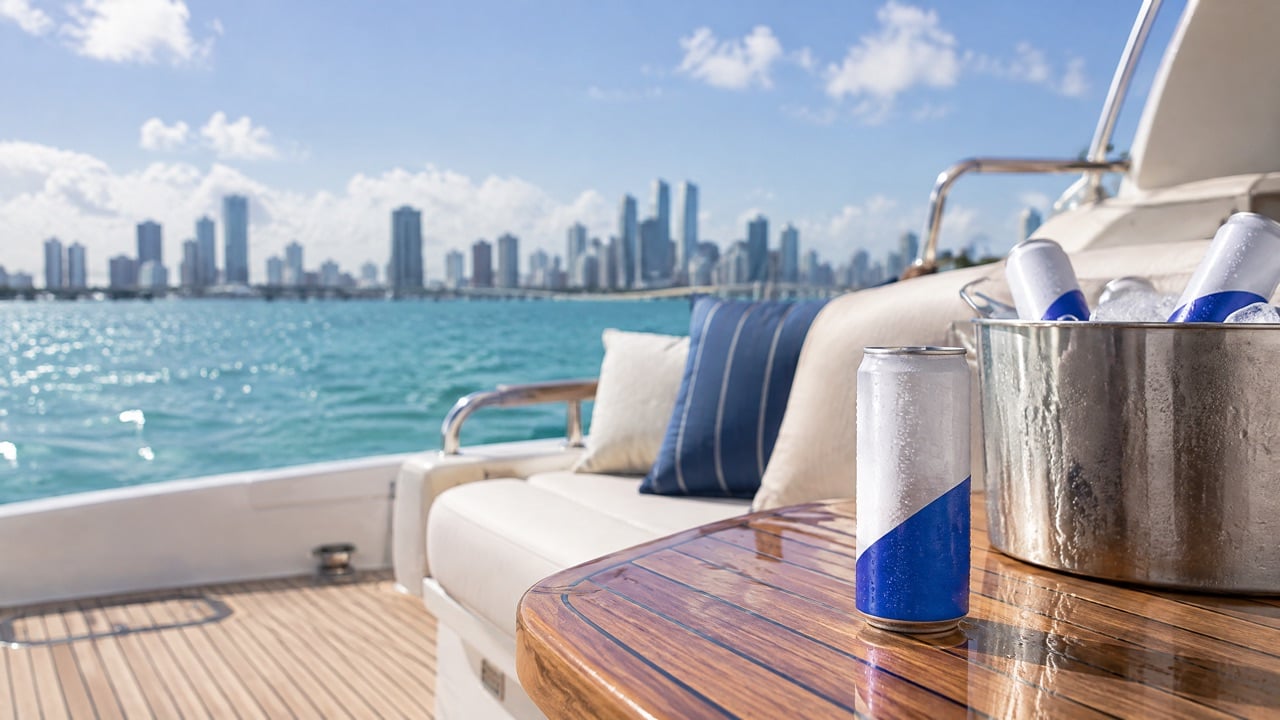
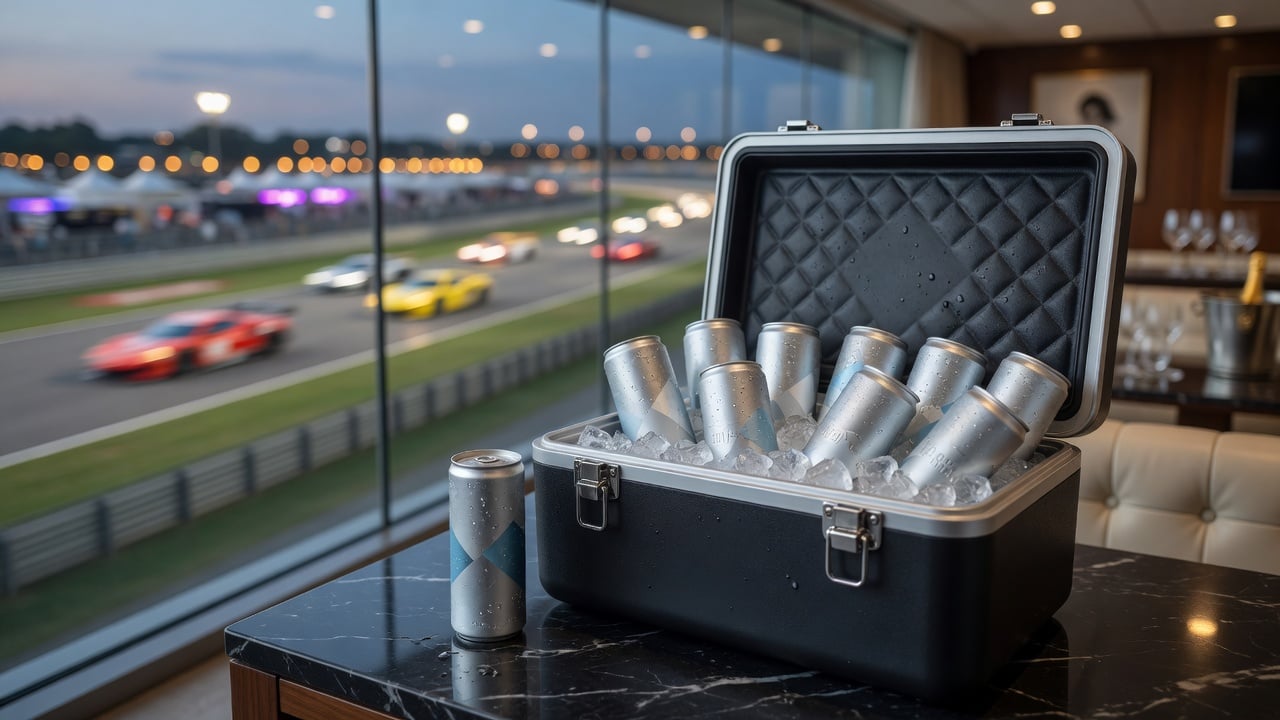
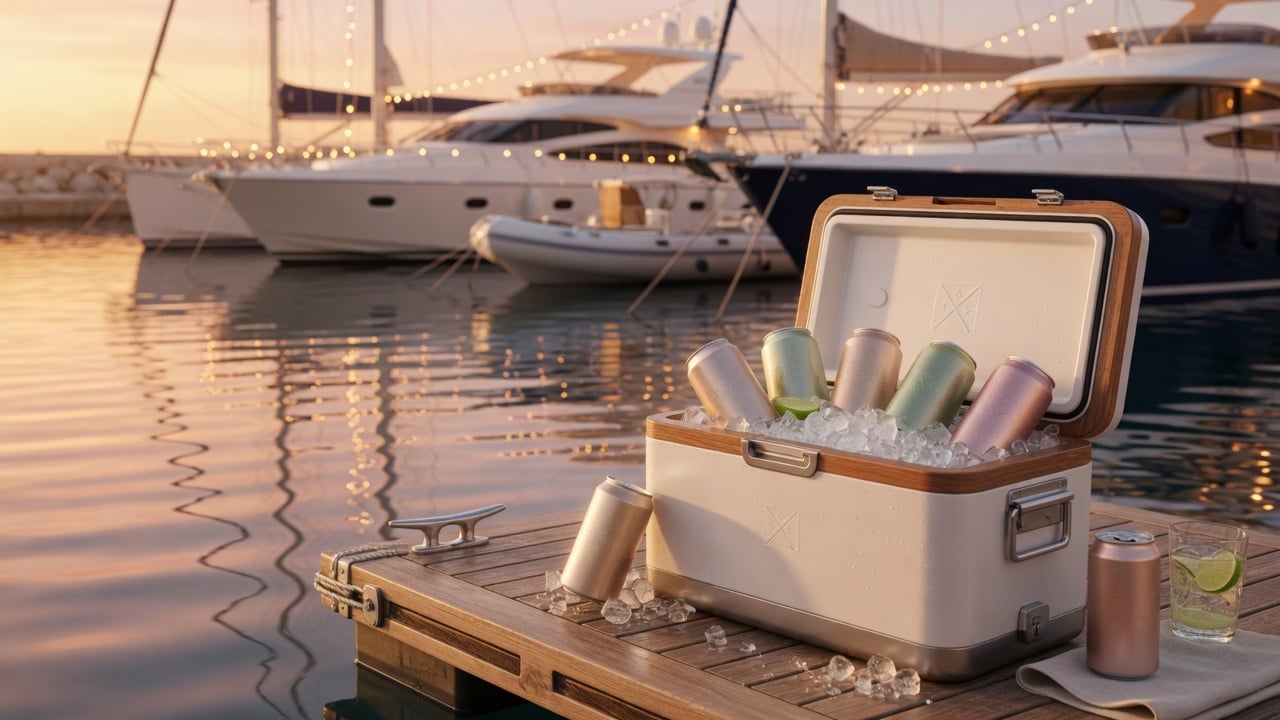
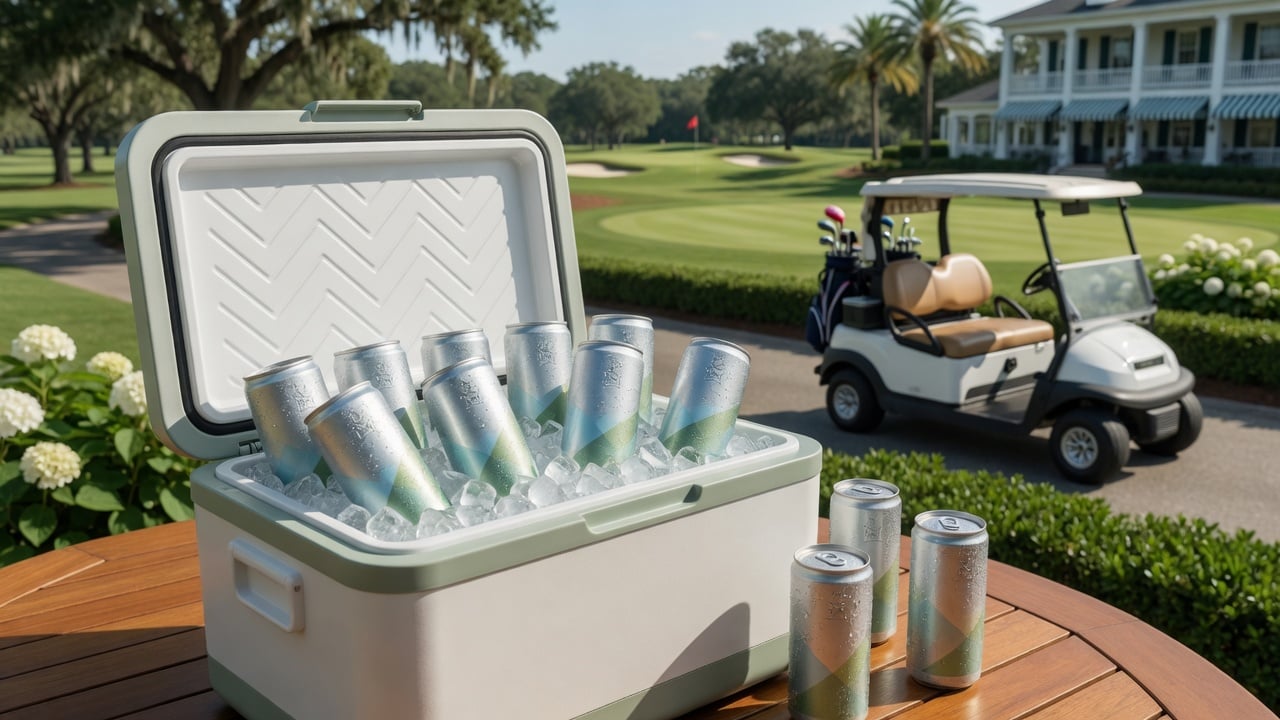
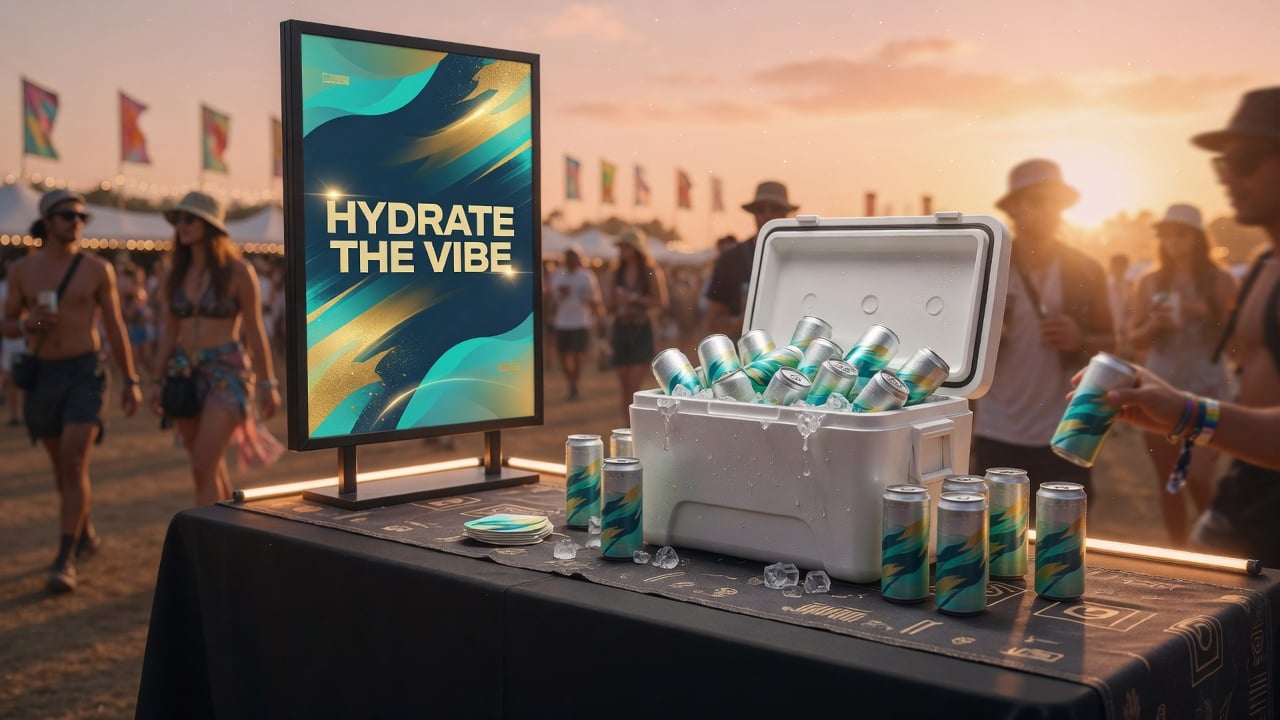
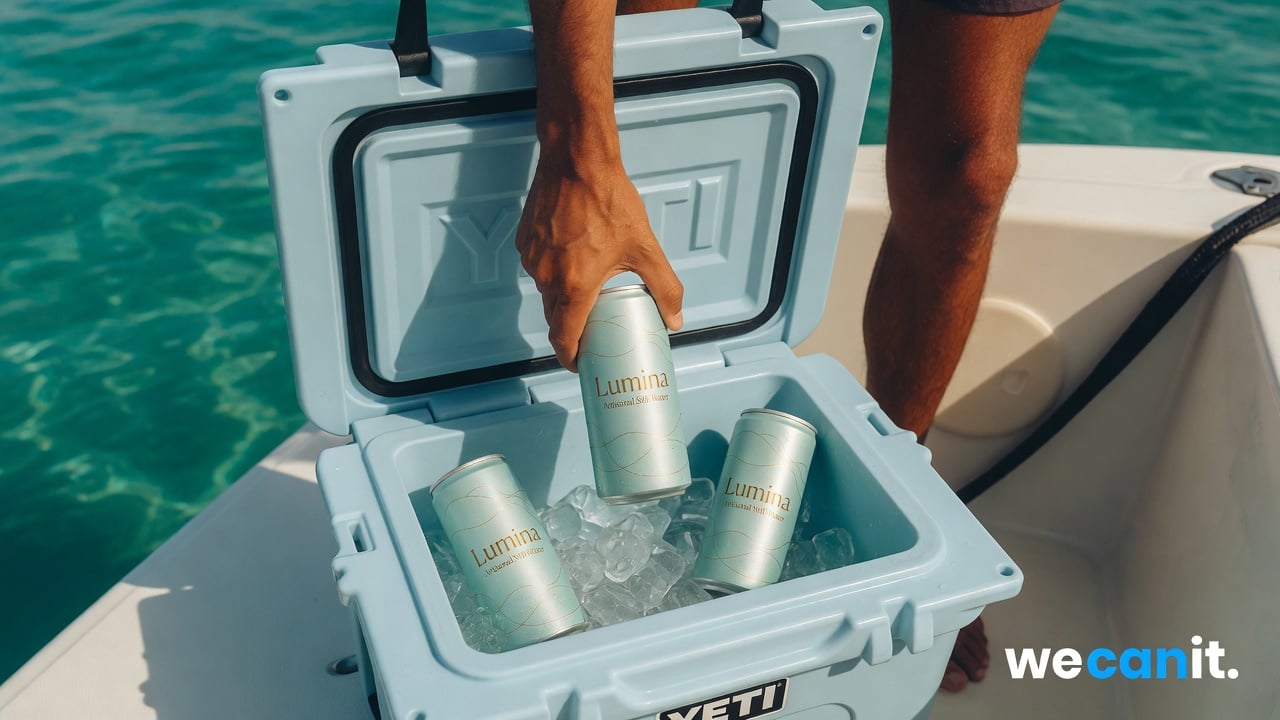
- Cold chain: cans chill fast in ice and hold their shape in a full tub.
- Guest experience: easy to carry while mingling; feels like a premium drink.
- Best for: receptions, galas, branded events, outdoor service where presentation matters.
For a broader comparison of the formats, see our guide to canned water vs bottled water.
Side-by-side summary
- Most elegant at a seated table: dispensers or carafes with glassware.
- Fastest for large outdoor crowds: bottles or cans.
- Best presentation for grab-and-go: custom cans.
- Lowest plastic waste: dispensers or cans with a recycling plan.
- Coldest drink in the heat: cans on ice.
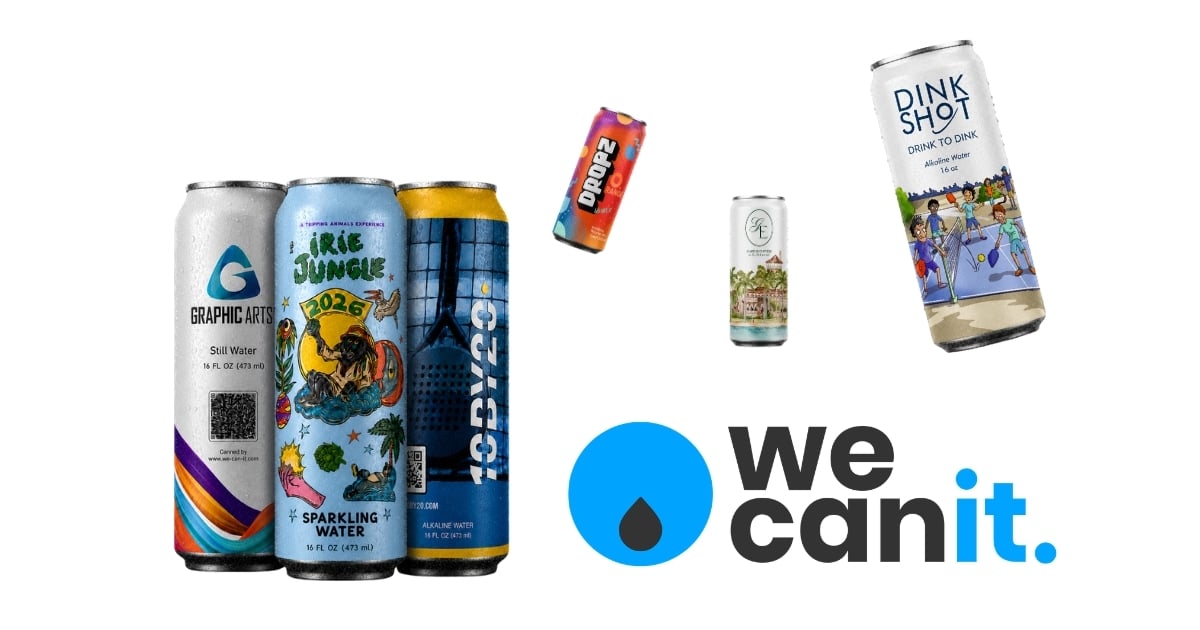
- Best for client branding: custom cans, printed across the whole surface.
How to choose water service for each event
Run through these questions during planning.
- Is the meal seated or standing? Seated favors glassware; standing favors single-serve.
- Indoors or outdoors? Outdoor heat favors single-serve on ice.
- How many guests and stations? Large counts favor single-serve to save labor.
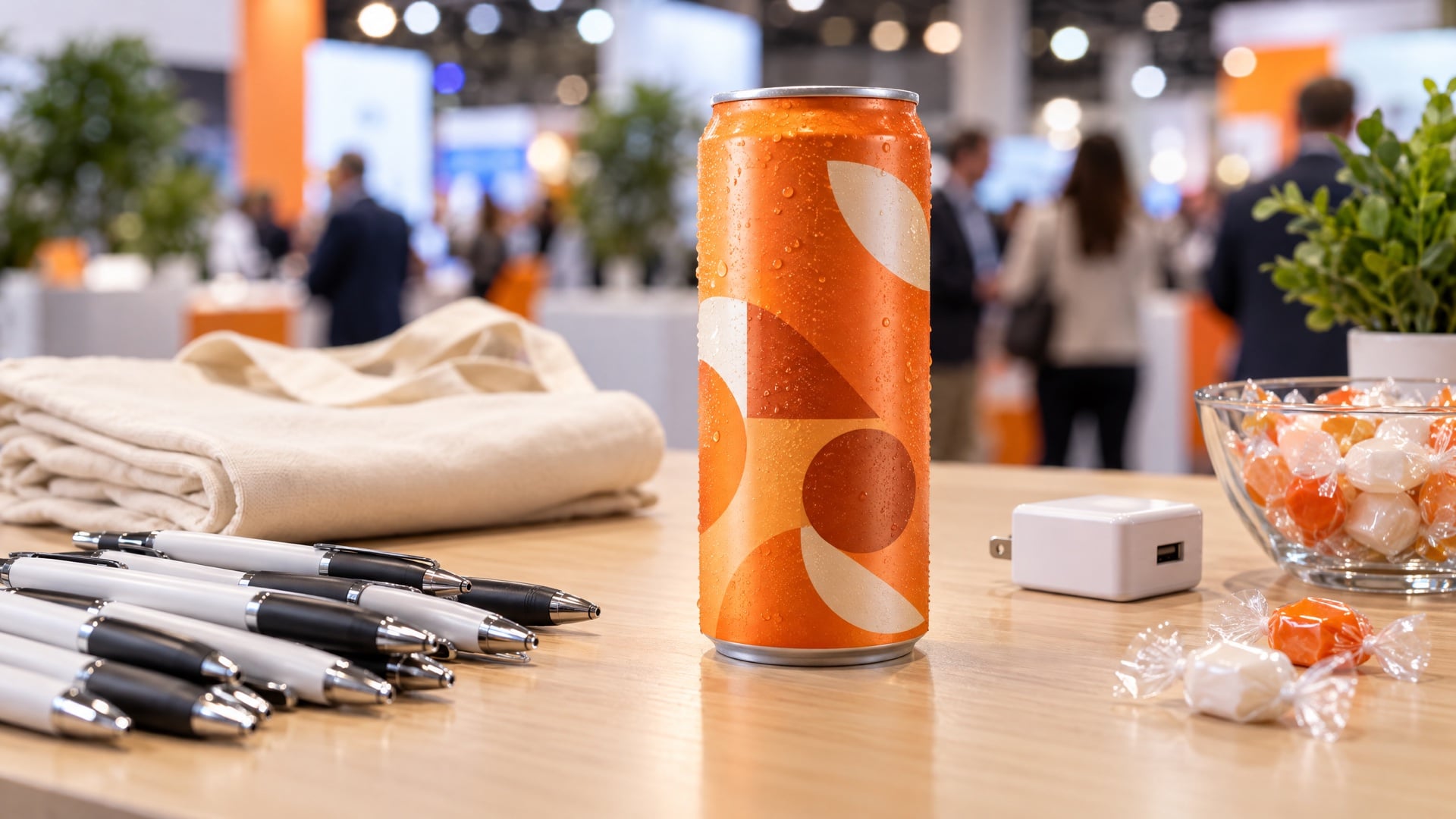
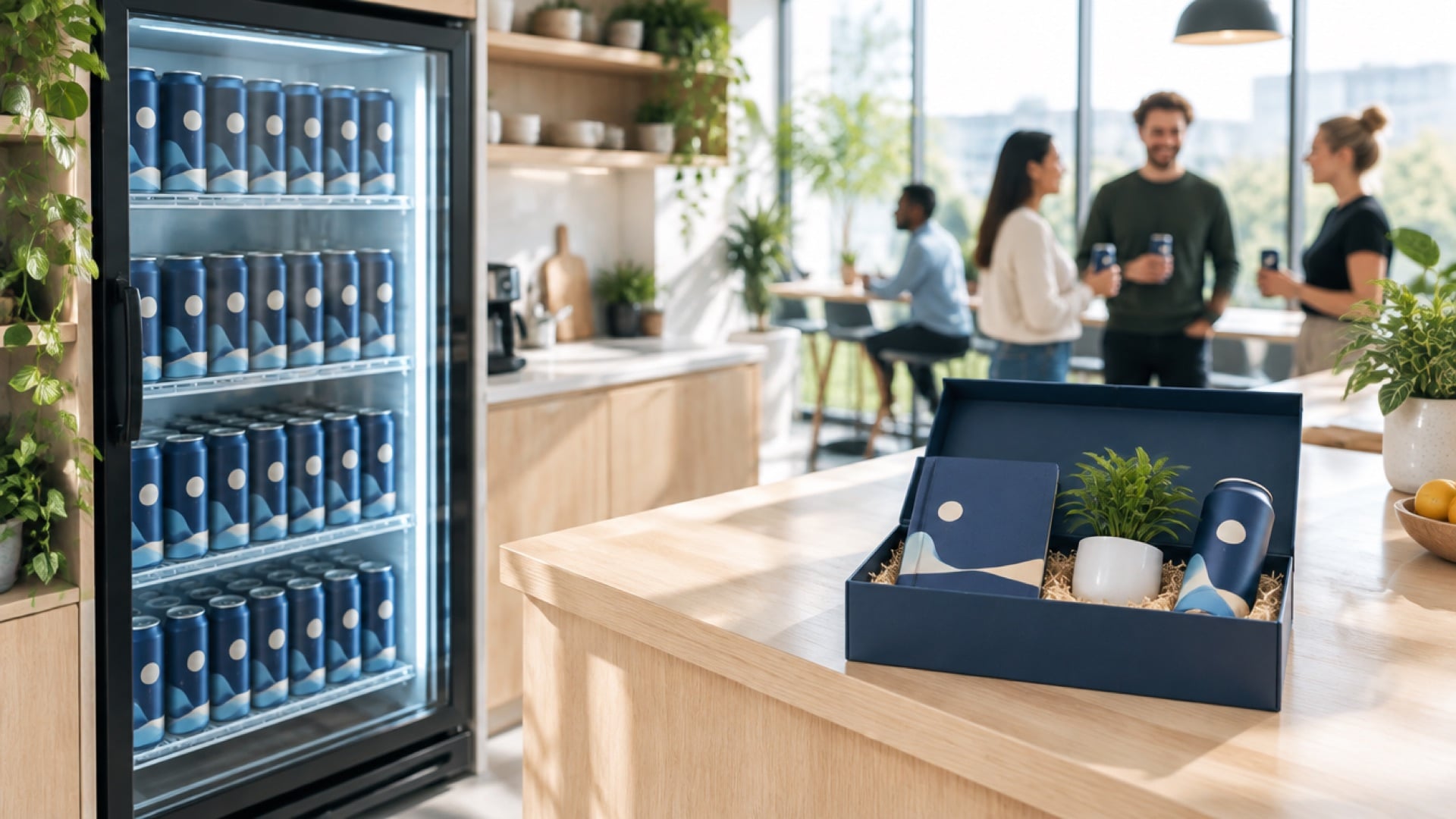
- Does the client care about branding? If yes, a custom can carries their design.
- What are the venue's waste rules? Some venues limit plastic or charge for waste.
- What is the staff plan? Fewer servers favors self-serve stations.
Combining options at one event
Many caterers mix formats so each area of the event gets the right service.
- Dinner tables: carafes or dispensers with glassware.
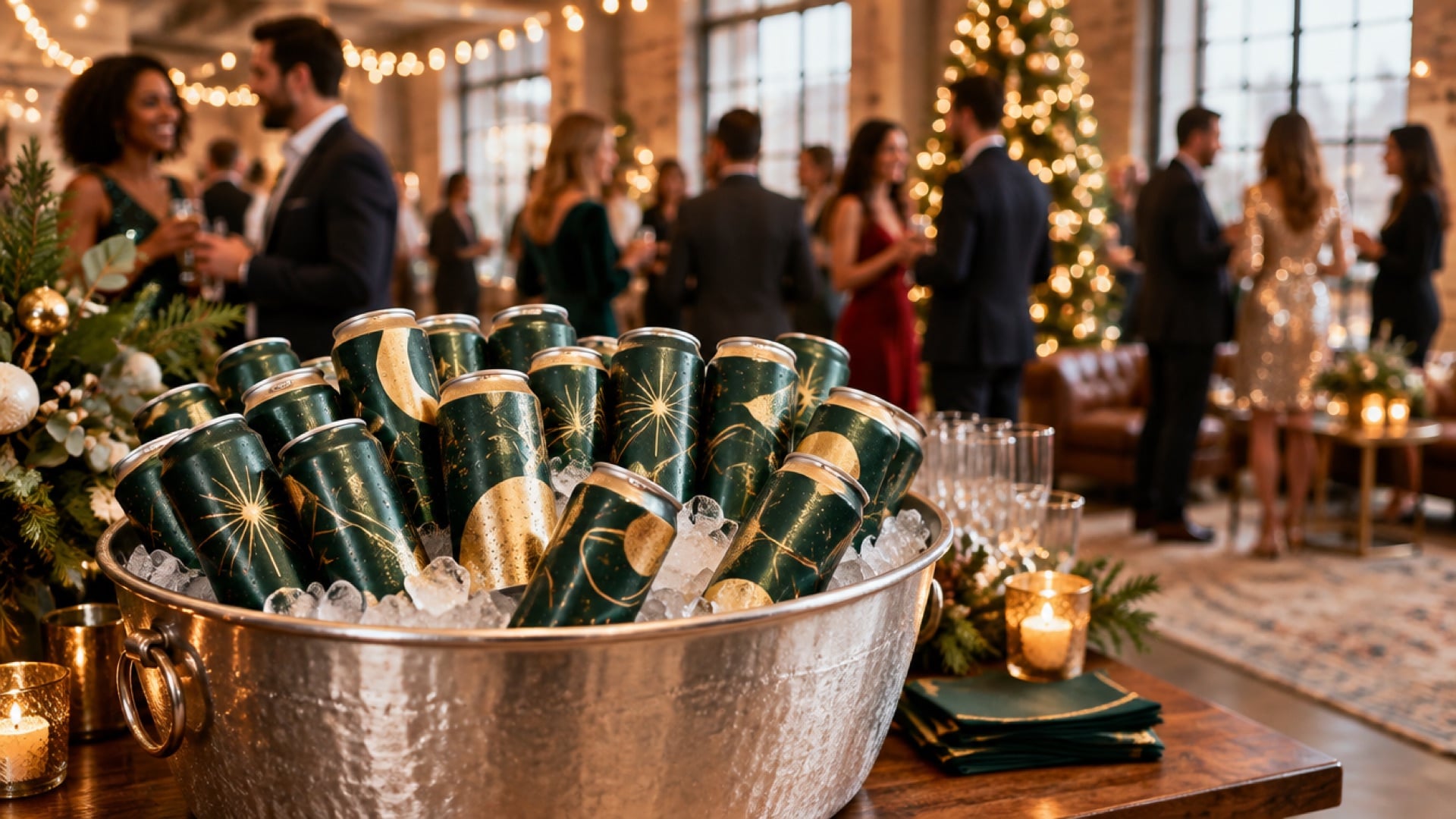
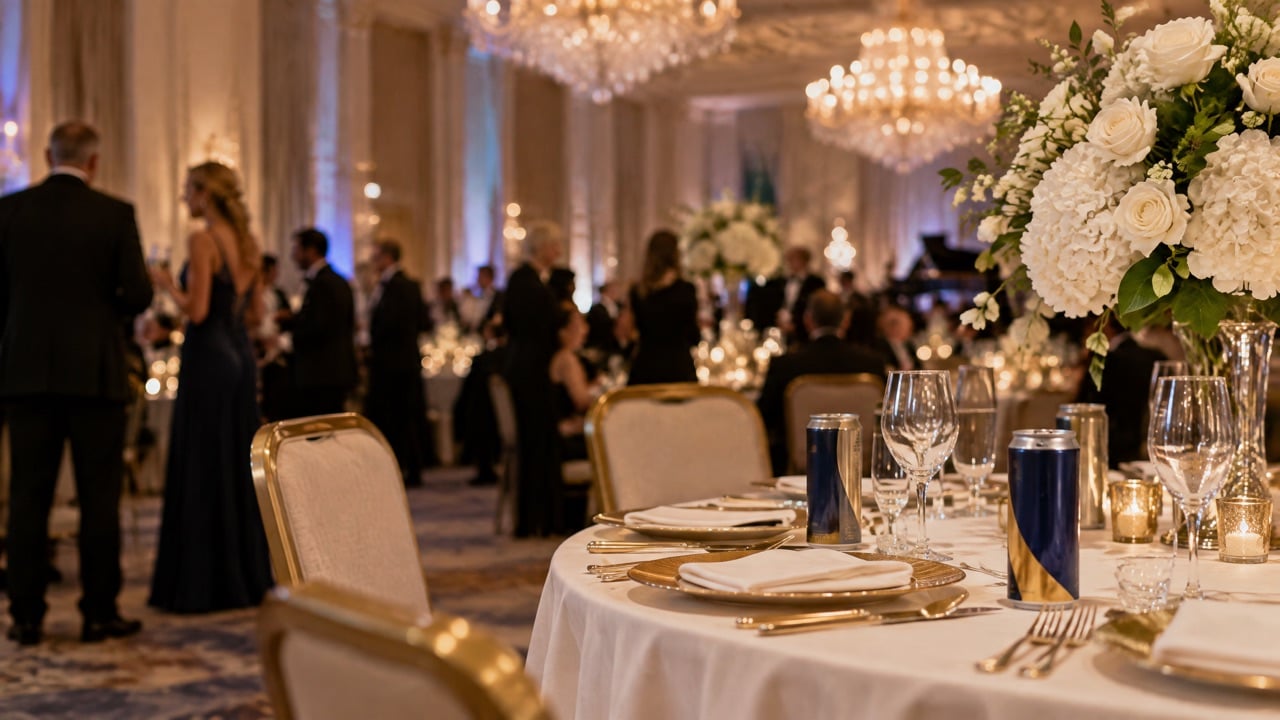
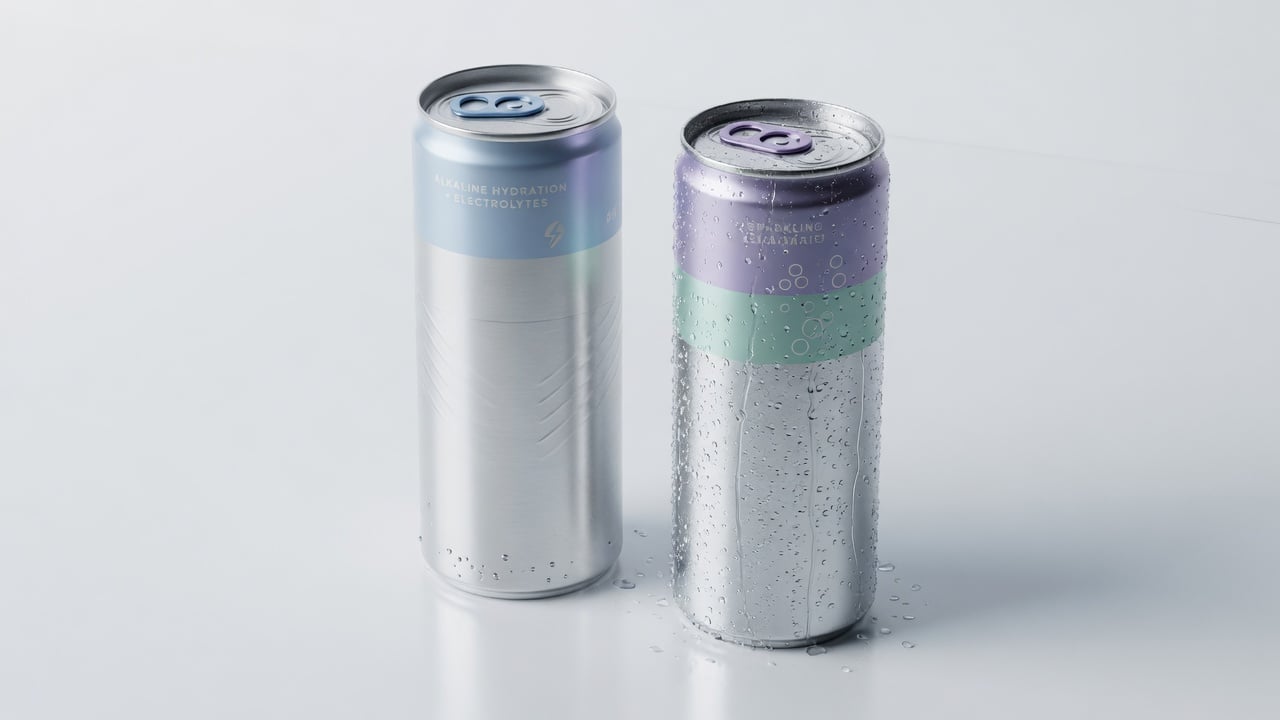
- Cocktail hour and bars: chilled cans, still and sparkling.
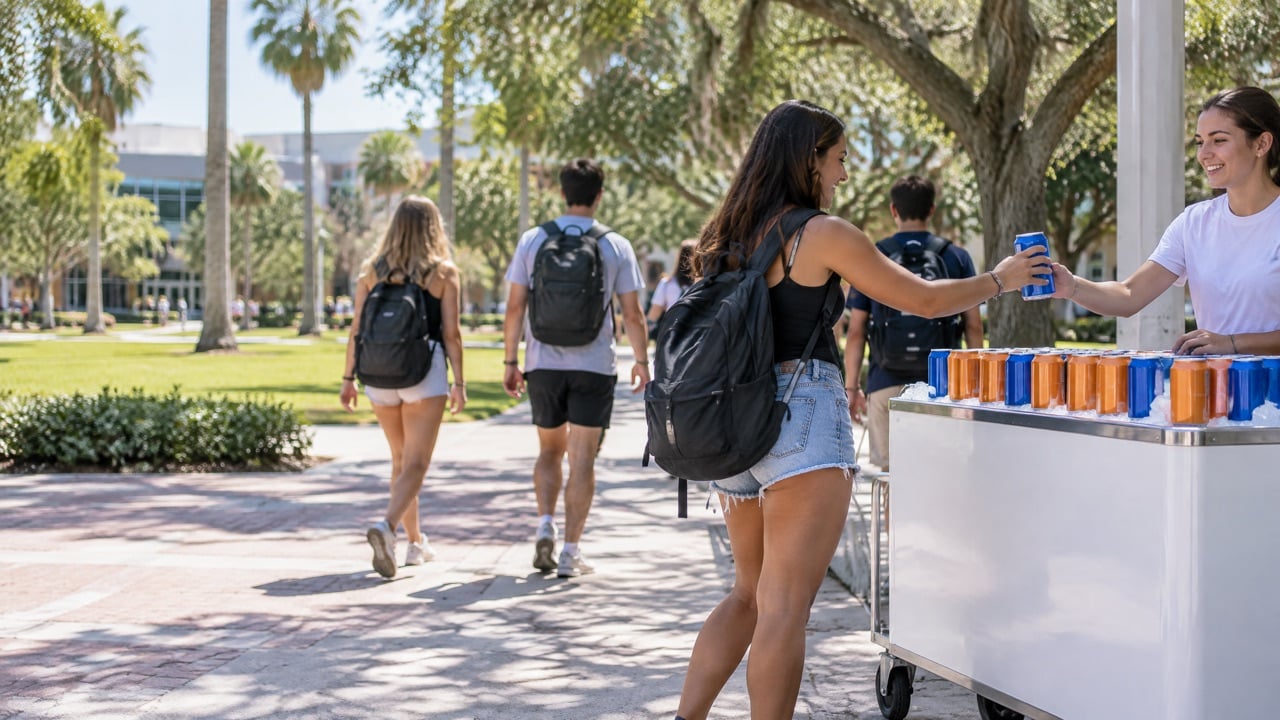
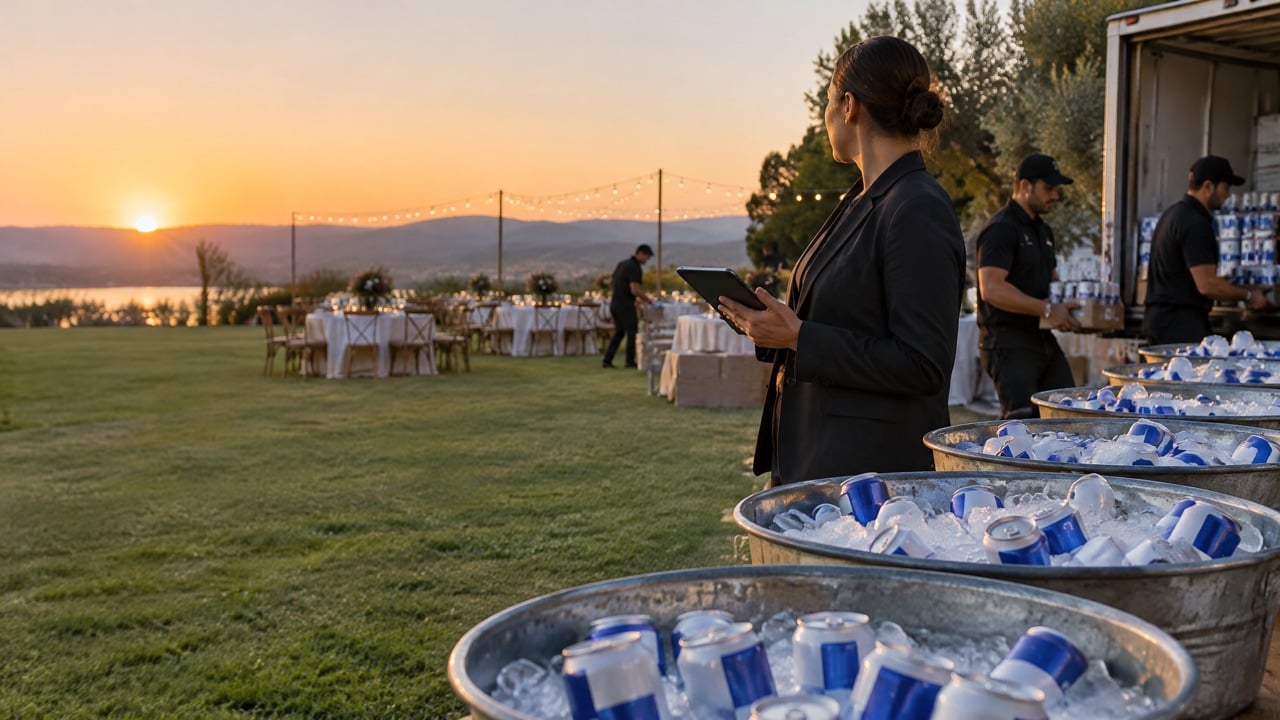
- Outdoor lawns and dance floors: cans or bottles on ice.
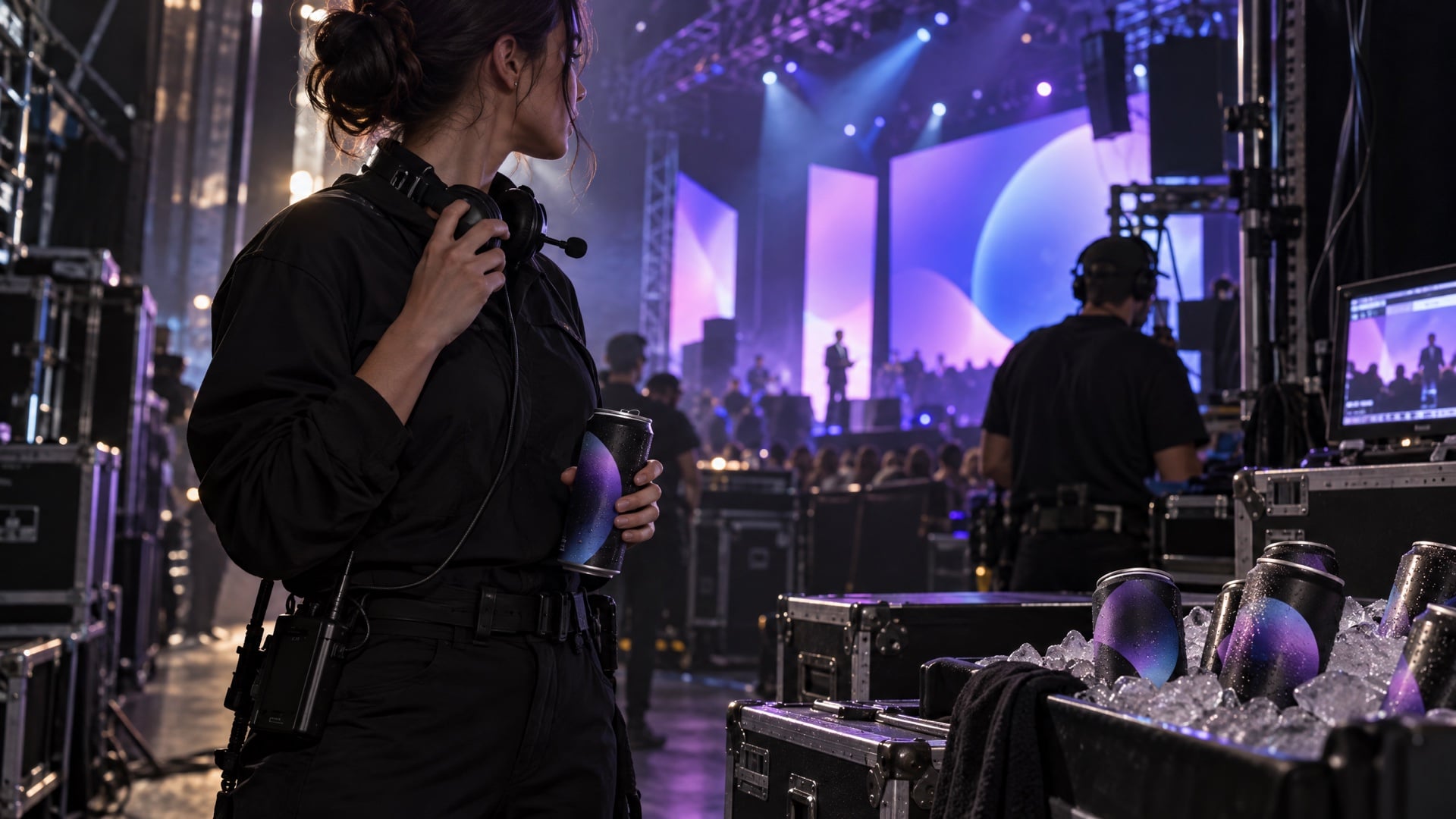
- Back of house and crew: bottles or a house can.
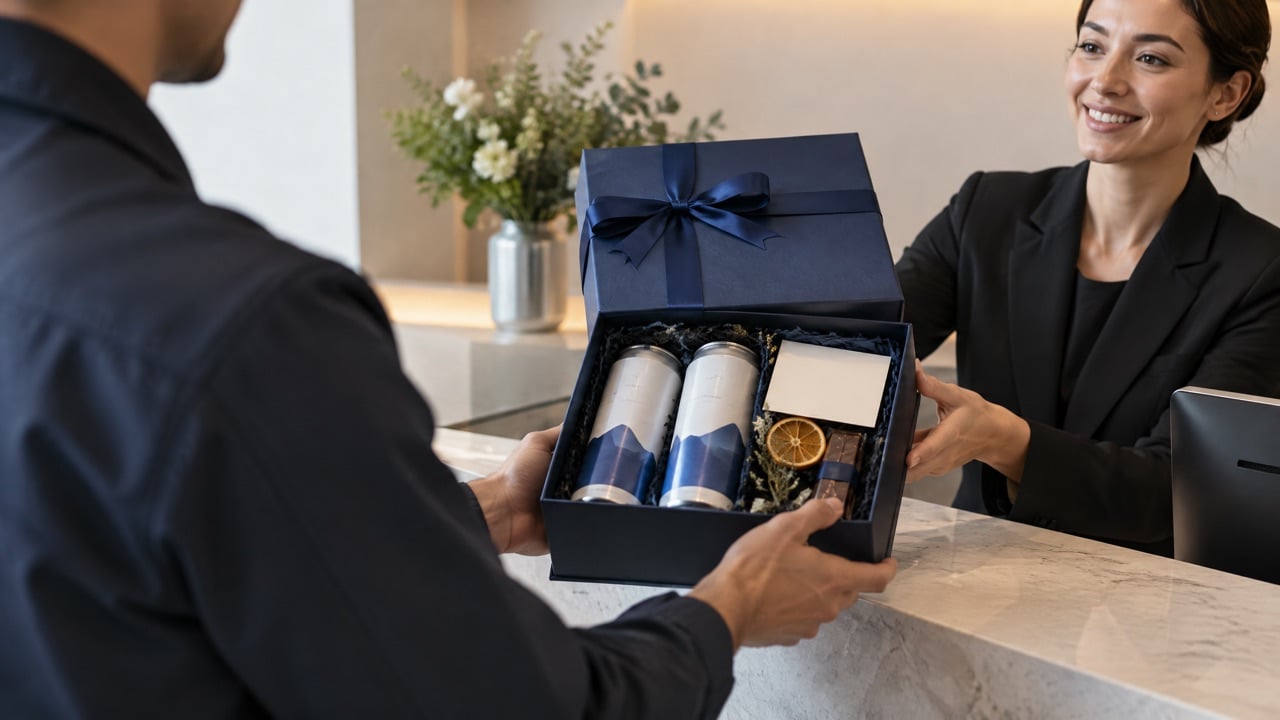
Ordering cans with the client's design for the guest-facing areas keeps branding consistent while the dinner service stays classic.
Cost per event: what to compare
Compare the total cost of each option, not the price per unit.
- Dispensers: water, garnish, glassware rental, washing and labor hours.
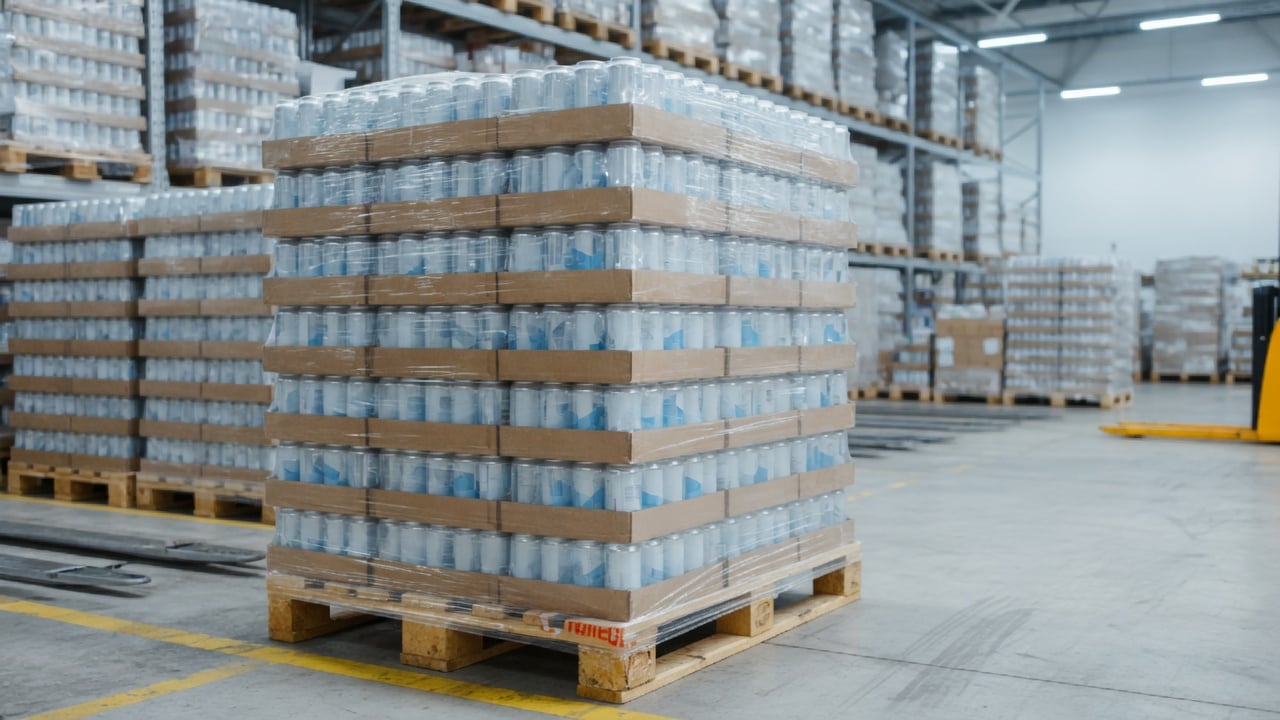
- Bottles: product cost, ice, waste handling.
- Cans: product cost, ice, recycling; no glassware or washing.
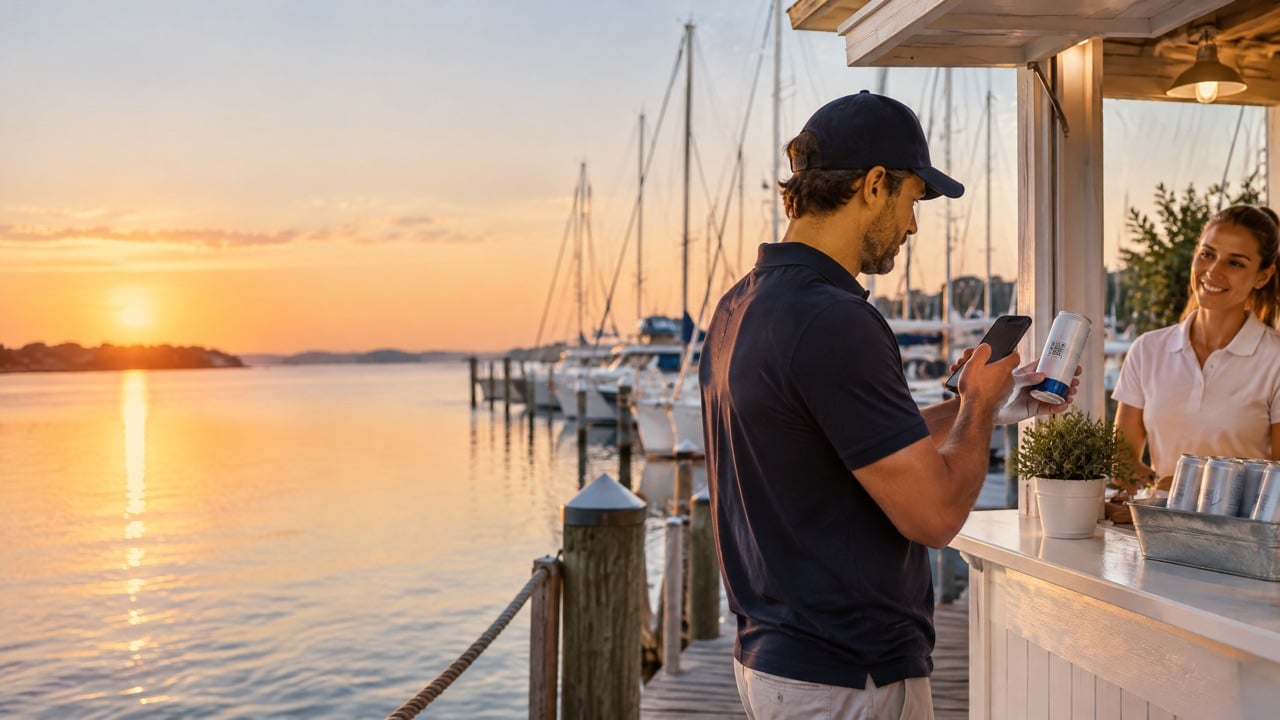
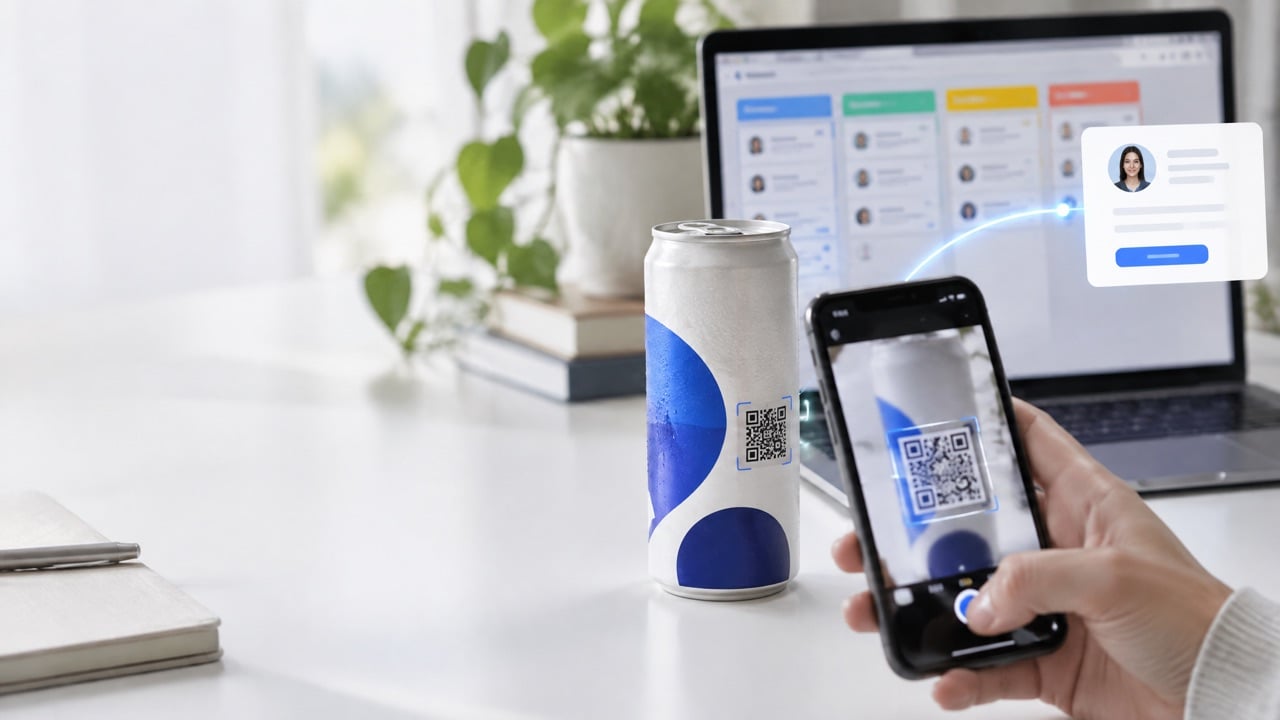
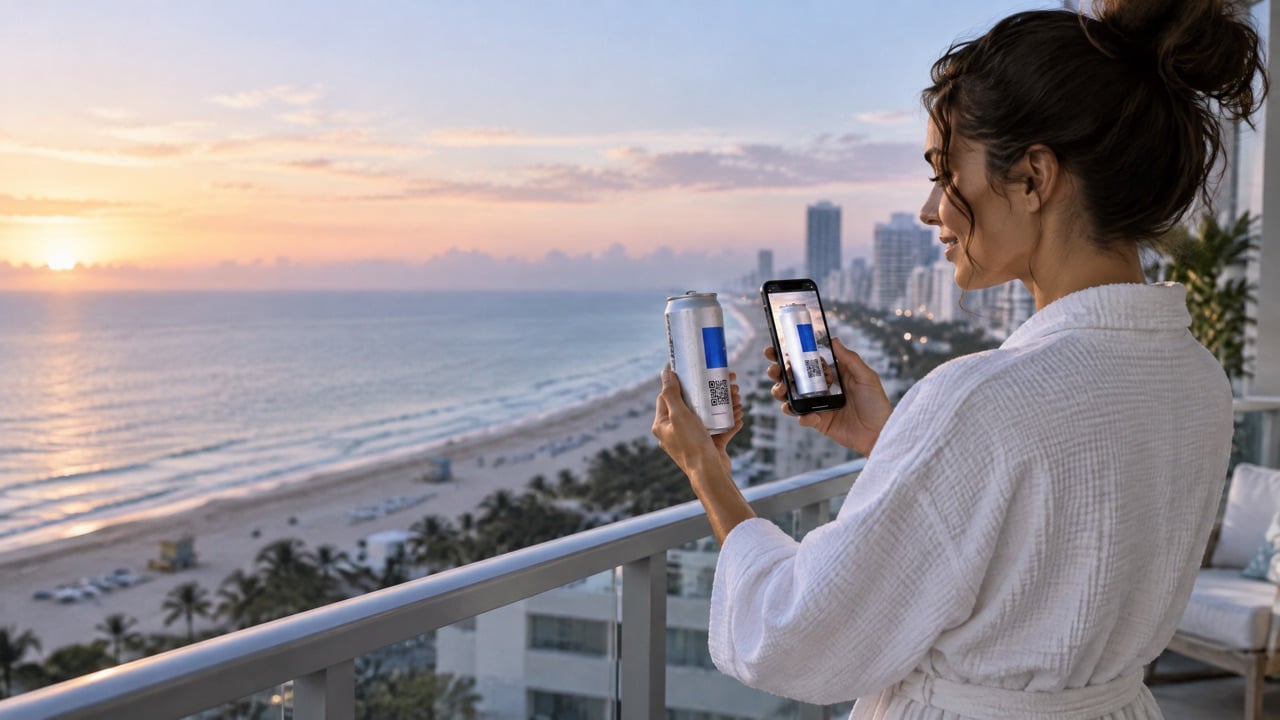
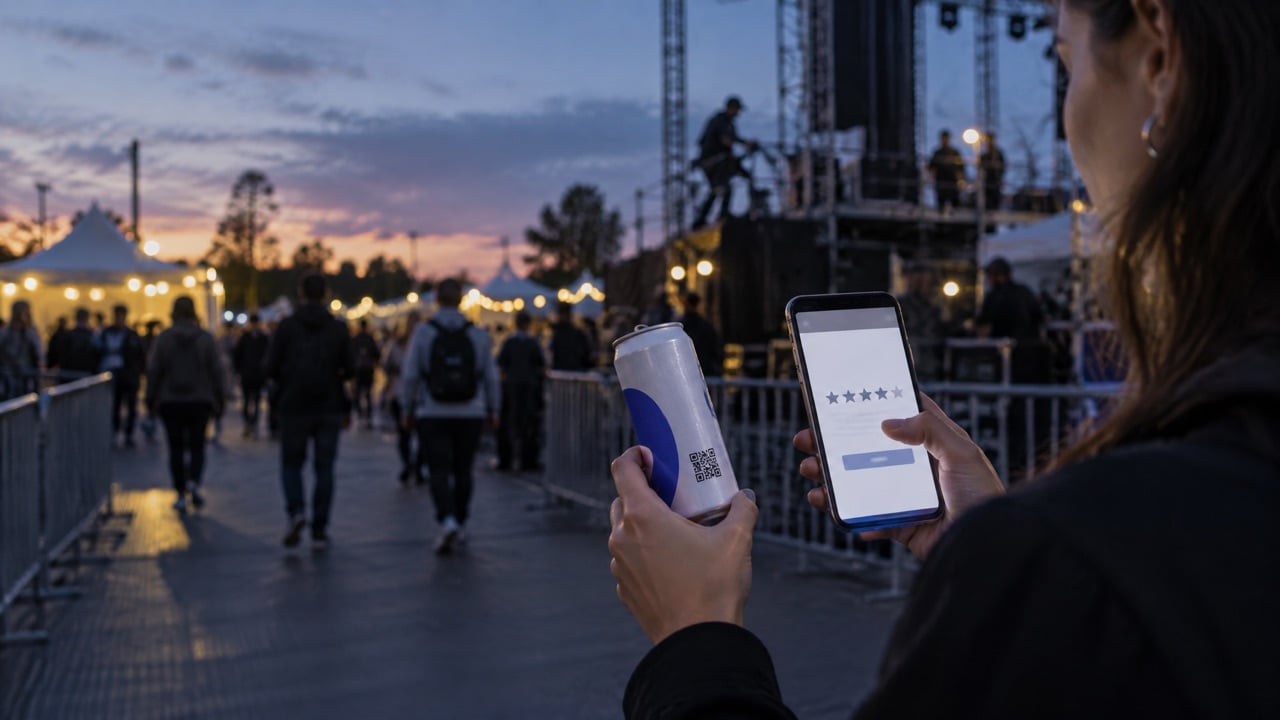
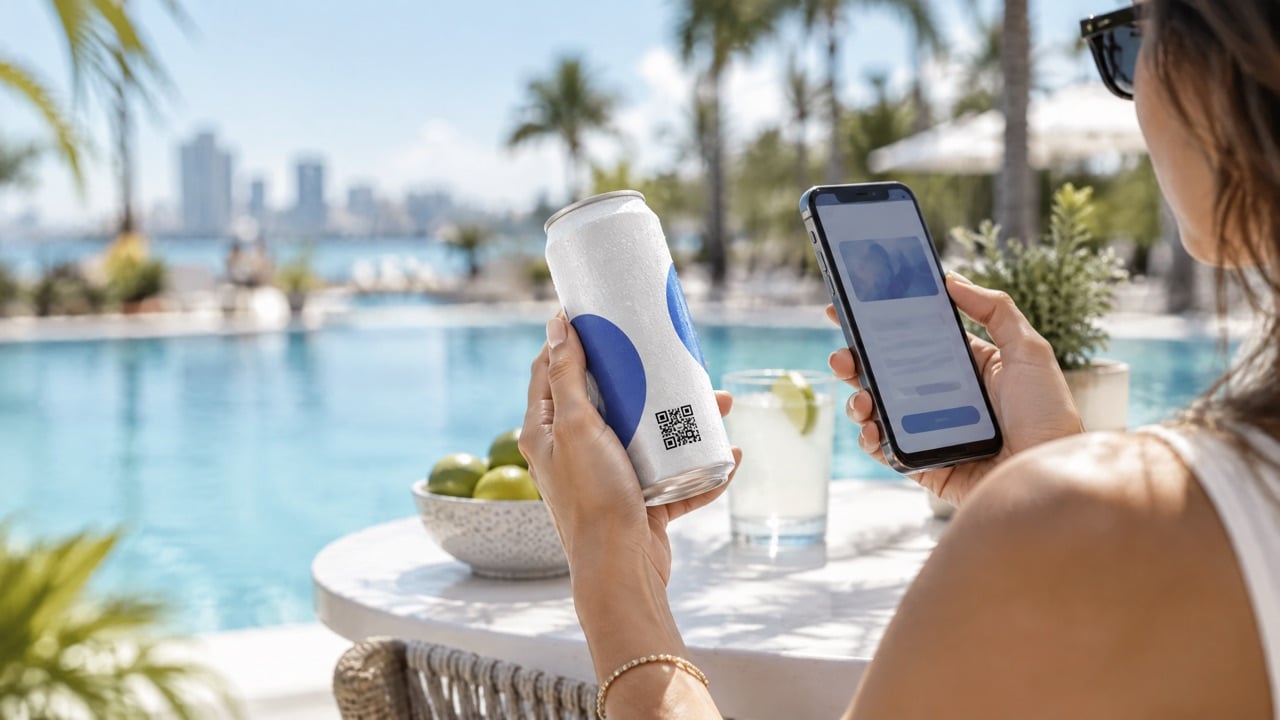
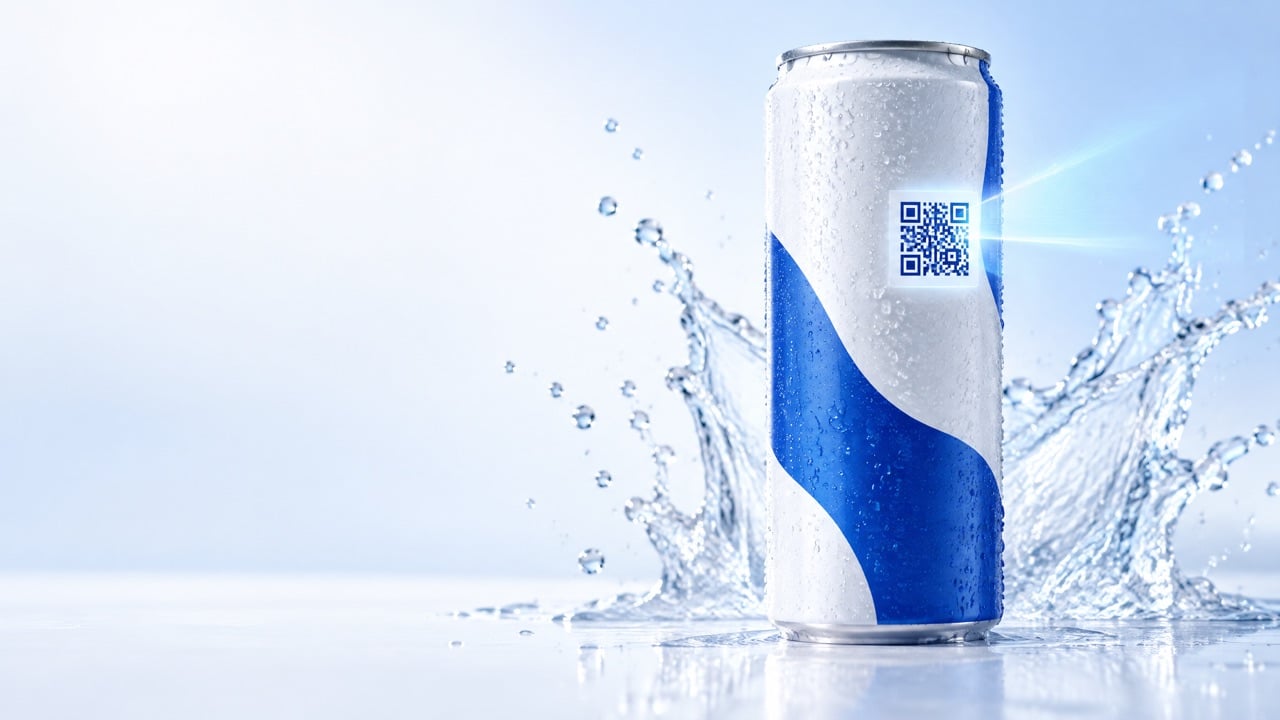
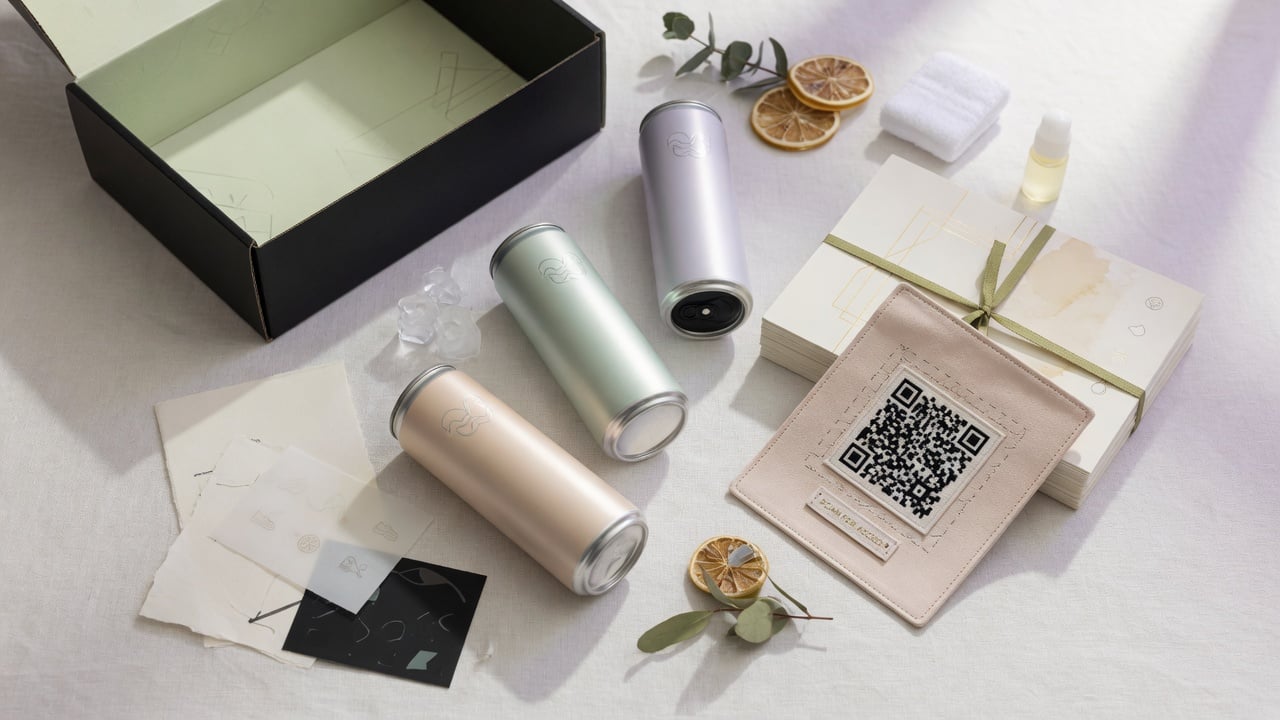
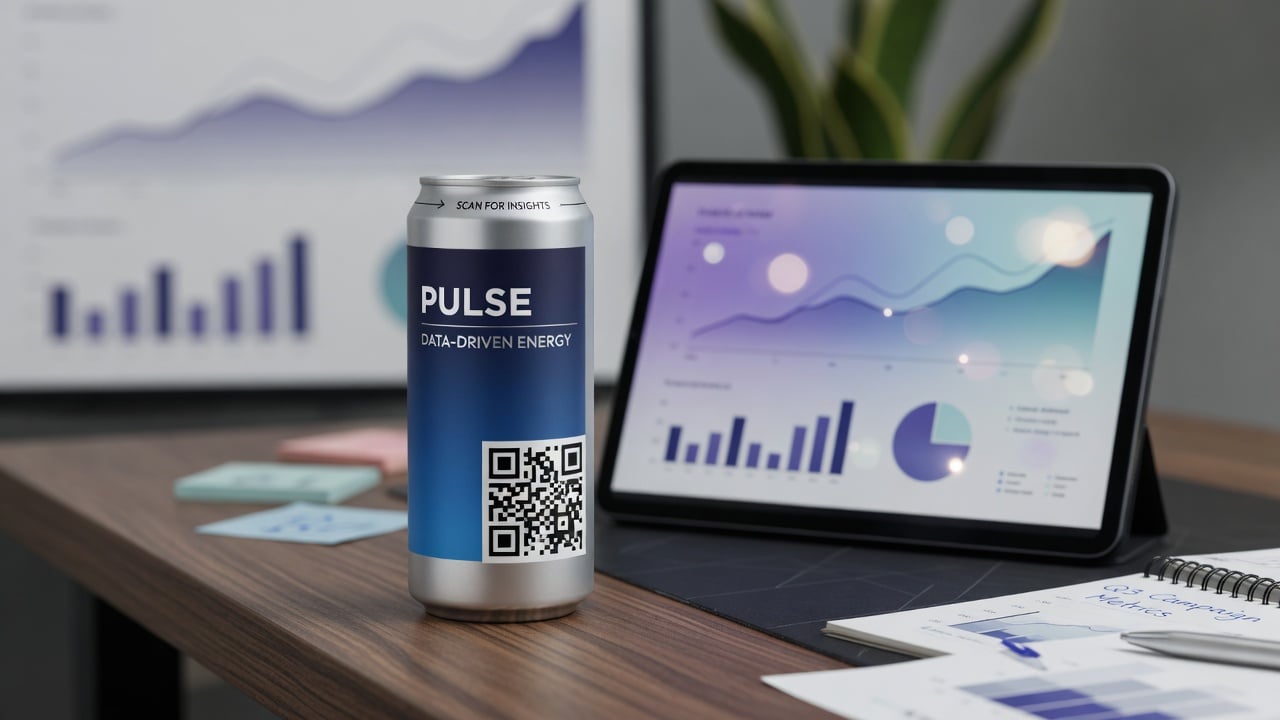
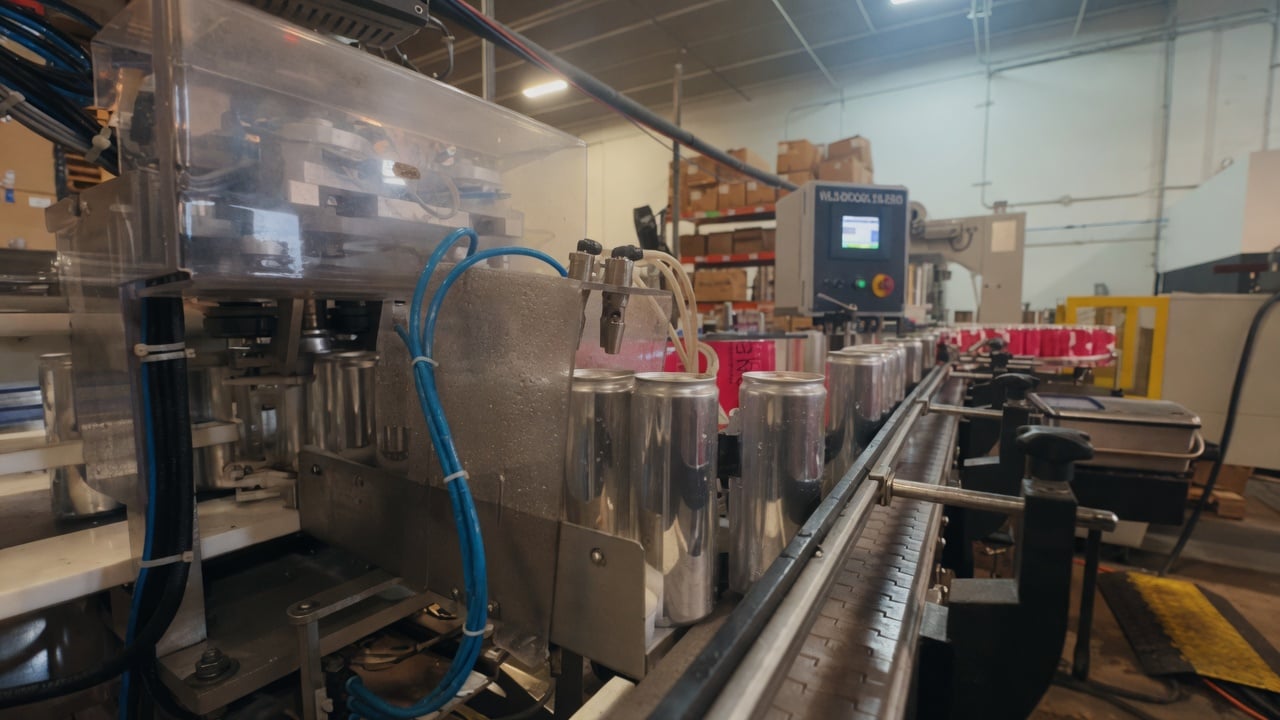
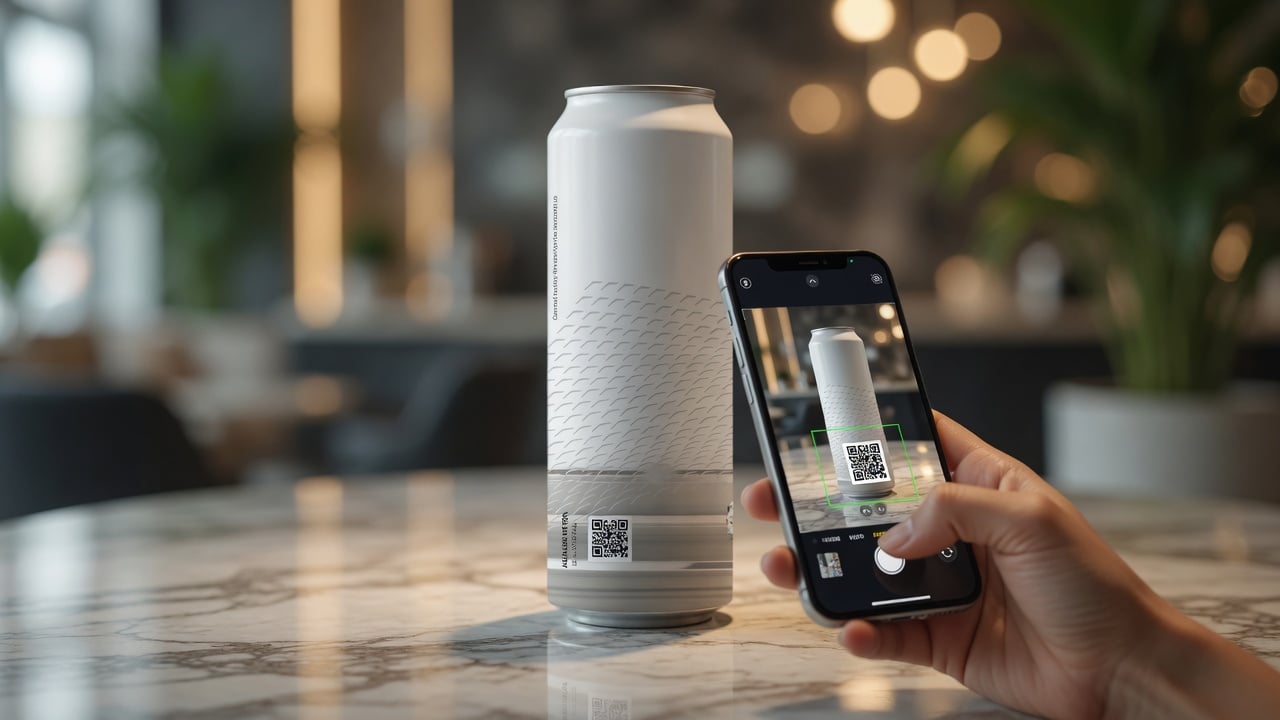
For custom cans, We Can It's digitally printed cans range from $0.90 to $2.50 per can depending on volume. Labeled cans start at 21 cases (504 cans) and are priced very competitively for small runs, and every can includes a QR code at no extra cost. Use the online calculator to compare against your current setup. Caterers building a premium offer may also like our guide to branded water for luxury catering companies.
Planning quantities and timing
- Quantities: base them on guests, event length, heat and the mix of service styles. Our guide on how many cans of water to order per guest has worked examples.
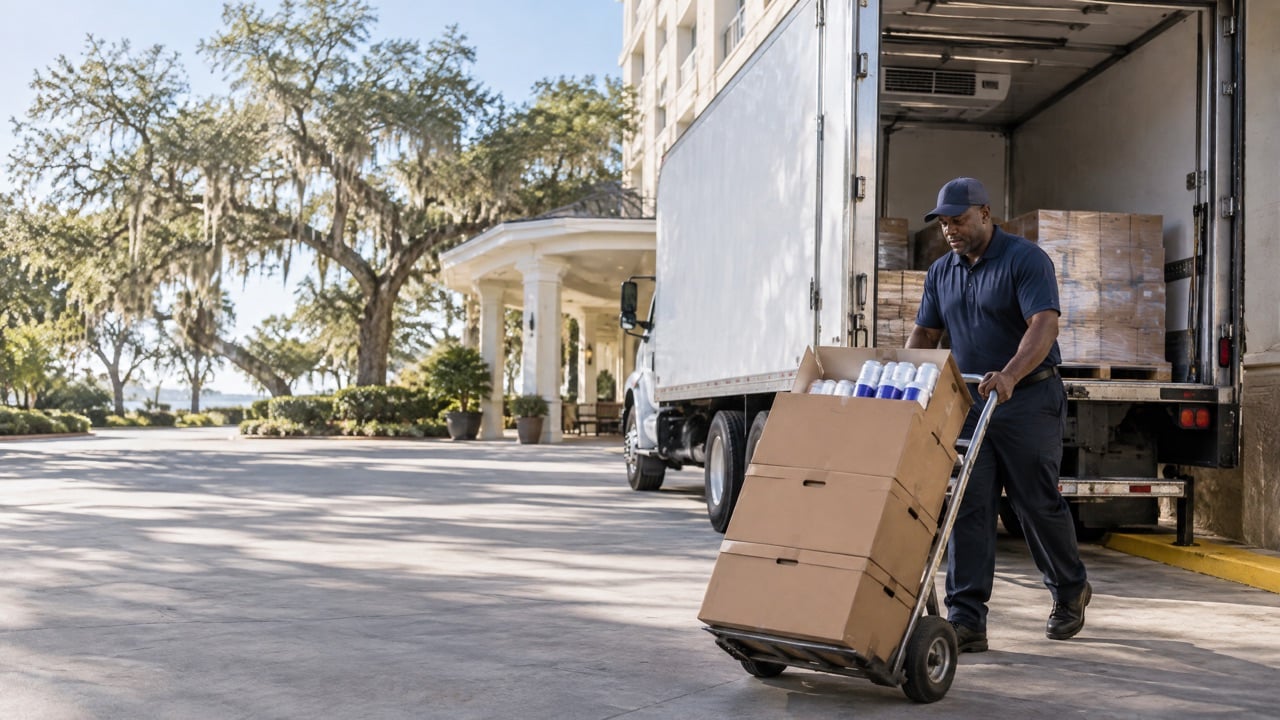
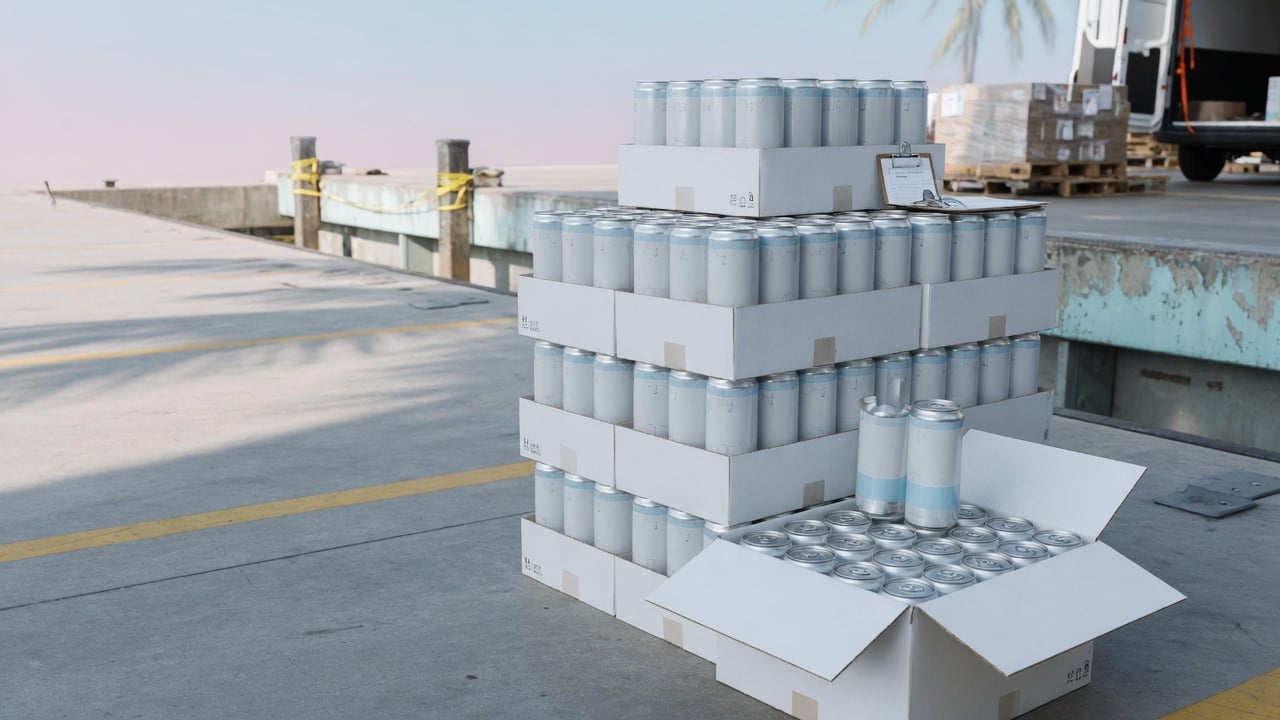
- Timing: custom cans take about 2 to 3 weeks from artwork approval, so approve designs about a month before the event.
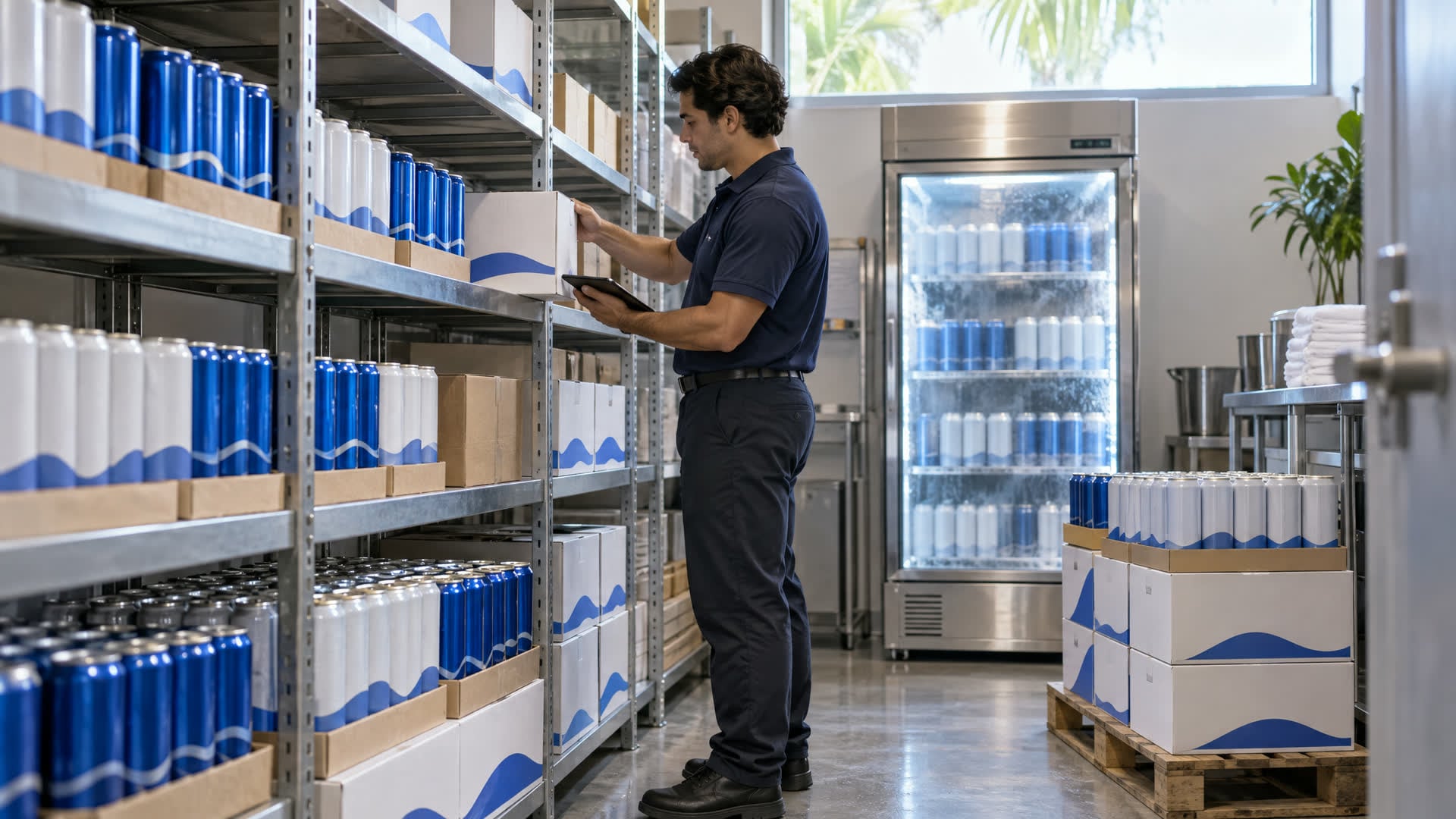
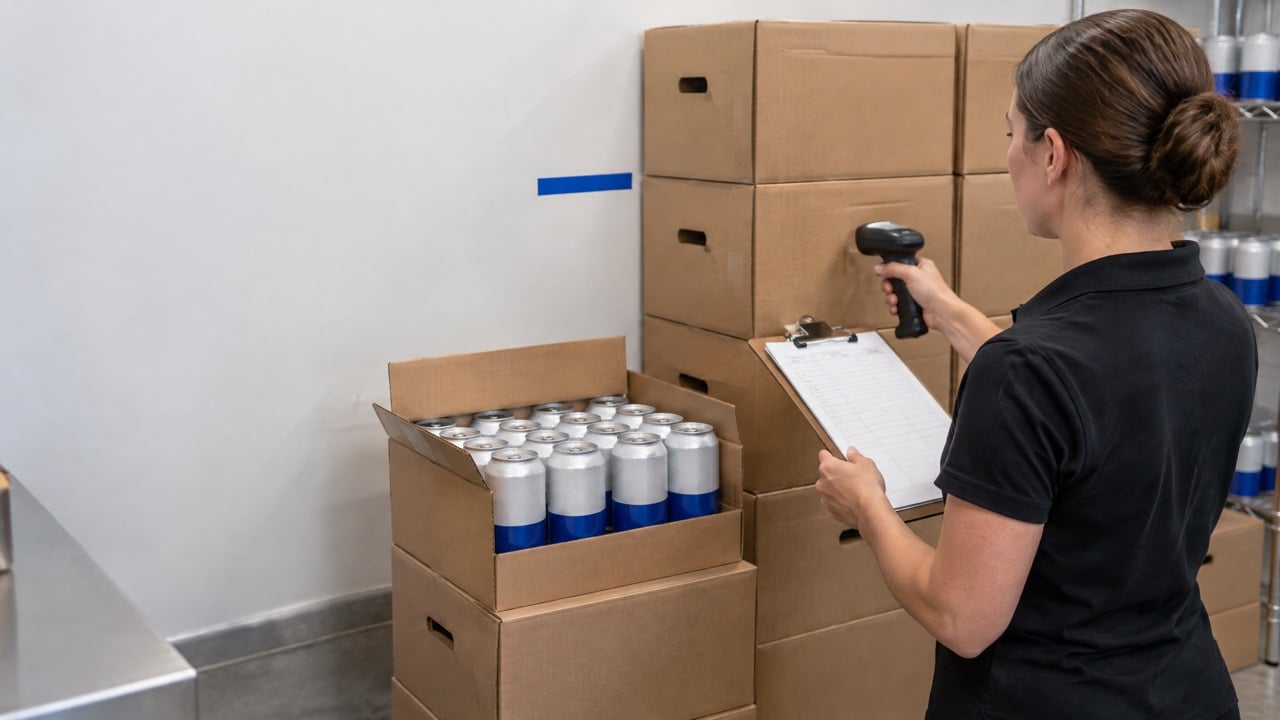
- Storage: keep cans in a cool place and move them to ice ahead of service. Our guide on how long canned water lasts covers storage.
Example: one reception, three water stations
Here is how a caterer might combine options at a 300-guest garden reception.
The seated dinner uses glass carafes on every table, refilled by servers, because the client wants a classic table setting. The cocktail hour on the lawn uses two bars stocked with chilled cans: still and sparkling, in the client's palette. A dance floor station near the band uses cans on ice, so guests can grab water without waiting in line at the bar.
Back of house, the crew uses a house can from the caterer's own stock. At the end of the night, the team counts used and unopened cans. Unopened house cans go back to the warehouse for the next event, and the client's leftover cans go home with the host.
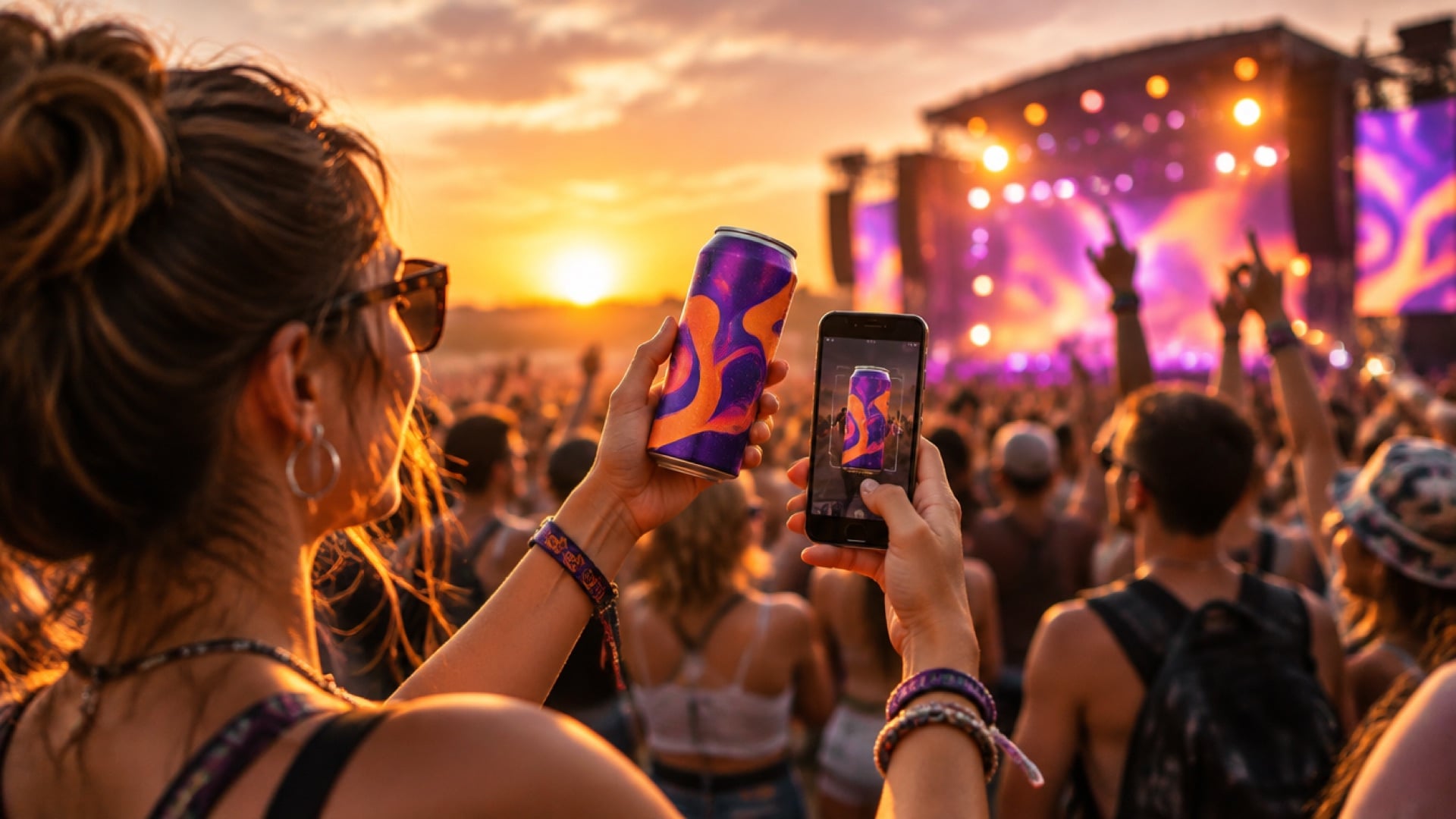
The mix gives the dinner its classic look, keeps the lawn bars fast and puts the client's design in every guest's hand during the most photographed part of the evening.
Questions to ask your client before choosing
- Do you want your brand or event design on the water?
- Will guests be seated, standing or both?
- How long is the event, and how much of it is outdoors?
- Does the venue have rules about plastic or waste?
- Are sustainability claims part of your event story?
Frequently asked questions
Is it cheaper to serve water from dispensers or bottles?
Dispensers have lower product cost but need glassware, washing and more staff time. Bottles and cans cost more per serving but save labor. Compare the full cost, including labor, for each event.
Are cans better than bottles for catering?
For many events, yes. Cans chill fast, hold their shape in ice, recycle well and can carry a full custom design. Bottles remain useful for very large outdoor crowds and resealable needs.
Can caterers order custom water cans for client events?
Yes. Caterers can order private label canned water designed for a specific event. Labeled cans start at 21 cases, which is 504 cans, with about 2 to 3 weeks of production.
How do I keep water cold at an outdoor catered event?
Store cases in shade or cold storage, move cans to ice well before service and restock tubs regularly. Aluminum cans chill faster than plastic bottles.
Can I serve both still and sparkling water?
Yes. Many caterers offer still at every station and sparkling at the bar and during cocktail hour. Plan both in one order to keep the design consistent.
How many cans of water should a caterer bring per guest?
It depends on event length, heat and how many other drinks are served. Plan at least one can per guest for short indoor events and more for long or outdoor events, then add a 10 to 15 percent buffer. Our per-guest planning guide has worked examples.
What do caterers do with leftover cans?
Unopened cans keep well when stored cool and out of direct sun, so house cans move to the next event. Client-branded leftovers usually go home with the host or to the client's office.
Get a quote for canned water for your catering service
Pick the right water for every station, and make the guest-facing ones look as good as the food. Get an instant estimate, and a product advisor will follow up by email.